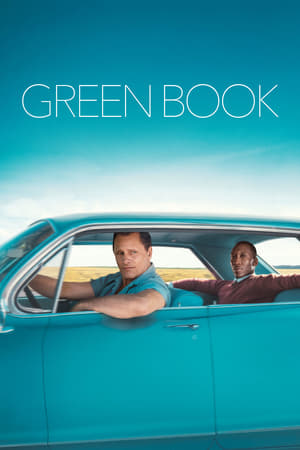
The Secret Agent Remembers the Absent Memory
The film reminds us to remember the people who had the courage and dignity that had made the world better, even when the memory was absent.
Incluvie – Better diversity in movies.
Identity in film with Incluvie stamps, scores, reviews.
Incluvie – Better diversity in movies.
Explore identity in film with Incluvie stamps, scores, reviews, and insights.


It has been nearly 5 years since Peter Farrelly won the Academy Award for Best Picture with Green Book in 2019, much to the chagrin of those who called the film out for its flimsy depiction of racial politics. Starring Zac Efron with appearances by Russell Crowe; Farrelly's TIFF presentation of The Greatest Beer Run Ever succumbs to many of the same pitfalls that lent his previous film its signature, “we solved racism” quality. Once again, it appears that Farrelly is out of his depth, toting his unsolicited take on how his All-American protagonist can singlehandedly restore peace to a war-torn Vietnam. Like Green Book, The Greatest Beer Run Ever is also based on true events and a real group of friends.
This film is so arrogant. John ‘Chickie’ Donohue, an Irish Catholic from the streets of New York, watches helplessly as all of his closest friends from his tight-knit neighborhood are shipped off to fight in the Vietnam war. With his remaining crew of buddies, he sits around the bar he frequents while Bill Murray laments about how the depressing images of war are bringing down morale around the community. The Americans are winning! They don’t know what they’re winning, but they’re winning, nonetheless, and would like to see some positivity on the news to reflect that. In an attempt to raise everyone’s spirits, Chickie commits to making an epic beer run overseas to where his friends are stationed. By bringing a duffel bag of warm Pabst (Pabst?!) he can remind his buddies that his loved ones back home are thinking of them and hopefully, bring a much-needed smile to their faces. What Chickie fails to realize is that Vietnam is not a playground within which he can deliver brews to his friends. An entire country and its people are in upheaval, there is death everywhere you look and a lot of innocent civilians, as well as his friends, are fearing for their lives in the midst of a war that no one can understand. However, Chickie’s got a reputation around town as a deadbeat and a freeloader, so this is his chance to prove to everyone that he can really accomplish something.
Before his departure, Chickie has some heated altercations with protestors that are advocating to end the war. Included in that bunch is his sister, Christine (Ruby Ashbourne Serkis). Chickie can’t stand to watch her be a part of something so unpatriotic, especially amidst the constant news circulating in their community that their friends are missing and dying. Christine tries to convince him that by protesting for peace, she is doing her part to keep these men safe, she doesn’t want to see any more members of her neighborhood drafted to fight in a fruitless conflict. Chickie stubbornly disavows her efforts, claiming that if the men fighting were to see these protestors devalue their sacrifice they would be heartbroken. So he hops abroad on a ship to Vietnam to go make a real difference by handing out beer.
Once he arrives in Vietnam, he requests a few days’ leave from the ship that he’s been working on to complete his mission. One would think that at this point, he would be in for a rude awakening, but Chickie struts about, making friends with the locals. He tries to find his way to his first friend’s base before heading into northern parts of Vietnam that have restricted access, due to how bad the fighting has gotten in those areas. When he runs into a group of journalists, who have all been staying in Vietnam and covering the war for months, he has no issue openly criticizing them for how their coverage is simply too sad. Don’t they know that no one at home wants to see that? Would it kill them to give everyone watching the war from the comfort of their living rooms a little hope? We now begin to wonder, what it will take for Chickie to realize that he hasn’t been dropped in the middle of an action movie.
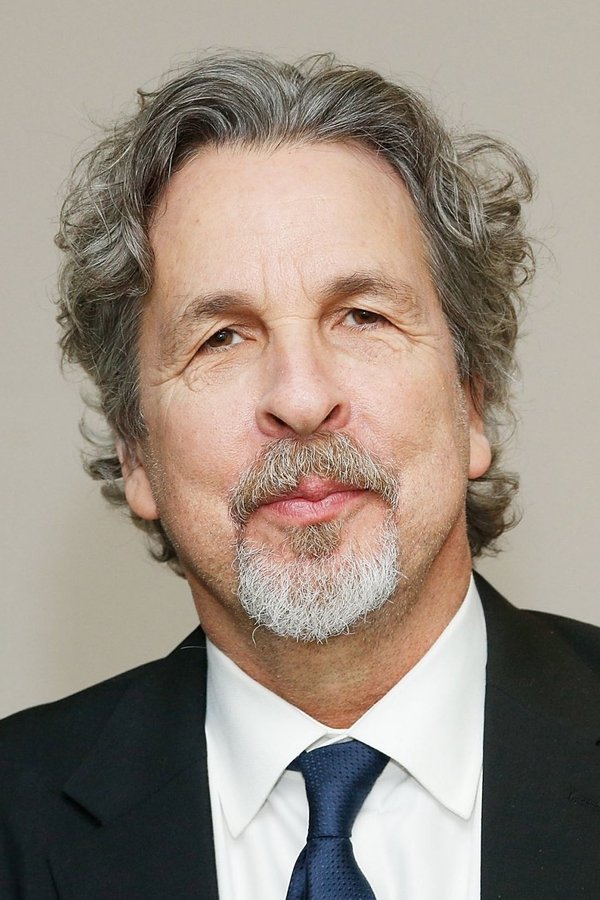
The 94th Academy Awards are right around the corner and with some truly wonderful films like The Power of the Dog, Dune, CODA, Belfast, and Licorice Pizza, the race for Best Picture is incredibly tight. But there's a film that has been gaining momentum at the perfect time - Ryusuke Hamaguchi's Drive My Car. Since the inception of the ceremony, The Academy had long avoided awarding foreign films the honor of Best Picture, even going as far as to award Alfonso Cuaron Best Director for Roma, then proceeding to give the Best Picture award to Peter Farrelly's Green Book in 2019. But in 2020, they finally broke this near century-long habit and awarded Bong Joon Ho's masterpiece Parasite with not only Best International Feature but Best Director and of course, Best Picture, becoming the first foreign film to ever do so. Now Drive My Car has the chance to do the same.
Drive My Car exudes a palpable sense of dreariness and lifelessness that is further embodied by Yusuke, portrayed tragically by Hidetoshi Nishijima, which is historically, exactly what The Academy loves. This film is a slow-burn that demands your attention in every scene, and by slow-burn, I mean glacial. You feel every second of its three-hour runtime and it asks for long periods of empathy and introspection that you have no choice but to give. It can be exhausting being enveloped in such monotony and gloominess, but this isn't the only experience Hamaguchi gives the audience - we also get to witness a journey to acceptance, albeit a lackadaisical one, that eventually leads to a moment of incredible emotional surrender and catharsis. This no doubt puts Drive My Car in a great position for Best International Feature (which it's surely a lock for) but also Best Picture being as there's one thing that The Academy has proven to cherish above all else, no matter what...the Drama.
But it's not exactly a shoo-in. There is stiff competition this year - whether it's Jane Campion's The Power of The Dog, which is very similar in style with a very slow and permeating feeling of dreariness, or Sian Heder's CODA which takes enormous steps forward in the way of deaf representation, we also have to acknowledge films like Paul Tomas Anderson's Licorice Pizza or Denis Villeneuve's Dune where the craftsmanship and quality are among the best Hollywood has to offer but lacking major representation. But Drive My Car is in an interesting position being the first foreign film nominated for Best International Feature and Best Picture since Parasite, while The Academy has been getting better at nominating the films that belong in both categories, they've been rather choosey about awarding foreign films the honor of Best Picture. It's possible for this narrative to change of course, but in a year with so many excellent films deserving of the award, I can't help but feel it might be overlooked. But of course, I'm no insider, I'm basing this entirely on the history of The Academy and their shoddy history of selecting Best Picture winners.
After years of being ignored, shut down, or shifted around, I think we’re finally getting somewhere with Black cinema getting its due. I think it is finally at the point where mainstream audiences will just watch a movie for black audiences and not have it feel forced or empty. It’s not at the level it needs to be at just yet, but I do think it is getting traction. Not counting the Oscars (especially after seeing Green Book win last year), I think that black cinema is making waves with the general population, and that excites me, because that can break up the formulaic and problematic amount of films that reach audiences and can open up the door for other minorities to start appearing in film more now that it’s proving that movies with diversity CAN reach people of all backgrounds despite their intended audience.
I think since 2016, there has been a stream of successful (and now iconic) movies by black artists, for black audiences, with general appeal.Moonlight,Fences,Get Out,Us,Blackkklansman,Blindspotting,If Beale Street Could Talk, Sorry to Bother You,The Hate U Give, andBlack Pantherare just afewof the plethora that come to mind, and all are great or excellent movies. It’s a far cry from times like 2004 where the most notable black led movies wereHotel Rwanda(white director) andWhite Chicks(infamously bad).
So, how doesQueen & Slim hold up in this black film-making start of a renaissance? It’s…OK. And I’m not gonna lie. I am highly disappointed that it’s just OK, because this was one of the most anticipated films of the year for me, and for good reason. For starters, the premise is the best kind of hook you could ask for. A Black man shoots a white police officer in self defense while on a Tinder date. He and the date go on the run. That’s an amazing idea for a film.
Likewise, it is the directorial debut of double Grammy winner Melina Matsoukas, who is best known for her fantastic music videos. And on top of that, Daniel Kaluuya, one of my up and coming favorite new actors, was one of the stars. And yes, I was somewhat right. The premise was intriguing. The direction was nice. The acting was great. But I forgot the cardinal virtue of good cinema - a solid script.
Regina King has done it yet again.
After exhibiting an unparalleled level of talent onscreen, in her rightfully awarded performances in both HBO’s Watchmen and Barry Jenkin’s If Beale Street Could Talk, Regina King has now stepped behind camera to prove that there are few things she cannot do. One Night in Miami... is her first foray into direction, and the success of the movie can be likened to someone doing a triple axel their first time trying on ice skates. Although she worked directed for television shows such as Scandal, the leap to a major movie such as this is monumentally difficult. Without mincing words, if Regina King does not win an Oscar for this movie you will be hearing from me about it.

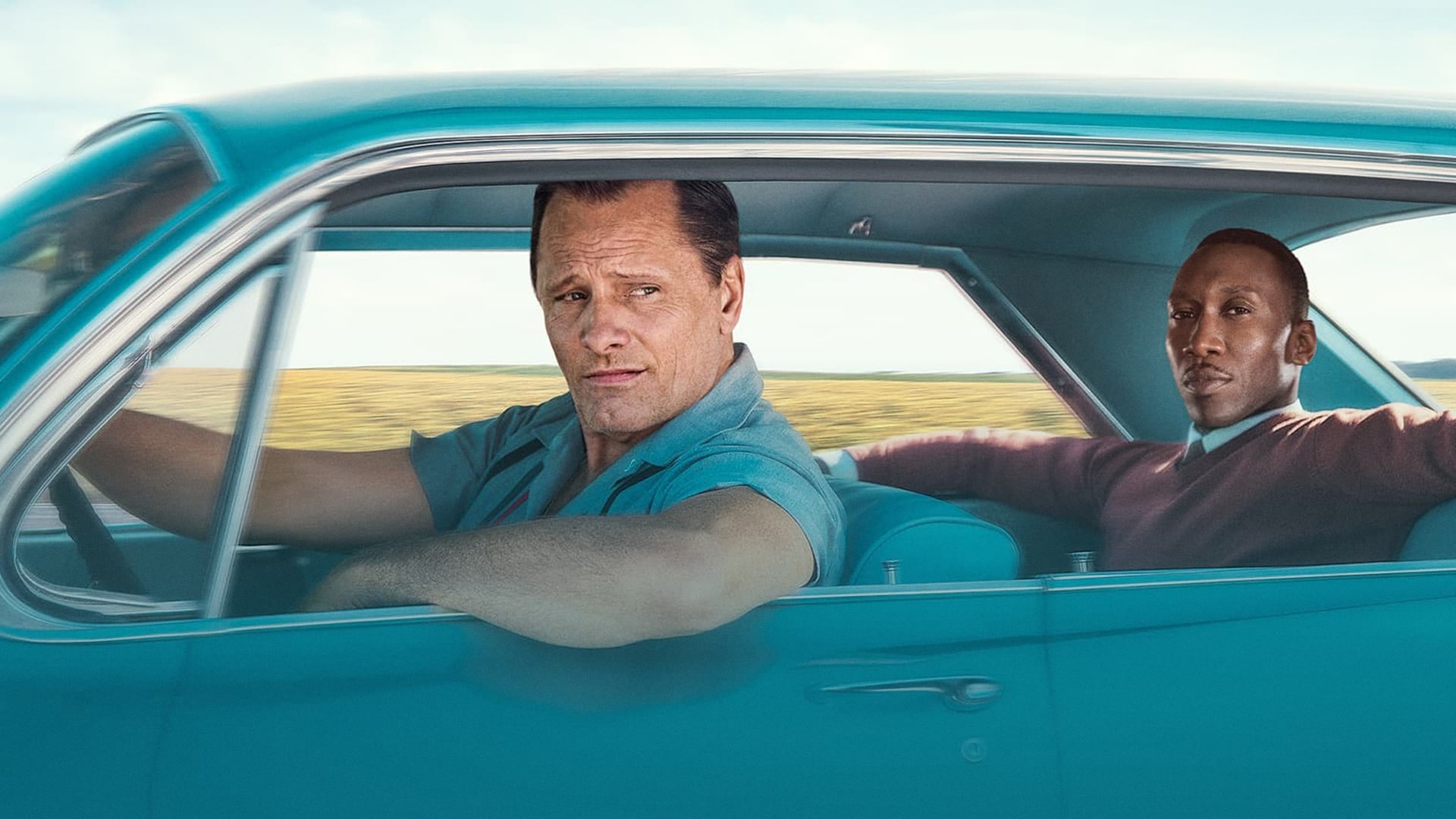
Tony Lip, a bouncer in 1962, is hired to drive pianist Don Shirley on a tour through the Deep South in the days when African Americans, forced to find alternate accommodations and services due to segregation laws below the Mason-Dixon Line, relied on a guide called The Negro Motorist Green Book.
The film reminds us to remember the people who had the courage and dignity that had made the world better, even when the memory was absent.
I’m disappointed in The Woman in Cabin 10, but that’s at least in part because of my love of Ruth Ware’s novel.
A best friend that will stick with you to the end, on a group trip from hell, is someone to die for.
'Kobra Auto Retrato' chronicles the inspiring journey of Kobra, a world-renowned Brazilian muralist and street artist.
"Abominable" is an exciting story for children and a great step forward for positive Asian representation.