








No One Mourns the Wicked?
Ultimately, Wicked is a story about the cost of being othered, the pain of being misnamed, and the quiet revolution of standing in your truth.

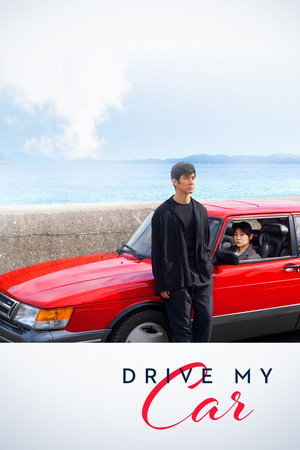



Yusuke Kafuku, a stage actor and director, still unable, after two years, to cope with the loss of his beloved wife, accepts to direct Uncle Vanya at a theater festival in Hiroshima. There he meets Misaki, an introverted young woman, appointed to drive his car. In between rides, secrets from the past and heartfelt confessions will be unveiled.
Ultimately, Wicked is a story about the cost of being othered, the pain of being misnamed, and the quiet revolution of standing in your truth.
Clocking in at about four hours, Stranger Things season 4 volume 2 is the length of a double feature. Despite the length and the hype, the finale still falls short of expectations thanks to poor pacing, poor character choices, and poor diverse storytelling.
'The Menu' has a strong story. The 5 acts, which are defined by the courses, are an excellent subversion of the classic 5-act film structure.
The French-born director Laure de Clermont-Tonnerre’s strategic choice to entrust the interpretation of a conventional, feminine character to a non-binary actor pays off: Corrin’s Lady Chatterley is awkward, edgy, and uninhibited at the same time.
With mismatched eyes, a willingness to experiment with hair color and style, and a rail thin frame, Bowie always drew attention. But he shunned gendered attractiveness, creating his own space somewhere in between. This hallucinatory and often nonlinear 2022 documentary is a perfect salute to David Bowie’s life and career. Rather than interviewing those that knew Bowie, the standard convention for biographical portraits, director Brett Morgen mostly lets the artist’s images, performances, videos, and words speak to capture the essence of the artist. Bowie was more than just a pop star. He painted, sculpted, acted in films, and was a thoughtful and articulate person who gave sincere answers to even the most shallow interview questions.
The more biting satire is reserved for those on top of the power structure, such as the police, while those occupying lower levels are given more nuance and likability, even if they operate on the wrong side of the law. This principle gives Deep Cover its heart.