“Young Washington” Is Imperialist Propaganda
Telling a story about the French and Indian Wars from the perspective of the British prioritizes the perspective of the colonizers.



Imagine your tenth favorite food. Not your top favorite, your tenth favorite. You love this food, but you don’t personally identify with it. You enjoy it a lot, but it isn’t incorporated into your being. This is something you have a few times a year, at the very most once a month. Now imagine that you eat this at least once a week, if not more like every other day.
That is the state of biopics in 2026. From Walk the Line, to Bohemian Rhapsody, to this year’s Michael, Hollywood has accumulated a bevy of well-made and well-acted biopics that are perfectly enjoyable and maybe even inspiring. A24’s Tony could not fit more perfectly into this collection. But that is both a positive and a negative. If you rarely see biopics, at most once a year, then this movie is going to come off as a tense, fresh, and well-crafted take on a celebrity’s life. But if you keep up with movies on a regular basis and see, say, three to five biopics per year, this might feel a little bit like well-trodden ground.
Tony shares a lot in common with recent Bob Dylan biopic A Complete Unknown. Both films focus on a young white man, who possesses more arrogance than there are stars in the universe, involved with a young woman who fluctuates between despising him and being in love with him depending on how honest he is about his life. There are notable differences, and certainly neither film can be accused of “recycling” when they are both based on real figures, but the story structure remains the same. Both even take place in roughly the same region of the United States.
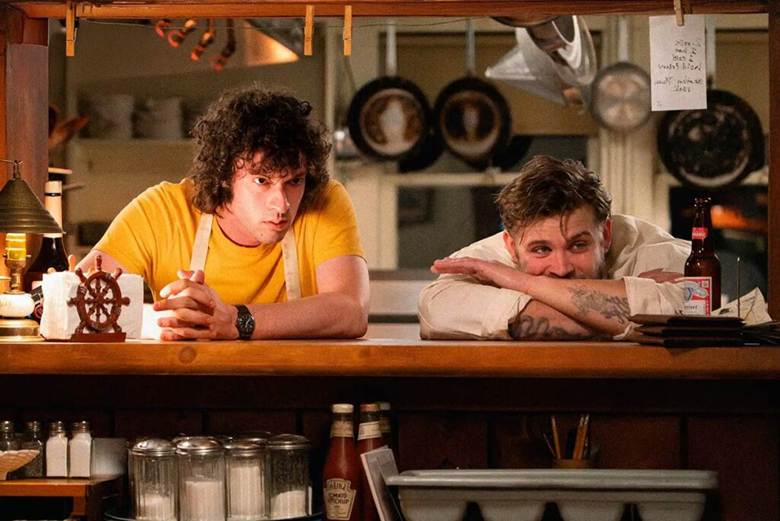
The obvious show-stealer didn’t need to show the steal at all, since he is the star, but he does it anyway. Dominic Sessa as Anthony Bourdain is at least as good as Timothee Chalamet in A Complete Unknown, if not better. This is at least true when Sessa is talking. When he’s just staring into the distance, which is a surprisingly large amount of the time, he looks a bit like a horror movie villain, but his vocal performance is transformative. Antonio Banderas as Chef José Vatel is also very engaging. Both performances, as well as the writing of these characters, compel the audience to wonder what their past was and how it shaped them as people.
Regarding other films, much ado has been made, both from pro-diversity and anti-diversity activists, about actors of one ethnicity playing characters of another, especially when there is an obvious change in skin tone. Here, there is no change like that, but questions are still evoked regarding this practice. Dominic Sessa is Italian-American while the real Anthony Bourdain was an American whose father was of French descent and mother was Jewish. Antonio Banderas, a Spanish actor, plays a Portuguese character in the form of José Vatel. It’s hard to imagine many viewers being offended by this or accusing the actors of stealing roles, but it’s also telling that these ethnic backgrounds are downplayed in the film, suggesting an attempt to sever their backgrounds from their life stories, which could be seen as either admirable or misguided.
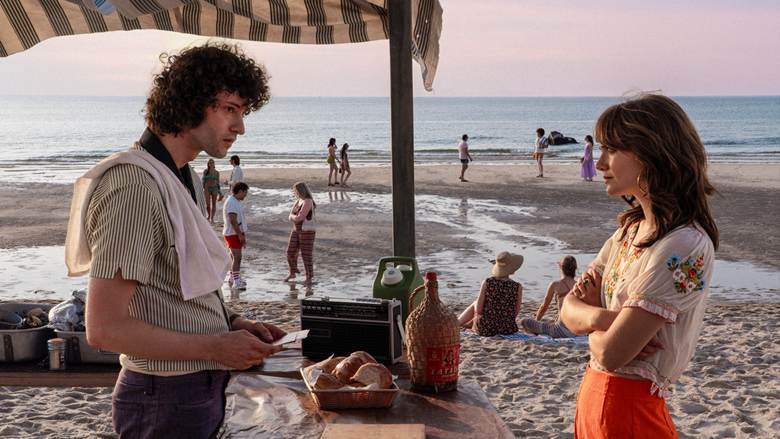
Michael Bauman, the cinematographer known for Paul Thomas Anderson hits like One Battle After Another, Licorice Pizza, and Phantom Thread, here in his fourth film demonstrates an astounding expertise with the camera. While this isn’t showy enough to win best cinematography at the Academy Awards, Bauman makes several decisions which allow the position of the camera itself to tell part of the story in each scene. For example, the character Nancy makes a comment about the restaurant Bourdain works in being just “fast food.” Later, during a pivotal moment with Nancy in attendance, the camera is as far back as practical to show that the restaurant is even smaller than the audience had yet to be let on to that point, confirming Nancy’s point in a dramatic yet subtle fashion.
The cinematography is good. The storytelling is good. The acting is good. This movie is good. Of course, the problem isn’t that it’s bad, it’s that it fails to stand out from the crowd of similar films. That means it’s an easy recommendation – on streaming. While the artists’ hard work and success should be admired, telling your average moviegoer to spend twenty dollars for a ticket to this film feels like an insincere gesture. That being said, certainly this film could resonate much more deeply with people who have gone through similar life events, or even more impactfully, the opposite.