“The Thursday Murder Club” Provides a Cozy Mystery
As a frequent “the book was better” extoller, this movie was well worth the watch.



In the 1996 film The Watermelon Woman, a young, Black, lesbian filmmaker goes on a journey to learn more about the Watermelon Woman, the pseudonym for a Black actress who played “mammy” stereotyped characters in the 1940s. Cheryl Dunye, who plays the homonymous main character and directs the film, takes us on a journey through both the (fictional) life of the Watermelon Woman and the character’s personal life while filming. Cheryl eventually learns that the Watermelon Woman was a lesbian named Faye, and from there she tracks her personal and professional life through various archives.
The Watermelon Woman was first released 30 years ago, but it remains one of the best lesbian movies of all time for a reason. The film’s confident portrayal of Black lesbian women sets it apart not just from other 90s movies, but most of the films since then. In honor of the 30 year milestone, I’m taking the time to talk about why Dunye’s film is still just as important as ever.
Watching the film, I couldn’t help but feel that Cheryl and I were on a similar journey. While Cheryl rented tapes from the video store and dug through countless library books unaided by the reference desk employee, I was 92 films deep in my quest to find the best queer cinema I could. I take that job very seriously, and although the internet has made it easier than it was for Cheryl, it’s far from a straightforward task.
During the film, Cheryl drives to New York City to look through the Center for Lesbian Information and Technology (CLIT) archives. They’re disorganized and volunteer-led, with papers strewn across the room and only one frazzled lesbian to help. When I search for queer cinema beyond the basics, I am met with a similar disorganized heap of blog posts and articles written by tired Tumblr warriors.
It’s only thanks to these—mostly unpaid—people like Cheryl that there’s any lesbian history to look through at all. Cheryl’s quest to find out about Faye’s career is hampered by an elderly woman who refuses to admit that her sister, a famous director, was dating Faye. Despite how much evidence Cheryl found to support her theory, the idea that a white director could be a lesbian dating a Black woman was scorned. Were it not for Cheryl’s persistence, it would be all too easy to erase the true history of Faye’s life.
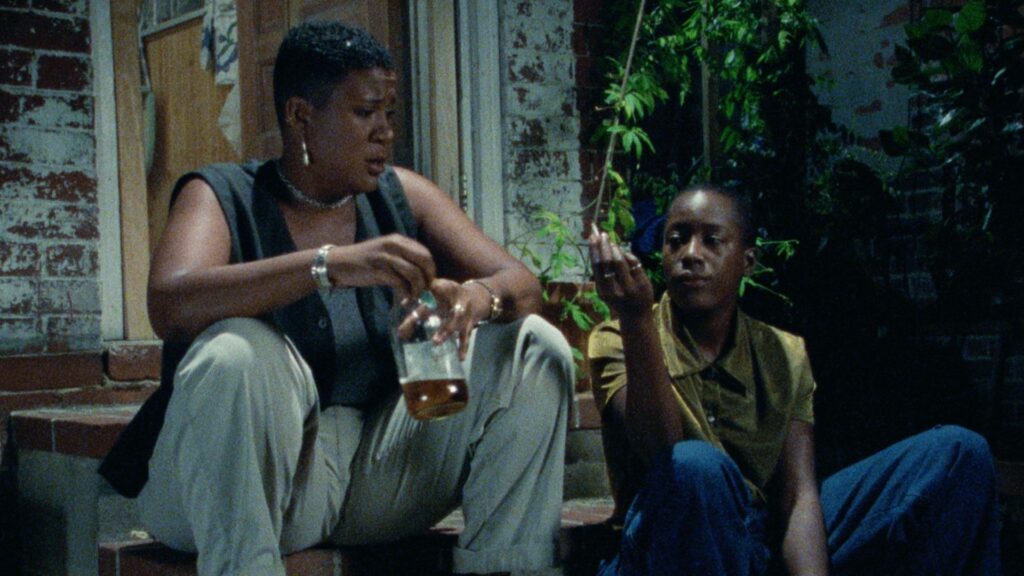
The Watermelon Woman allowed me to see a story about a lesbian archivist and filmmaker, but the more important impact was the way the film unapologetically addressed queerness and blackness. There still aren’t enough Black lesbian films out there. Cheryl and her friend, Tamara (Valarie Walker), are incredibly different people, but their shared identities bring them together. Tamara especially is a great example of a proud, loud, lesbian who isn’t afraid to be herself. It’s refreshing to see such three-dimensional characters and to have multiple people to root for throughout the story.
The relationships throughout the film feel deeply grounded. We are dropped into these women’s lives at a seemingly random moment, and that allows us to see the ups and downs of a normal relationship. We get to see Cheryl going on a blind double date and Tamara worrying about the stability of her long term partnership in ways that feel refreshingly real. I can envision the way Tamara and Cheryl’s lives were before the film started and how they will go after it ends.
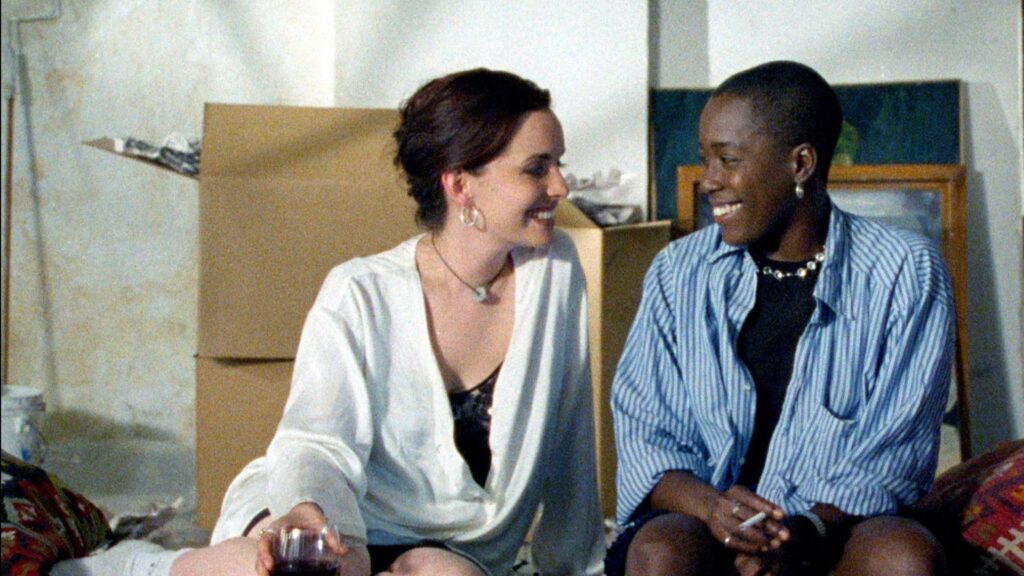
At the start of the movie, Cheryl is single, but she ends up meeting a white woman named Diana (Guinevere Turner) at work. The two have a short but passionate affair—with an incredible sex scene. Tamara is disapproving, concerned by the way Diana presents herself and the fact that she, more likely than not, consistently dates and fetishizes Black people. As Black lesbians have to be just as wary of white lesbians as they do of men.
Cheryl’s friend is eventually proven right, but the breakup matters less to Cheryl than the excitement of her discoveries around the Watermelon Woman. Faye is the woman of Cheryl’s life, and her relationship with Diana only exists as a parallel to Faye’s relationship with the director. With time, Cheryl came to realize that Faye was only with the director because it helped her career. The real love of her life was a kind Black woman. In the same way, Cheryl might advance her career or have a fun moment with Diana, but the central loves of her life are Faye and Tamara. Cheryl’s adoration for Faye is paramount, because it’s in Faye that Cheryl sees herself.
It’s hard to wrap up a review of The Watermelon Woman better than Cheryl herself wrapped up her documentary. This is a film about sisterhood, about representation, and about being people who date, fuck, fight, and discover. Because of that, this movie will always resonate with queer people, for as long as queer people exist. In the words of Cheryl, “It means hope. It means inspiration. It means possibility. It means history!”