“By Any Means” and the Pitfalls of Entertainment
It is up to the community to decide if this film is a force for enlightenment or not.


If you’re excited about America’s 250th birthday and going into Young Washington hoping for a patriotic retelling of the founding of this nation and a celebration of the values that underlie such a founding, you’re going to be sorely disappointed. Although it should somewhat be obvious given the title of the film, Young Washington is actually a retelling of George Washington’s involvement in the French and Indian War. Here is where the problems start.
Telling a story about the French and Indian Wars from the perspective of the British, or at least its colony of Virginia, is a choice to prioritize the perspective of the colonizers of this country. If Angel Studios had chosen to make this story about the Revolutionary War, at least they could focus on the heroic ideals while ignoring (or, dare they, address?) the lesser ones. But here, there’s no heroic ideal. The explicit, and only, point of George Washington’s journey in this movie is to further the British conquest of indigenous lands. That does not celebrate America, that celebrates racism.
Choosing to prioritize the perspective of the British also serves to diminish the perspective of everyone else. The French are cartoonishly villainous and stereotypical. Black people barely appear in the movie, and when they do, their subservience is the whole of their character. That subservience is portrayed in a way that erases the brutality and grotesqueness of slavery, reducing it to just a background fact. One Native American is portrayed as smart, while the rest are portrayed as antagonistic and fear-inducing, reinforcing a centuries-old stereotype of indigenous people as “savages.” Look, this isn’t the 1920s, the non-white people of the film are not portrayed in as awful a light as possible. There’s an attempt to be respectful, but that attempt seems ill-informed, even ignorant.
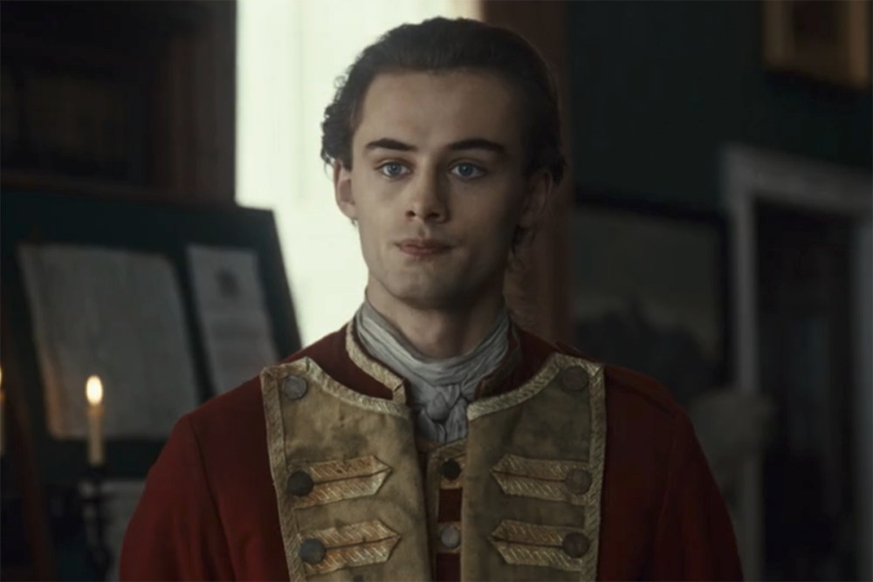
Some readers may ask, “fine, it’s problematic. Is it at least entertaining?” Well, a little bit. The script is, paradoxically, over-stuffed and over-long at the same time. Visually it feels like a constant inundation of pale white with little splotches and garnishing thrown in, with framing that feels like a pale imitation of higher-budget films. The film is over-edited and the cutting is frantic. The acting resembles first-reads, in the sense that they don’t feel rehearsed or natural. None of these flaws are dramatic or intense, but they leave the film without many aspects that can make up for its shortcomings.
The one exception is the climax. Aided by a very exciting score by the Kiners, known for their work on franchises like Star Wars, Transformers, and Leprechaun, the final battle of this film is very exciting and manages to enrapture the audience, convincing us to root for George Washington in ways the rest of the film fails to do, with multiple twists and a little genuine suspense.
But otherwise, the film feels like a pale imitation of bigger Hollywood studios. The story of a young up-and-comer who overcomes numerous failures before achieving his big success has been told the way Young Washington tells it numerous times. These shortcomings, combined with the problematic nature of this retelling, make for a bad experience. This review doesn’t even cover any potential historical inaccuracies, or the believability of somebody dying from dysentery suddenly performing astounding heroics. In short, it’s, unfortunately, bad. Hopefully Angel’s next ventures, of which there are many, are superior.