





"The Black Phone" - The Ghost Story Cloaked In A Slasher Film
This is a movie that combines a ghost story, revenge tale, and serial killer obsession into a cinematic experience that uses your fears against you.

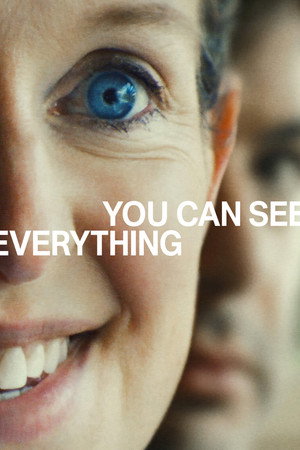


As I walked home from the theater last night, my brain spun with questions. You Can See Everything is billed as a documentary where you can, quite literally, see everything about Elizabeth Holmes’ life leading up to her incarceration, but it’s somehow more and less than that. Nathan Fielder and Lance Oppenheim’s film raise questions about power, finances, and what the word “truth” really means.
As could be expected by the names attached to the project, You Can See Everything is a masterclass in documentary filmmaking. The blocking, audio choices, and composition make for a film that could easily win Best Picture at the Oscars despite being a documentary. What truly sets the film apart, however, is the enigma that is Elizabeth Holmes. She is able to match Fielder’s dry delivery and stare at him so intensely I was certain they’d kiss. She’ll deliver sentences with a smile and a nod and moments later admit to being confused about what it means.
The audience was brought into her last 34 days before her 11 years in prison, and yet we know her almost less than we did before. Let’s take a look at the questions the film raised, and whether it also hinted at answers.
The following includes spoilers for You Can See Everything. I highly recommend watching the documentary before continuing. It’s worth it.
Most people, myself included, went into the theater expecting to gain a better understanding of whether or not Holmes intentionally committed the crimes she was convicted of. For her part, Holmes remains adamant that she didn’t. She told the truth. It may have been in a way that led most people to the wrong conclusion, but she didn’t intend that to happen.
It’s honestly hard not to believe her. If she’s a manipulator, she’s a master.
After hearing Holmes mince words and stare blankly when confronted with the implications, Fielder showed the Theranos founder a clip of “Who’s on First?”, an infamous comedy routine. In the skit, two announcers misunderstand each other after a man named “who” hits first base, leading to confusion about whether the second announcer is giving a question or answer. Homes pretended like it was funny, but couldn’t explain the joke. Throughout You Can See Everything, but especially in moments like this, she reminds me more of children’s book character Amelia Bedelia than a scammer.
This is a review of a documentary. Among the general public, documentaries are not known for their creative visual style. They are known for capturing what happened and that’s it. No extra flare or style, besides maybe a score. Nathan Fielder and Lance Oppenheim probably think that the previous three sentences are the worst words ever uttered by a human being.
The secret screening from the Telluride Film Festival is here, and it is just as mind-blowing as the internet is making it out to be. From the very first fraction of a second out of nearly three hours of runtime, it becomes very apparent that this is not normal. The lighting, the camera work, and the editing blow most films, documentary or otherwise, out of the water. Whether this was achieved on-site or in post-production, the filmmakers here must be congratulated for their work. You Can See Everything has a slightly surreal, almost dreamlike atmosphere, with an aesthetic very similar to Lance Oppenheim’s other 2026 feature Primetime. Except, while that film was admittedly visually interesting, that approach is significantly more effective here.
When it comes to a craft perspective, perhaps more than all of the visual elements, the score by Ari Balouzian stands out. This film knows when to be quiet and when the music should be in your face, and it does both perfectly from a music standpoint. The swelling of music almost perfectly matches moments of viewer epiphany.

Thirty-four days before she's sent to prison, notorious Silicon Valley founder Elizabeth Holmes invites a skeptical film crew to document her every move. What begins as an intimate portrait of an enigmatic felon becomes a mind-bending three-year journey into the abyss.
This is a movie that combines a ghost story, revenge tale, and serial killer obsession into a cinematic experience that uses your fears against you.
Even without the messaging, Mercy does not hold up as a movie. It's sloppily done and the mystery doesn’t tie together at the end.
Rules are nowhere to be seen in the harsh unfiltered reality of ‘Fair Play.’
Hawkeye episode 3 has arrived and it feels like we’re finally getting started! This episode features the debut of Maya Lopez aka Echo, a Deaf Indigenous hero with a prosthetic!
Check out the ABCs of Abbott Elementary - Cast & Reviews - In 'Abbott Elementary' showrunner and star Quinta Brunson highlights common issues among teachers deserving of Superhero Status.
‘Bruiser’ is an intense drama that explores unresolved childhood trauma and how it can affect the people around us.