“Resident Evil” is for Streaming
Word of mouth has been incredible, but the film's faults cannot be ignored.



This is a review of a documentary. Among the general public, documentaries are not known for their creative visual style. They are known for capturing what happened and that’s it. No extra flare or style, besides maybe a score. Nathan Fielder and Lance Oppenheim probably think that the previous three sentences are the worst words ever uttered by a human being.
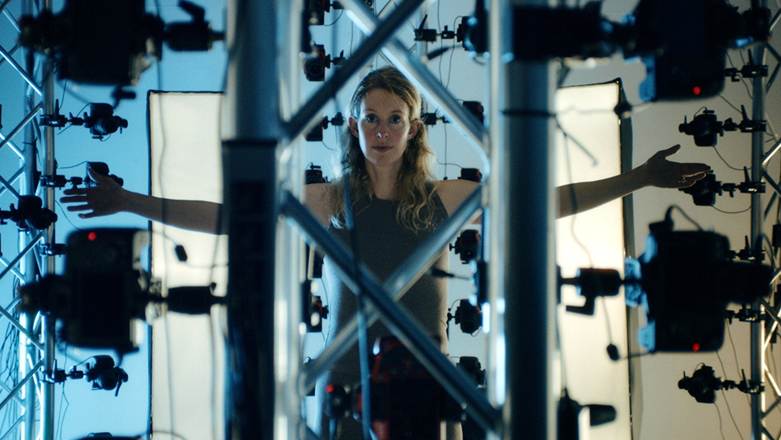
The secret screening from the Telluride Film Festival is here, and it is just as mind-blowing as the internet is making it out to be. From the very first fraction of a second out of nearly three hours of runtime, it becomes very apparent that this is not normal. The lighting, the camera work, and the editing blow most films, documentary or otherwise, out of the water. Whether this was achieved on-site or in post-production, the filmmakers here must be congratulated for their work. You Can See Everything has a slightly surreal, almost dreamlike atmosphere, with an aesthetic very similar to Lance Oppenheim’s other 2026 feature Primetime. Except, while that film was admittedly visually interesting, that approach is significantly more effective here.
When it comes to a craft perspective, perhaps more than all of the visual elements, the score by Ari Balouzian stands out. This film knows when to be quiet and when the music should be in your face, and it does both perfectly from a music standpoint. The swelling of music almost perfectly matches moments of viewer epiphany.

But a documentary cannot be judged solely or even primarily based on how it functions. It should be primarily judged by how it captures its subject matter. The story of Theranos is widely known, but until the debut of this film, the story of Elizabeth Holmes was far more opaque to the general public. This film is not interested in relitigating the story that was covered extensively before, but several stories that have had less exposure, such as Holmes’ coping with her inevitable imprisonment, her relationship to her spouse Billy, and her near indecipherable personality. The numerous approaches to the same person, admittedly enabled by her enigmatic nature, makes this film so dynamic and justifies its extraordinary runtime.
Uncovering all of this information is Nathan Fielder, who plays a very active role in the film. He is not there just to capture the moments but to actively interrogate nearly every element he is witnessing, on-screen as himself. At first, this feels very intrusive, like a man who feels the need to mansplain a woman to herself. It also feels very awkward at first, like who is this random person intruding on this couple’s intimate moments? But quickly it becomes apparent than Fielder has a role to play, almost as a detective, and far more revelations are made because of his involvement than would have been made if he was a neutral observer. It also becomes apparent that, despite Fielder’s initial awkwardness, he is carrying his mission out with respect and inquisitiveness rather than being exploitative.
Earlier it was mentioned that Oppenheim worked on both this film and Primetime. In both films, the perpetrators of very serious crimes are framed as the victims of manipulative people. In both cases, he makes convincing arguments without downplaying the seriousness of these crimes. But at the same time, these arguments are dangerously convincing. If we are to question whether every perpetrator was truly responsible, even after a conviction was handed down, then we run at least some risk of failing to hold people accountable. This film should be, and mostly is, built on the premise that we should have a conversation about Elizabeth Holmes’ culpability and mental state. But both films lean at least somewhat towards acquitting in the eyes of the public. If there was ever a flaw in You Can See Everything, it is potential bias.
This movie will make your jaw drop. There are so many unbelievable moments that would be mind-blowing in fiction, but are even more impactful given that these are almost all real moments, and the remainder being presumably faithful recreations. The style of the film makes the duration fly by, and the content of the film will excite the viewer and cultivate their curiosity.
What’s funny is that the title is very clearly a lie. You cannot see everything, because that would require psychic abilities. The enigma of Elizabeth Holmes is trapped behind her eyes, probably forever. But this glimpse into her world is so captivating that it is an easy must-see, nearly flawless, and exceptional in every way.