











I Was a “Teenage Sex and Death at Camp Miasma”
If you identify as part of the queer community, or if you love old school slasher flicks, you will love this movie.
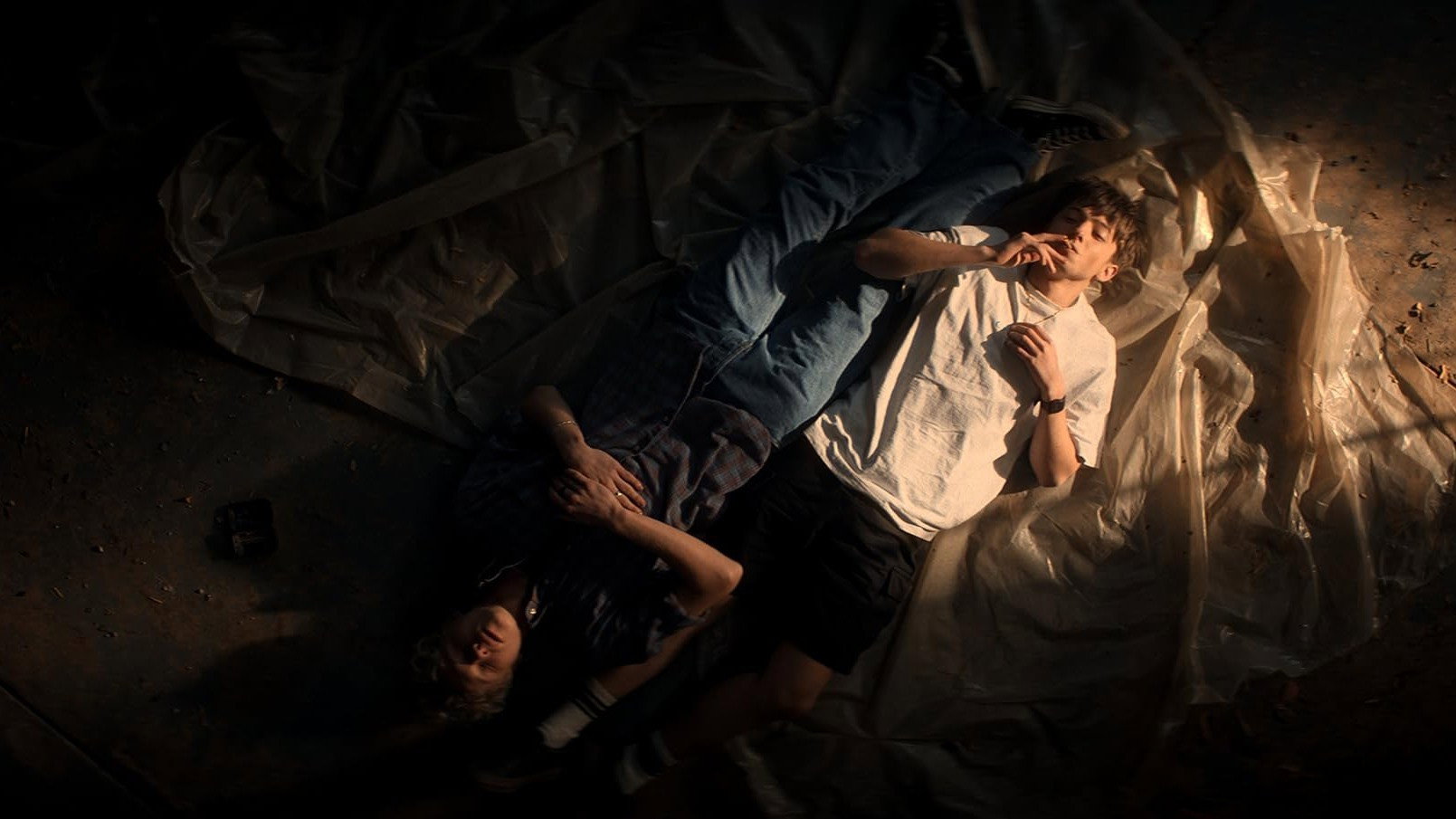
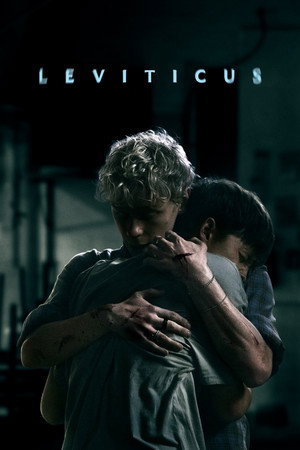


I’m a big fan of Australian horror. From Lake Mungo and The Babadook to Relic, Talk to Me, and Bring Her Back, Australia’s take on the genre has never disappointed me. The Australian filmmakers always bring something new and distinctively their own to the horror landscape. After watching Leviticus, that impressive streak clearly continues.
Adrian Chiarella’s Leviticus is a beautiful, poignant, enraging, gut-wrenching, and heartbreaking film about the trauma and harm conversion therapy inflicts on young queer people. Even though its classification as horror holds, the emotional bond between the two main characters, Naim and Ryan, elevates the story into a realistic romantic drama on par with Eternal Sunshine of the Spotless Mind.
Naim and Ryan, played by Joe Bird and Stacy Clausen, are two teenage boys who fall in love while living in an unnamed religious town. Because of their restrictive community, their love story must be kept secret. When the elders discover the boys' relationship, they turn to a mysterious man routinely used by the community to "cure" homosexual youth. His cure comes in the form of an entity that takes the shape of the person the "diseased" desire most. An allegory for conversion therapy, religious shame, and homophobia, the invisible creature stalks the teenagers by shifting into the person they love most, turning human connection and intimacy into a source of constant and inescapable terror.
What I found most distressing about this movie is that the parents know the kind of torment they are inflicting on their children. They are fully aware of the creature's violent nature and that it could end up killing them. It is extremely hard for me, even as a cis straight woman, to fathom how devastating and harrowing it must be when your parents, the people who are supposed to love and protect you most, who should be the first in line to accept you as you are, are the ones trying to erase your nature. I simply cannot wrap my head around this level of intolerance and hatred toward the LGBTQIA+ community, let alone toward one's own flesh and blood.
This maternal betrayal is portrayed perfectly by the cast. It’s the first time I’ve seen Mia Wasikowska play a mother. While she brilliantly brings to screen the blind ignorance of a brainwashed, religious parent, it is also the first time I’ve absolutely hated her character. I found her completely unbearable in the scene where she tells Naim that he needs the fear she had brought upon him to survive after she is gone.
The most widely celebrated English translation of the Bible is the King James Version. Leviticus chapter 18, verse 22 of that translation reads: “Thou shalt not lie with mankind, as with womankind: it is abomination.”
I have very little doubt that director Adrian Chiarella chose the title for this film with the purpose of reminding us of that verse. Leviticus is not necessarily an anti-religion movie, but it is furious with the homophobic practices endorsed by Christianity, and lays the blame at the feet of both church leadership and church membership.
That fury is not evenly distributed throughout the film. Instead, it oscillates between several different modes. Sometimes, yes, it’s a political statement; other times, it’s a heart-pounding horror-thriller, and at other times, it’s a touching coming-of-age film. Chiarella balances all of these different modes beautifully, if not perfectly, to deliver the best horror film of the year. In 2026, that’s saying something.
The acting in the film is solid, anchored by lead performances from Joe Bird and Stacy Clausen. But it’s the storytelling that really makes this film as good as it is. One is best situated not knowing much of anything about the plot going in, as the mystery of the film slowly unravels bit by bit, dropping major revelations at perfectly chosen intervals. While the film isn’t completely free of plot holes, it feels so well-calculated to make the audience interested. This interest is mostly held during the last two-thirds of the movie, which can make one forget how slow the opening parts of the film are, but for a film that premiered at Sundance and whose main purpose is social commentary, that shouldn’t come as a huge shock.
The film excels at its portrayal of homosexual youth, because they’re mostly just portrayed as young men who happen to be in love. Without straight-washing the main characters, Chiarella portrays his protagonists as normal, which would help audiences of any sexual orientation identify with them. Not everyone in the audience will be a sexual minority, but most of them will have been cheated on, felt like nobody believed them, or deathly afraid of something stronger than them.
Leviticus is not free of error when it comes to portrayal of minorities. There is barely any racial diversity. Worse, women are portrayed as villainous more often than they are portrayed neutrally or heroically combined. That being said, this film should receive high praise for its representation of homosexual men, and for that reason alone I think it satisfies a reasonable definition of strong representation.

Two teenage boys must escape a violent entity that takes the form of the person they desire most: each other.
If you identify as part of the queer community, or if you love old school slasher flicks, you will love this movie.
The plot lags, the moral lessons are misguided, but are those fluffy little donut creatures adorable? Yes. Yes, they are.
Netflix’s new rom-com, Voicemails for Isabelle (dir. Leah McKendrick), isn’t just heartwarming, funny, and an achievement in female directing - it’s also an instant classic. Following 20-something aspiring baker Jill (Zoey Deutch), Voicemails for Isabelle tells a story of grief, self-discovery, and fateful connections. Ever since her beloved sister Izzy’s (Ciara Bravo) death, Jill has been leaving her hilarious, extremely TMI voicemails about her chaotic love life and miserable day job as a prep cook. Little does she know that a handsome and unsatisfied real estate agent in her hometown has inherited the number and practically fallen in love with her by listening to her stories.
Ricky Staub’s Concrete Cowboy, based on Greg Neri’s novel "Ghetto Cowboy", tells the story of a young teenager forced to adapt to a new lifestyle.
This Halloween movie is a remake of the 2003 movie of the same name with Black representation.
Mariah Carey's "All I Want for Christmas Is You" is an iconic family favorite with a multi-talented biracial lead that will remain fresh and magical for years to come.