Leviticus (2026) Delivers a Braver Kind of Romantic Horror
Adrian Chiarella’s Leviticus is a beautiful, poignant, enraging, gut-wrenching, and heartbreaking film about the trauma and harm conversion therapy inflicts on young queer people. Even though its classification as horror holds, the emotional bond between the two main characters, Naim and Ryan, elevates the story into a realistic romantic drama on par with Eternal Sunshine of the Spotless Mind.
I’m a big fan of Australian horror. From Lake Mungo and The Babadook to Relic, Talk to Me, and Bring Her Back, Australia’s take on the genre has never disappointed me. The Australian filmmakers always bring something new and distinctively their own to the horror landscape. After watching Leviticus, that impressive streak clearly continues.
Adrian Chiarella’s Leviticus is a beautiful, poignant, enraging, gut-wrenching, and heartbreaking film about the trauma and harm conversion therapy inflicts on young queer people. Even though its classification as horror holds, the emotional bond between the two main characters, Naim and Ryan, elevates the story into a realistic romantic drama on par with Eternal Sunshine of the Spotless Mind.
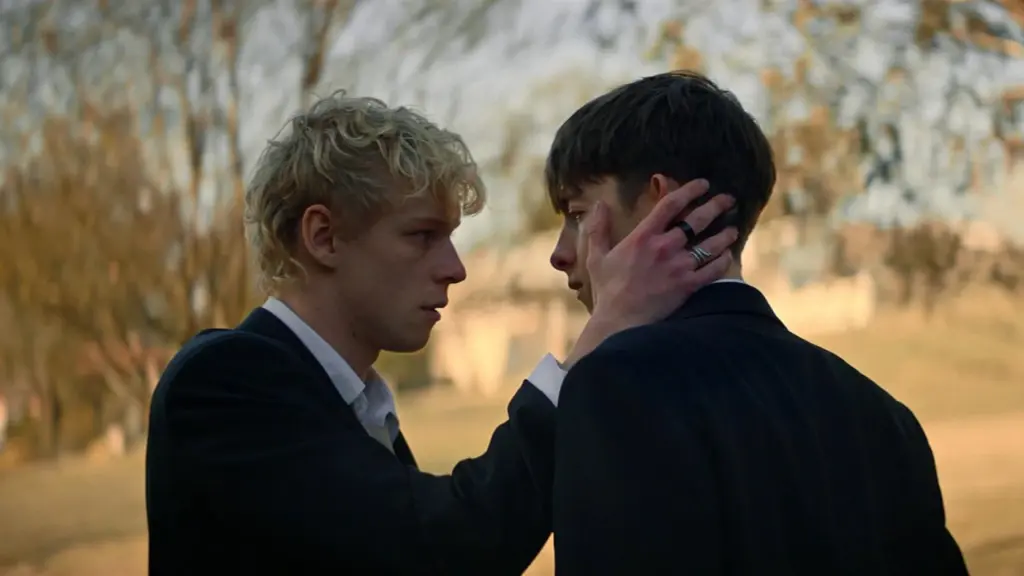
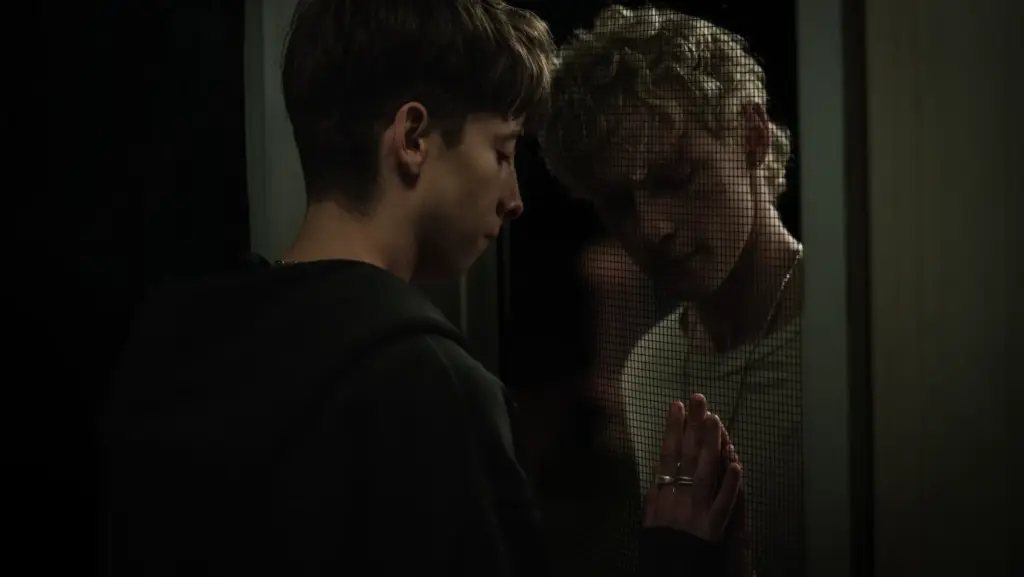
Naim and Ryan, played by Joe Bird and Stacy Clausen, are two teenage boys who fall in love while living in an unnamed religious town. Because of their restrictive community, their love story must be kept secret. When the elders discover the boys’ relationship, they turn to a mysterious man routinely used by the community to “cure” homosexual youth. His cure comes in the form of an entity that takes the shape of the person the “diseased” desire most. An allegory for conversion therapy, religious shame, and homophobia, the invisible creature stalks the teenagers by shifting into the person they love most, turning human connection and intimacy into a source of constant and inescapable terror.
What I found most distressing about this movie is that the parents know the kind of torment they are inflicting on their children. They are fully aware of the creature’s violent nature and that it could end up killing them. It is extremely hard for me, even as a cis straight woman, to fathom how devastating and harrowing it must be when your parents, the people who are supposed to love and protect you most, who should be the first in line to accept you as you are, are the ones trying to erase your nature. I simply cannot wrap my head around this level of intolerance and hatred toward the LGBTQIA+ community, let alone toward one’s own flesh and blood.
This maternal betrayal is portrayed perfectly by the cast. It’s the first time I’ve seen Mia Wasikowska play a mother. While she brilliantly brings to screen the blind ignorance of a brainwashed, religious parent, it is also the first time I’ve absolutely hated her character. I found her completely unbearable in the scene where she tells Naim that he needs the fear she had brought upon him to survive after she is gone.
For those who have already seen the film, Leviticus features one of the most beautiful and realistic endings I’ve ever seen in either the horror or romance genre. Hollywood has this obnoxious tendency to magically erase any problem or trauma so that their movies will have that “perfect happy ending.” In reality, that rarely happens. That’s why, when I watch movies like Leviticus, I’m so grateful that there is a movie industry outside of Hollywood.
While many critics found the climax of Leviticus to be underwhelming, in my opinion, its quiet resolution is its greatest strength. It mirrors the beautiful, bittersweet last scene of Eternal Sunshine of the Spotless Mind, which is one of my favorite endings of all time. Just as Joel and Clementine accept each other’s deep flaws with a simple “Okay,” Naim and Ryan accept that they live in a deeply flawed society and that the entity will be a permanent fixture in their lives.
Just as Joel and Clementine chose to be together knowing they would end up hurting each other again, Naim and Ryan choose love despite the guaranteed continuous struggle coming from the hatred and intolerance of the world around them. Sadly, most of the time, the monster cannot be slain, and you have to learn how to survive and live with it walking side by side with you. That, to me, is braver, more honest, and more realistic than any clear-cut “happy ending.”