All Too Well: The Short Film and the Hysteria
Considering the runtime, I expected each scene to hit harder as opposed to a series of montages and vignettes.
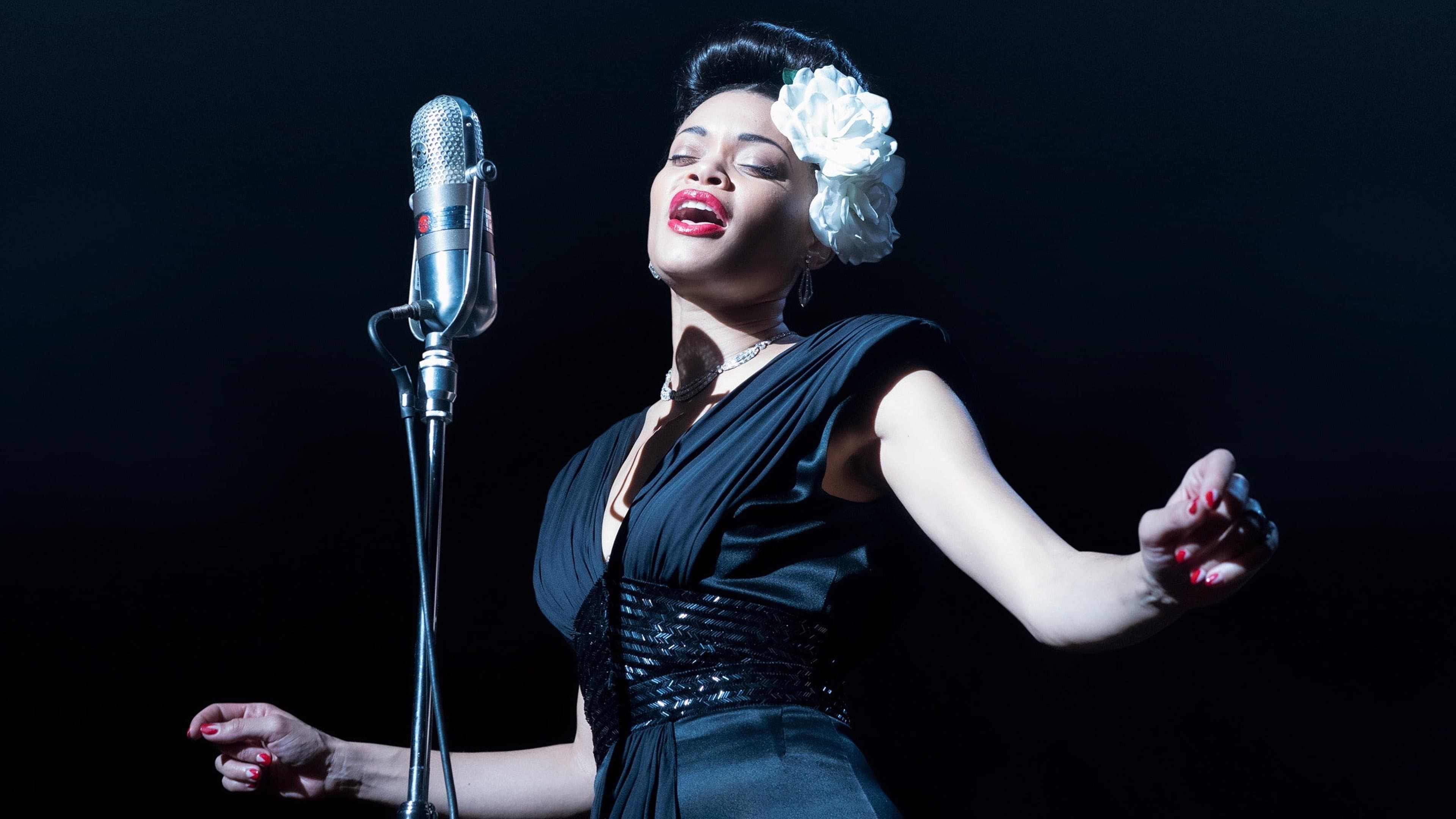



Lee Daniels’s Billie Holiday biopic The United States vs. Billie Holiday was released on February 26th, 2021, and my immediate reaction to it was one of discomfort. I have been reflecting on this ever since.
The film tells the story of (as the title suggests) Billie Holiday and the legal persecution for “drug use” she faced from the Federal Bureau of Narcotics as a result of singing the song “Strange Fruit” after threats from the government to stop performing it. The film is imperfect, but its imperfections are not what I want to focus on because, firstly, I feel others have sufficiently taken this film to task for its shortcomings, (I recommend reading this review by K. Austin Collins for Rolling Stone) and second, I believe these imperfections say more about the ways in which we use film to remember the past than it says about this film in particular. The general consensus I’ve gathered on this film from critics is that though many of the performances on display are stunning, namely Andra Day as Holiday, the directing and editing lack the focus necessary to make the film a cohesive biopic. What I ended up questioning about the film was not what could have made it stronger, but rather why it matters that this film was made now, in our current culture. If one assumes the film was made to create a highly nuanced representation of Holiday and her work or represent the historical truths of her life, then the film falls woefully flat. When considered alongside recent releases such as MLK/FBI and Judas and the Black Messiah, however, the questions I believe we are collectively grappling with is how do we reckon not only with the racial violence committed by the United States government in the past, but the way that past is still our present.
The film begins with text that reads “In 1937 a bill to finally ban the lynching of African Americans was considered by the senate” and after fading out, new text appears that reads “It did not pass.” After the two-hour run time, the film ends with text that reads “In February 2020, the Emmet Till Anti-Lynching Act was considered by the senate” and then, mirroring the beginning of the film, reveals that “It has yet to pass.” These two facts placed side by side paint a rather clear picture of how our legislature’s failures are ongoing and how the struggle for civil rights exists as much today as it did in the ’50s and ’60s. How are we reckoning with this, however? Is it enough for filmmakers to represent the ways in which the law has harmed Black people in the United States, in all of its violence, and hope that the guilt it inspires will change the hearts and minds of the public? Perhaps asking if this is enough isn’t even the right question. Maybe what we should be asking ourselves is if this depiction of the United State’s violence is even responsible.
In his review for RogerEbert.com, Matt Zoller Seitz writes that:
The word that I believe gives us not only the most insight into why this film did not effectively represent Holiday but a potential way to understand how we can resist these ineffective representations is “pornographic.” The word suggests a depiction that is done first and foremost in the service of gratifying audiences, so what would it mean to make a film that is created with the directorial imperative of serving the memory and legacy of the subject being depicted? Is it possible that there is a better way to grapple with the wounds created by governmental violence than by seeing a historical figure who has been the subject of said violence engage in a fictionalized romance with a remorseful government employee? Are pain and suffering the only way we can extend empathy to Black historical figures, or could depictions of talent and joy be more effective alternatives?
I believe that the moment we are in historically, which has been marked by instability and likened to the struggles of the past, calls upon us to act on our desires to reckon with that past in order to find answers for the present. This coveted search for answers, however, as this film and the criticisms it inspires suggest, cannot be at the expense of depicting the lives of historical Black women in ways that focus solely on vivid depictions of trauma and suffering in order for mainstream audiences to find a resolution to the guilty conscience of a nation. I cannot think of representations that focus on recreations of violence on screen as accomplishing very much beyond recreating the violence it seeks to condemn. Audiences, critics, and filmmakers should, first and foremost, critically understand the political and social implications of representing a figure and what the filmmaker's representation and the audience’s viewing do for the subject. This is true whether the figure is historical or fictional, and especially when they are of a marginalized identity. It’s time that filmmakers take responsibility and consider the effects of depicting violence on screen, and perhaps consider what alternatives exist. I hope that in doing so, more films will emerge that focus on depicting stories for the good of their subjects.
We must take seriously the discomfort viewers have around movies such as The United States vs. Billie Holiday when they depict violence in ways that do not serve its subjects nor the culture it is produced in. Acknowledging this visceral discomfort allows us to know that what is being done now in many works within media isn’t an effective way of representing marginalized people (especially those who exist within the intersections of marginalized identities) and that new ways of approaching representation must become more widespread. Perhaps for audiences for whom this discomfort is not immediately felt, researching media theory can be used to facilitate conversations around the art we consume and the world around us. Yet, especially in a time when there are more widespread discussions on topics such as the male gaze (Laura Mulvey) and intersectionality (Kimberlé Crenshaw), it is essential that we take the responsibility and time to accurately learn the history and meanings of these terms beyond their flattened existence as buzzwords. This learning is imperative if we are to more effectively think about not just the violent content of the movies we watch, but how the very act of watching itself can be violent.
The United States vs. Billie Holiday is available to be streamed on Hulu.
As the title suggests, this film depicts a heartbreaking battle: governmental abuse against the Black Civil Rights movement in the wake of Lady Day’s song “Strange Fruit”. The telling of her story through the eyes of Lee Daniels lends a more artistic tone than biographical one but the nature of her legacy rings true despite some flaws in its execution.
The actualization of the characters and their relationships supersede the realization of the plot in almost every way. Daniels and his cast and crew really have dedicated themselves to paying homage to the impeccable Black talent that came before them. Daniels' commitment to portraying a love story that is messy and real strives to fill the gap he feels is missing in romantic Black narratives. Andra Day, as the nominations pour in for her performance, absolutely must be acknowledged as the reason the world of this film turns. She completely transforms her speaking and singing voice, as well as her appearance, to embody Holiday. The vulnerability and tenacity she brings to her interpretation of the icon resonates days- weeks- after initially watching the film. She compels in every possible way, and delivers all the pain and trauma of Holiday’s experiences.
The United States vs. Billie Holiday adopts an empathetic gaze at how Holiday was a victim of the racialized war on drugs. The central plot revolves around the Federal Narcotics Bureau targeting Holiday’s drug addiction as grounds for arrest and prosecution so she could no longer use the stage as a platform for Civil Rights activism through her music. Soon, the film becomes entirely about drug use and her continued engagement with abusive men, only occasionally circling back to the impact that “Strange Fruit” had on American society in the 1950’s. While attempting to thoughtfully layer multiple stories, Suzan-Lori Park’s screenplay pulls at too many threads. The information being so poorly organized results in a simultaneously chaotic and aimless territory in which the plot is allowed to unfold. Because of this, many intriguing details and opportunities for development get lost in the shuffle. These aspects do, at times, make it a struggle to stay invested; but sharp, painful moments of suffering (often in the form of unadulterated, explicit violence) ground you as an active audience member- and make your blood run cold.
What separates this film from other music biopics is that it really tries to focus on Billie Holiday not only as an era-defining talent, but as a fervent activist. The use of her carefully crafted art was how she spoke about her pain, her biting lyrics expressing her suffering over the unspeakable violence, death and mistreatment of Black people that took place in the very country that revered her. The journey from beloved blues icon to being silenced and brutalized by the government is the story that gets disregarded, but the story that has so much more to give. If it had succeeded in strengthening that focus, telling the story that “Strange Fruit” itself aims to enlighten in a more disciplined way, it would have been a history-making, forcible film.

Billie Holiday spent much of her career being adored by fans. In the 1940s, the government targeted Holiday in a growing effort to racialize the war on drugs, ultimately aiming to stop her from singing her controversial ballad, "Strange Fruit."

Lee Daniels
Director

Andra Day
Billie Holiday
Trevante Rhodes
Jimmy Fletcher

Garrett Hedlund
Harry Anslinger

Leslie Jordan
Reginald Lord Devine

Miss Lawrence
Miss Freddy

Adriane Lenox
Mrs. Fletcher

Natasha Lyonne
Tallulah Bankhead

Rob Morgan
Louis McKay

Da'Vine Joy Randolph
Roslyn

Evan Ross
Agent Williams

Tyler James Williams
Lester 'Prez' Young
Considering the runtime, I expected each scene to hit harder as opposed to a series of montages and vignettes.
Hokum is an enjoyable horror film that will probably get a little under your skin, but it isn’t the tour de force that you might be expecting.
'My Big Fat Greek Wedding' is a franchise built on inclusive storytelling.
Armed with a $400M budget and Tom Cruise’s death-defying stunts, Mission: Impossible – The Final Reckoning delivers pulse-pounding action even as its plot falters. From underwater silence to high-altitude madness, it's pure adrenaline powered by old-school movie magic — but is this really Ethan Hunt’s final mission?
“To be universal, you have to get specific”: while the film does not attempt to provoke discussions about queerness or race, those watching closely may find something resonant in Sorrentino’s love letter to the Naples of his youth.
Behind all the action, 'Space Sweepers' is a surprisingly heartfelt and progressive story about building community.