
'Joker' (2019)
Joker is a compelling, character-driven, psychological tale that has a message behind the madness.
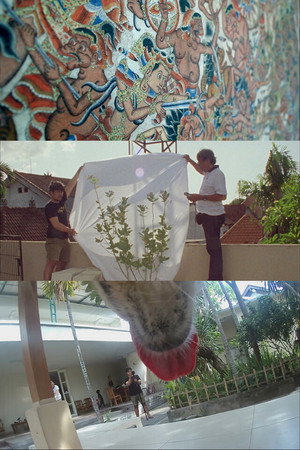


Filmed in Sanur, Bali, The painter-tailor is a family portrait. Drawing together multiple perspectives through the use of 16mm film and HD video that were made by the artist with her relatives and a family dog, the story revolves around the last painting created by Sriwhana Spong’s grandfather, the artist and tailor I Gusti Made Rundu (1918–1993). It is the only work that the family still owns and evokes memories of his life and role as an artist. Setting the work in the surrounds of the family home and alongside photographic albums, the film reveals the social, economic and political contexts that influence art-making. Sriwhana prompts us to think not only about the ways that we make art and images, but also their distribution and the act of looking. Through this lens we can see the effects of colonization in Indonesia and the subsequent impact on traditions of art and image-making.
Joker is a compelling, character-driven, psychological tale that has a message behind the madness.
The Olivia Wilde renaissance is upon us.
“Nobody 2” is the kind of sequel you expect to roll your eyes at—and then end up grinning through the whole thing. Bob Odenkirk proves once again that an ordinary-looking guy can be the most entertaining action hero alive, battling cartels with harpoons, deep fryers, and pure chaos. Toss in Sharon Stone as a delightfully over-the-top villain, and you’ve got 89 minutes of wild, joyful mayhem that reminds you why going to the movies is just plain fun.
If Top Gun needed to say it, Top Gun: Maverick makes you feel the need... the need for speed.
One Christmas Eve, after a sudden snowstorm, a group of teenagers will discover how their lives will change forever.
The film is a documentary focusing on heavy metal in the late 80s and tackles topics like drug addiction, alcoholism, sex, masculinity, and of course, rock and roll. However, this didn’t feel like any documentary I’ve ever seen before.