

'Shakti': A Survival Guide
Shakti’ is a survival guide for women all over the world.
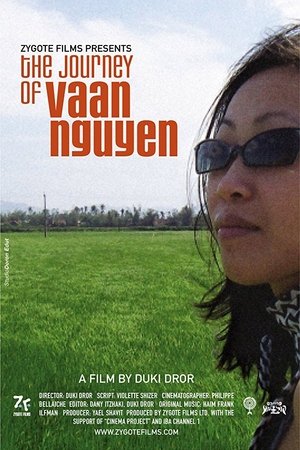


Hoiami Nguyen never imagined that he will end up so far from his home village of Bong Son in central Vietnam. Political circumstances and the roulette of life have washed him to the shores of Israel. The penniless Vietnamese refugee became a father of 5 Hebrew speaking Israeli daughters. His daughter - Vaan, describes her parents' ordeal using a razor sharp language in her blog. She feels trapped in circles of identity which will never meet. Caught between her wild and stormy Israeli spirit and the expectations to be modest and obedient Vietnamese at home, there is unbridgeable abyss. When her father returns to his family in Vietnam, Van finds herself absorbed into his tragic story - a cruel tale of loss and survival. Hoimai's dream of return sends Vaan to look for a brighter future in the new-old country. She joins him in trying to reclaim the lands of the family, in the remote village at the heart of the Vietnamese jungle.
Shakti’ is a survival guide for women all over the world.
It's not love. It's Obsession. The hook of this movie is the tension between wanting to be loved and the fear of being all-encompassed by that love. It plays on men’s typical (though certainly not universal) inner-conflict
When they’re young, they’re America’s darlings but, when they become teens and adolescents, they’re instantly perceived as harbingers of immorality. They’re Lindsay Lohan, Macaulay Culkin, Justin Bieber, and Britney Spears. But, despite what many media outlets, politicians, and the general public may think, they are human beings above anything else. The new Billie Eilish documentary, Billie Eilish: The World’s A Little Blurry, proves this — showing the trials, tribulations, and humanity when growing up with all the world’s eyes on you.
The social issues The Half of it takes on are handled well, between the antagonization brought on to Ellie for her race and the conflict that arises from her being gay. Both aspects of her character are built up over the course of the film and don’t seem abrupt or rushed. The film shows racism towards Ellie and her and father in varying levels, from having her schoolmates specifically address her as "Chinese girl” to the fore mentioned way her Dad is treated due to language barriers. The same can be said about Ellie being a lesbian. While she never truly “comes out” in the narrative, that does not undermine her journey of self-discovery from being meaningful. These ideas aren’t thrust upon the viewer in a preachy manor, the scenarios that occur feel believable given the rural setting. The film presents watchers with problems whom those like Ellie may face, and leaves us to sit with them and reflect.
A Girl Walks Home Alone At Night, though its feminism may be unintentional, cannot exist without its focus on women reclaiming power. The movie is feminist by definition, even if Amirpour didn’t write it with that in mind. A Girl Walks Home Alone At Night is mesmerizing, poetic, and stunning, both for its portrayal of feminist ideas and its powerful story that is both horrific and subtly romantic at once.
Kat Wahlen’s The Whiteboard tells, or rather shows, a delightful love story between two young women who meet in detention.