










Representation Matters: Diverse Characters and Voices in “The Amazing World of Gumball” and “The Epic Tales of Captain Underpants”
Inspiring and diverse animated series for the whole family.

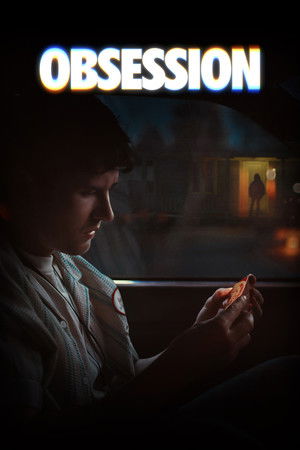


Curry Barker’s film, Obsession, soared in success this past May, leaving everyone who has watched it in extreme chills and disturbance. And taking it to new levels of why men are always the root of horror films, even when they try not to be. This film easily falls into my favorite genre, along with Fatal Attraction and Gone Girl, where men famously don’t get to “have their cake and eat it too”. In these specific types of movies, we witness the lead female character acquire these psychotic, destructive traits because of the disloyal, traitorous actions of their male love interests. There is nothing more horrifying to me than a man getting what he wants at the cost of others but facing no consequences, which is why Obsession did not disappoint.
The film is centered around a friend group of young adults, but specifically captures the relationship between the two characters, Bear (Michael Johnston) and Nikki (Inde Navarrette). At the beginning of what later becomes the most unthinkable case scenario for these two, we are first introduced to Bear, who right off the bat emphasizes his strong romantic feelings for Nikki, which she is unaware of. The character goes through mental trials and tribulations on how he is going to propose his feelings to her, and eventually ends up completely missing every opportunity. When he unfortunately blows his last chance, but still has Nikki in his presence, Bear secretly pulls out a “One Wish Willow” in hopes of officially winning her over. And out of everything he could’ve wished for, he ends up undoubtedly wishing for “Nikki to love him more than anyone else in the world”. Surprisingly, Nikki then turns around and is immediately showcasing that she's been in love with Bear all this time, which we then figured out that the wish has actually worked. Since Nikki has only ever expressed to Bear that she has seen him as a friend, it left Bear in confusion at first with the very sudden change of heart, and then he eventually became thankful that his very passionate feelings are being forcibly reciprocated. But as Bear’s hopeless romantic days have come to an end, the horrors have begun.
After their short-lived “honeymoon phase” of being a compelled new couple, Nikki starts to become unrecognizable. From the confident, driven, self-assured girl she was at the beginning of the film, we quickly start seeing a side of her that is the opposite of the Nikki we knew, and Bear knew. This isn’t just her being under a love spell, even though she actually is, but it starts to look like somebody entirely different is entering and leaving her body. Bear becomes thrown off by the person that he wished her to be, and as he slowly pulls away, she attaches herself more. She instantly develops insanely unhealthy, obsessive feelings towards Bear, and this is where the film starts to take very unexpected turns. In the beginning of these extreme acts, we witness Nikki duct-taping their entire apartment door shut when Bear had to leave for work, and later on in the film, murdering their best friend, Sarah, who could’ve been a threat to their relationship.
Viewers of the trailers for this movie, and many viewers of the movie itself, probably read the title and first thought of the supposed mental illness reflected by the character Nicky. But this article is primarily concerned with the mental illness of the main character, Bear. Because analyzing the consequences of his disturbances reveals something far more disturbing about new horror-hit Obsession.
The hook of this movie is the tension between wanting to be loved and the fear of being all-encompassed by that love. It plays on men’s typical (though certainly not universal) inner-conflict between the desire for the fulfilling aspects of a romantic relationship and their fear of the responsibility that comes with one. That’s what gets men’s butts in seats: a horror film based on a fear they’re loath to even admit to themselves that they have. That would be sufficient to make a scary movie.
But very early in the film, we get one of our very few explicit recognitions of Bear’s mental difficulties. That is, when he opens his medicine cabinet, and a slew of over twenty pill bottles litter the shelves. They appear to be filled too, implying this is less due to sloppiness and more due to an abundance of prescriptions. Throughout the film, we get almost no hints that Bear suffers from any physical conditions, implying that all of these pills are prescribed to treat something beneath the surface.
But what could it be? Nobody ever says that Bear suffers from anything, and indeed, his symptoms don’t match with anything readily apparent. But, in fact, they do. Because the title of this film doesn’t refer to Nicky. It refers to Bear. Whether intentional or not, the thesis of this film is that Obsession is the mental illness. A mental illness that is decisively cast as a men’s mental health issue.
Contrast Bear and the character Sarah. It’s not a spoiler to say that Sarah has an affection for Bear. But their affections are cast in two completely different lights. Sarah allows Bear to pursue his own crush. Sarah allows Bear to make the first move. Sarah isn’t nearly as nervous as Bear is to Nicky. Sarah’s affection does not originate in fear. Sarah’s affection is not controlling. Bear, on the other hand, gets jealous, plots his first move before Nicky has shown any signs of affection, trembles at the fear of failure, and as the central plot point of the movie, imposes her affection on him without her consent – even if, admittedly, he doesn’t see the chances of success as all too likely, he still takes a chance on doing something that would violate Nicky’s autonomy. Bear’s form of love is toxic. Because it’s not love. It’s Obsession.
Don’t get me wrong. Bear is still the protagonist. He is well-intentioned. As soon as he realizes his mistake, he does everything he can to fix it. This movie isn’t asking men who have crushes to kill themselves. (or is it?). I don’t think Curry Barker, a male director, is out to condemn men as irredeemable. If this article is correct, I think Barker is sending a call to get help. If you see yourself in Bear, recognize the toxic traits that you have and seek to improve yourself. That way you can be a better person and pursue a more symmetrical relationship.
This movie is scary. Partially because of jump scares and gore. But mostly because it asks men to be introspective while stressing you out. For women, it might even be scarier – showing a dark reflection of men they may have in their lives, just beneath the surface of dangerous. This film isn’t just a horror movie, it’s a cry for a revolution in how men pursue relationships.

After breaking the mysterious "One Wish Willow" to win his crush's heart, a hopeless romantic finds himself getting exactly what he asked for but soon discovers that some desires come at a dark, sinister price.
Inspiring and diverse animated series for the whole family.
Life may find a way, but is it worth testing its fierceness and how far it will go?
"Well, the film industry is completely sexist and completely class-biased." A closer look at Lynne Ramsay's impressive body of work.
The film follows the biblical story of Moses, from his time as a prince of Egypt, to a leader for the people of Israel. It’s a film that works brilliantly in animation, and is one that both children and adults can; enjoy despite its religious contexts, it is friendly to general audiences.
An action-packed adrenaline rush with a diverse cast that delivers evocative storytelling.