





The True Confessions of an Invisible Girl
The clever but socially-awkward Tetê joins a new school, and she'll do anything to fit in.
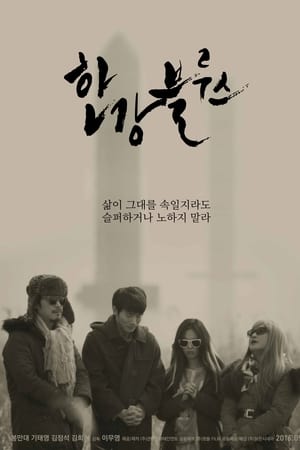


Catholic priest, Myeong-jun, climbs up one of the bridges crossing the Han River to commit suicide after learning that a woman who loved him in the past, has killed herself. Then Jang-hyo, a homeless person, tells the man on the bridge that he bet with other homeless people that the suicide attempt will fail. Myeong-jun jumps into the river anyway. But Jang-hyo rescues the suicidal priest and lets him join the homeless community. Chu-ja, a transgender homeless person, is on bad terms with his daughter. When he hesitates about attending his daughter’s wedding, the two men visit the daughter and ask her to forgive her father. Another homeless person, Maria goes to a soup kitchen at a Catholic church, where she sees the beautiful nun Angela. Maria, who was pregnant at the time, gives birth to a baby later and decides to remain at the church to be a sister. Despite their own painful history, each of these four people finds a way to reconcile with the past.
The clever but socially-awkward Tetê joins a new school, and she'll do anything to fit in.
The trouble with Yara (2021) is that in its attempt to tell the whole story, it struggles to tell a consistently engaging story.
'Little Woods' rethinks the Western genre and examines the misogyny and classism inherent in the healthcare industry.
The beating heart of this film is the relationship between Anna Osborne and Sonya Rockhouse.
Monster's plot is built around Steve Harmon's false accessory to felony murder accusation, and the anxiety and desperation experienced by him during incarceration and the corresponding trial.
With The Father, writer-director Florian Zeller- who wrote and developed the play upon which the film is based- pulls no punches as he confidently makes every effort to put the audience in the mind of someone whose grip on reality has all but vanished. It’s a dazzling testament to Zeller’s abilities as a director as he makes his first transition from stage to film appear as if he’s been working behind a camera his entire career. The dialogue he fashions with co-writer Christopher Hampton, along with the work of production designers Peter Francis and Cathy Featherstone, collectively makes the downward spiral of dementia startlingly tangible, doing so in a way that can be comprehended by everyone except the person it directly affects.