






Looking Behind the 'Z-O-M-B-I-E-S' Trilogy
Our trilogy at Seabrook High School starts with a rivalry between zombies and humans who eventually come together.
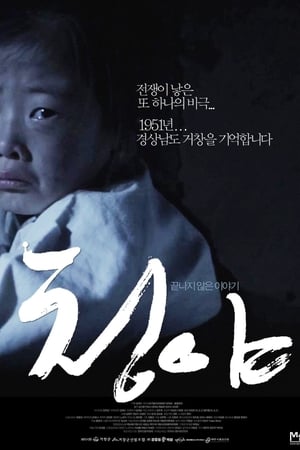


Dong-seok Cha, a documentary producer, made a documentary about 'Geochang massacre in 1951' for its 60th anniversary, but it is not selected as a broadcasting program for its lack of impact. So, PD Cha is disappointed until he meets Ji-yoon and her grandfather Lee, who was a soldier at the time of 'Geochang massacre in 1951', and has lost his memories by disease. Ji-yoon and Lee come down to Geochang to find a girl in a picture, which Lee has kept for his life. PD Cha thinks that it is a great chance to take impact on the documentary by filming him.
Our trilogy at Seabrook High School starts with a rivalry between zombies and humans who eventually come together.
The film is a documentary focusing on heavy metal in the late 80s and tackles topics like drug addiction, alcoholism, sex, masculinity, and of course, rock and roll. However, this didn’t feel like any documentary I’ve ever seen before.
A review of the Ryan Polomski documentary featuring the story of Basketball star Raymond Lewis.
With The Father, writer-director Florian Zeller- who wrote and developed the play upon which the film is based- pulls no punches as he confidently makes every effort to put the audience in the mind of someone whose grip on reality has all but vanished. It’s a dazzling testament to Zeller’s abilities as a director as he makes his first transition from stage to film appear as if he’s been working behind a camera his entire career. The dialogue he fashions with co-writer Christopher Hampton, along with the work of production designers Peter Francis and Cathy Featherstone, collectively makes the downward spiral of dementia startlingly tangible, doing so in a way that can be comprehended by everyone except the person it directly affects.
In Saudi Arabia, a little girl (Wadjda) is told she can't have a bike because she's a girl. Wadjda struggles to obtain a bicycle to race her friend, Abdullah, due to the gender inequality and cultural norms of Saudi Arabia.
'Blonde' commits a relentless assault on the autonomy of Marilyn Monroe, reducing the icon to nothing more than a victim of the director's whims.