“Other Mommy” and Deuteronomy
This film’s ambition is betrayed by its lack of substance.


The Super Mario Galaxy Movie comes on the heels of its billion-dollar grossing predecessor, and seeks to do absolutely nothing other than repeat its success. In this, the film is eminently effective. If you have seen the previous film, you can expect something extremely similar in this package. That is, a barrage of references to Nintendo intellectual property wrapped in a plot that provides the thinnest layer of emotional payoff for the characters. Compelling development is not completely absent from this film, but it is present in the same way that calcium is present in Nutella. In both contexts, one literal and one metaphorical, the end-product should be much more well-known for the sugar content.
So far, what you just read surely sounds like a negative review. But, plot twist, this is a positive review, at least marginally. That is because of the interplay between the content of the film, the target audience, and the reasonable expectations that should arise as a result. It is no secret that the target audience of both The Super Mario Galaxy Movie and its source material is composed primarily of two groups: children and hardcore Nintendo fans. Of tertiary, but significant, concern is the parents who accompany the children. In any case, no one is expecting Oppenheimer.
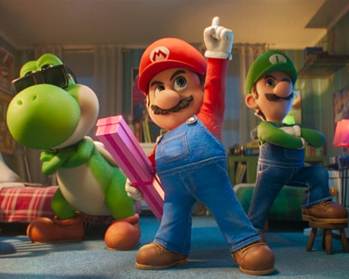
Demanding that a movie like this conform to the standards of any other groups can be viewed as an expression of privilege. Such criticism assumes that the viewpoints of the speaker should be taken into account in all cinematic spaces, not just those in which the speaker should be reasonably expected to be in attendance. It directly places the expectations of the speaker above those of the intended audience. This is not to say that it would be wrong to craft a film that appeals to a broader audience; that would result in a superior film. What it is to say is that, just because the film doesn’t appeal to you doesn’t mean that the film fails.
Whether it be Warner Brothers’ early animated shorts that initially appealed to adults more than children, or it be Disney and Pixar’s broad library of films that appealed broadly to families rather than directly to children, the average adult animation viewer has grown accustomed to being serviced by a product that they should not reasonably be expected to be served by. A proper viewing of The Super Mario Galaxy Movie should be accompanied by a refreshing of our expectations, reminding ourselves that this is in fact the same studio that brought us Minions, which was incredibly successful in part because it understood what children want. Besides, The Super Mario Galaxy Movie is far less offensive to adult sensibilities than Minions.
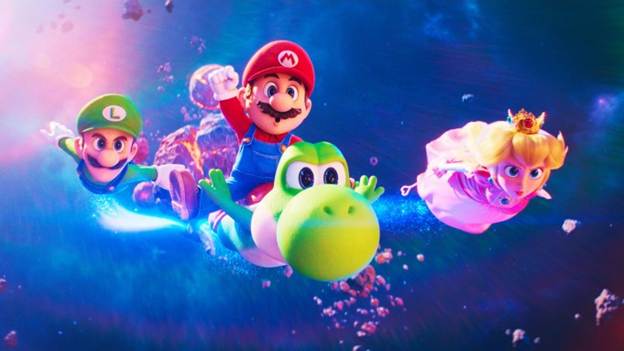
Drawing on a source material that primarily features European characters, and has had a problematic relationship with female representation, The Super Mario Galaxy Movie doesn’t have a great opportunity to promote on-screen diversity. Nor was this ever seen as a primary mission of the film. That said, The Super Mario Galaxy Movie does little to address this. The biggest success is the newfound strength of the character Princess Peach, a far cry from her subordinate status in the video games. Princess Rosalina, on the other hand, essentially takes the role of Princess Peach in being the damsel in distress for most of the film’s runtime, which is a harsh downgrade from her role in the original Super Mario Galaxy games. Any attempts to address ethnic diversity, or the bizarrely complicated history of Birdo’s gender identity (no, really) are saved for internet message boards.
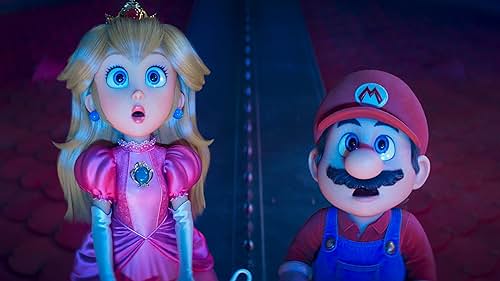
The animation in this film is top-notch, blending detail with vibrant colors and compelling CGI models. The star-studded voice cast delivers handily on the comedy, but leaves much on the table when it comes to other emotions. The music is extremely bombastic and usually works, especially when it is used to create a rush of nostalgia, but sometimes can be overbearing. The plot is split into multiple parts across a ninety-eight-minute runtime and features a myriad of characters, which leaves the script feeling paper-thin. Illumination would not be mistaken to make the third film in this series a two-hour affair, allowing for more development of the characters. This was most sorely needed with Bowser and Bowser Junior, who presented a very compelling character dynamic in the early part of the film that was never capitalized upon.
The Super Mario Galaxy Movie exists in a duality: in this world where Nintendo exists, it is a blast for children and adult gamers alike, with numerous flaws but ultimately anchored by its respect for the source material. That is the world we live in, and it earns a positive score in reality. In a hypothetical world where Nintendo did not exist, it would be a relatively generic, over-stuffed film that almost feels like it was generated with artificial intelligence. Choose whether you watch this film with that dynamic in mind.