The Bizarre World of PN & Friends Episode 30: Reboot
“Reboot” can be crass and has much room to improve, but with investments of time and care, could flower out of the seed of a vision.



A24 films form a movie fan’s ultimate Venn diagram: one circle represents masterpieces, one circle represents divisive films, and a whole lot of their movies, from Hereditary to Civil War to Eddington, fall in the space where the circles overlap. The Drama is no different. This is not a film, it’s a drop tower. A drop tower that you don’t get off of for the vast majority of its 106-minute runtime. Without relying on any action set-pieces or visual spectacle, this will make your heart race from the word “go” until you finally reach the finish line.
The Drama follows a couple as they prepare for their wedding, only for the bride-to-be to drunkenly reveal a dark secret about her past that drives a wedge between them. Revealing that dark secret here would ruin the incredible moment of realization; not revealing it would misrepresent how compelling this film actually is. This article chooses to keep a secret. This falls under the same umbrella of films as Sinners and Sorry to Bother You in that telling you what the film is about could taint the experience.
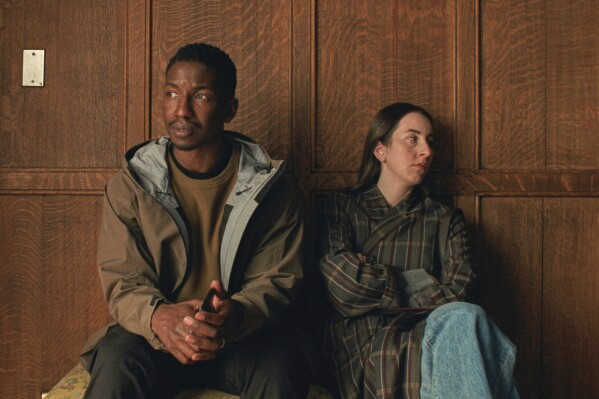
Where the film only partially reaches the heights of Sinners and Sorry to Bother You is the diversity of its cast. Our female lead is played by Zendaya, who is of mixed decent, and the male lead’s best man is played by Mamoudou Athie, a Mauritanian actor. The prevalence of these two actors is greatly appreciated, but the rest of the film is awash with light-skinned actors. You might not even be able to see a minority cast as an extra in this film.
The film is very strong in terms of gender diversity, with women arguably playing a more prominent role than men, though it elects to not openly present LBGTQIA+ representation. Where the subject of diversity is most complicated for the film is disability. Zendaya’s character is differently-abled in the sense that she is partially deaf, though the reason why she is partially deaf, although compelling from a story perspective, detracts from that opportunity for strong representation. Even more interestingly, the character of Rachel, played by Jewish actress Alana Haim, has her own dark secret involving a child referred to her as “slow.” This dark secret takes a huge backseat to Zendaya’s, which, intentionally or not, serves as a commentary on how neurodivergent experiences are undervalued in society.
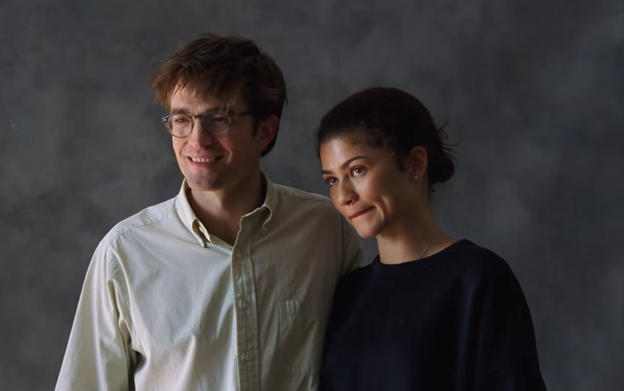
The Drama will not please everyone. It sits very adjacent to films that make you embarrassed for the main characters, or in other words, make you feel “cringey.” These sorts of moments are littered throughout the movie. But, unlike other films, here those embarrassing experiences feel like genuine expressions of the character’s relatable faults and generate empathy, a word that appears prominently in the film. That is appropriate, since the moral center of this film is ultimately that exact thing: empathy. The Drama challenges us to consider how the differing life experiences of our peers, even our closest loved ones, can shape people into unrecognizable forms, and asks us to differentiate between to what extent they are culpable and to what extent they require our compassion. That is a difficult question to answer, especially given the subject matter of the film, but ultimately an answer is delivered. Spoiler alert, but mercy and grace overcome all in the end, and it made this critic feel just as warm inside as the restaurant critic in Ratatouille when he is reminded of his childhood.
Overall, The Drama is an excellent tour of discomfort and emotional conflict, decorated with excellent editing choices and superb performances by its cast. While the film doesn’t exactly deliver a full thesis on any of the subjects it tackles, this appears to be by design, as it invites further conversation, one that we can incorporate our own difficult life experiences into. This is only the fourth feature outing by Norwegian director Kristoffer Borgli, and I am very excited to see what he does next.