“Digger” or, How I Learned to Stop Worrying and Love the Way You Lie
Digger is a smart film, one that takes what could have been a “seen it before” message and gives it new life.



This year’s Best Picture front-runner, La Bola Negra (also known as The Black Ball in English), is overwhelming. It is in Spanish, takes place in Spain, and was a co-production of Spain and France. It is two-and-a-half hours long, and tells three interconnected stories. Whereas it was popular in the silent age to make films that were a collage of thematically related stories, such as Fritz Lang’s Destiny, the stories of La Bola Negra are actually connected in terms of their content.
These are not the only distinguishing characteristics of La Bola Negra. Each of the main characters of the three stories is a young gay man, and that is not by coincidence. This movie, in part, is intending to contrast the way that gay experiences tended to play out in three radically different settings, while weaving in numerous other social issues and illustrating how they are all connected (just like these stories).

Probably the most stunning element of La Bola Negra is its cinematography. Gris Jordana captures absolutely beautiful imagery here, and some subtle choices greatly enhance each scene. This feels like a high-profile production directed by a true artist. Of course credit should then be given to Javier Calvo and Javier Ambrossi, who directed the film and wrote it alongside Alberto Conejero. There is one sequence in particular involving a climb up a snowy mountain that stands out from the rest of the film, purposefully so, and is so moving that it might bring tears to some eyes.
But the cinematography shines the most, along with the sound design, in the opening scene. It is bound to catch audiences completely off-guard, and makes extremely good use of the movie’s aesthetics. That opening sequence has more to say about warfare than most war movies can say in their entire runtime. What happens in that scene is so shocking, and the reaction of the characters so disturbing, that it makes a statement so loud the subtitles become briefly unnecessary.
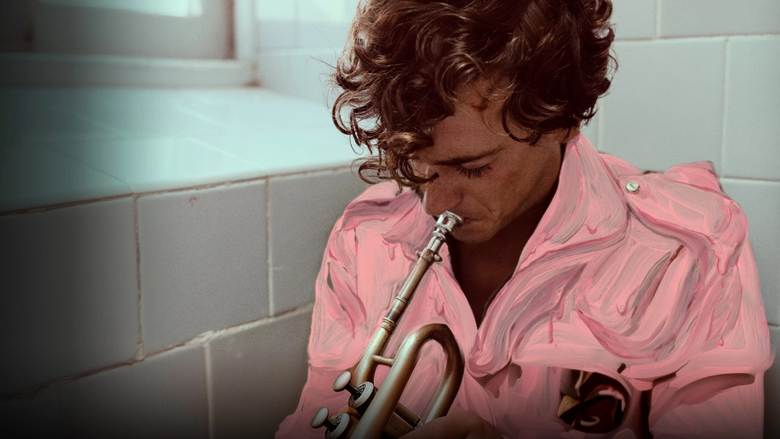
The cast of La Bola Negra is stellar, despite being so gigantic. Not a single performance feels like it’s phoned in. Everyone acts in a genuine, authentic manner, and that is almost entirely without anything that could be characterized as “over-acting.” That is another indication that this film is expertly directed. This film is extremely likely to be up for directing and casting awards during awards season.
But the writing also deserves praise. Choosing to interweave three different stories, none of which are action-oriented, was about as bold as it gets. But the authenticity of the dialogue and the slow but expertly-paced revelations makes the story so much more gripping. It also helps that the film feels incredibly prescient. Set against the Spanish Civil War where members of the same country were ending each other’s lives over ideology, it is one of several recent films to explore such a type of conflict, and echoes some of our fears regarding current polarization. It speaks strongly in amplifying the voice of minorities caught in the crossfire.
La Bola Negra is not a conventional crowd-pleaser. It is an intimidating task. This is not a masterpiece in the way that the best classic rock albums are. This is a masterpiece in the way that an album from a genre you have never experienced is. This is less Ben-Hur and more Doctor Zhivago. But between its gorgeous cinematography, its approach to its subject matter, its expert direction, its stellar cast, and its impressive screenplay, La Bola Negra is an achievement worth praising and worth seeing. It is bound to make big noise as time goes on, and deservedly so.