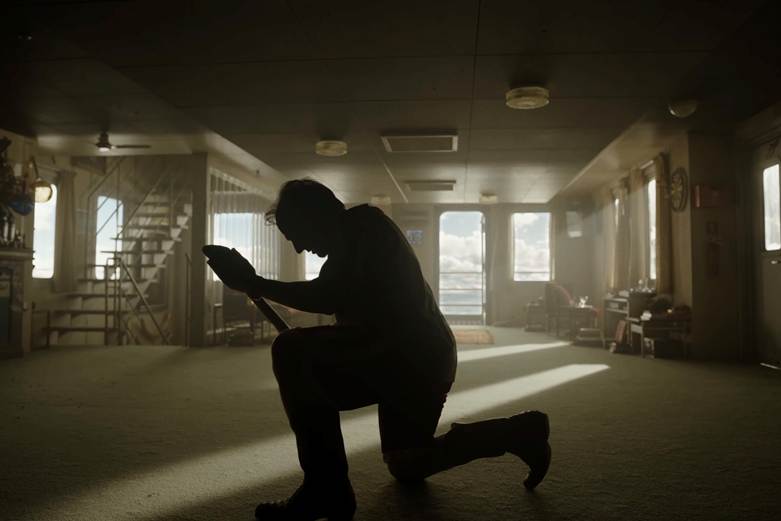
When I first heard that Tom Cruise was gunning for an Oscar, I had a sneaking suspicion that I would hate whatever vehicle would serve that purpose. I subsequently witnessed ten million trailers for his new film Digger, and each time I saw one, I would hate what I saw even more than the last time. Then early reviews came out, seemingly confirming my suspicions that this was going to be horrendous. Finally, I went to see the movie, and for the first thirty minutes or so, my thought was “this is Minions for people who eat at Michelin Star restaurants.”
Then, all of a sudden, something happened. There was a bit of a plot twist to cap off the first act of the film. Without giving anything away, the reveal involved a miniature tree falling over. That was when I realized that something else was going on here. I sat through the rest of the film, and as it turns out, Digger is a layered, thoughtful film, even if it is quite loud.
Without spoiling all of the details of how it delivers its message, suffice it to say that Digger is a film about climate hypocrisy. In the same way that Dr. Strangelove was an indictment on how international governments handled the nuclear arms race in the Cold War, the primary layer to this film criticizes how both public and private entities, portrayed and indicted as inappropriately intertwined, handle the modern climate crisis. But where Dr. Strangelove primarily criticized authority figures for incompetence (and there is plenty of that here too), the primary criticism of power here is that it lies.
But there are other layers to this film than merely “the President doesn’t care about the environment.” There is a particular sequence where the titular character gives a speech to what is presumably the United Nations about why he lied for so long. In that sequence, director Alejandro G. Inarritu very effectively (if very unsubtly) delivers the thesis statement of another layer of this film: that for all the lying that powerful people do about the climate, the biggest liars are the people who push for climate activism yet engage in the exact behaviors that fuel the climate crisis. This film is not only criticizing presidents and CEOs, but also people unwilling to give up their lifestyle as just as much of a sham.
But there is even a third layer to this film. Inarritu turns inward and points a finger at himself. At everyone in Hollywood. Even Digger itself is a sham, a production that itself likely expended numerous fossil fuels, was produced on indigenous lands, and was exploitative in other ways. The film is so self-aware of that fact, that it spends a lot of its runtime in a meta self-reflection. To fully explain this level would be to spoil the first act twist. Suffice it to say, nobody is safe. Everyone is indicted.
There is a line in the film that has been featured in the trailers about one day being on top of the world, and the next being dust. That is the main character, that is the main character’s cat, but more than that, it is humanity. It is the world. Eventually, some form of excess leads us to our demise, even if we live far longer than we should. It is a dark, dreary, “Doomer” take on the climate crisis, but numerous audience members will find that it is the only realistic take that the film could have.
Digger might be too loud and chaotic for everyone, and its sense of humor won’t land for everybody (it didn’t really for me). But it is a smart film, one that takes what could have been a “seen it before” message and gives it new life. It should also be mentioned that Cruise, John Goodman, and numerous other cast members give it their all and get many moments to shine. While it may not serve as the best “entertainment” in the world, it should be unsurprising that this film comes from the same director who made Birdman and The Revenant. It will be studied for decades to come – even if given few repeat viewings by fans.