


"Project Hail Mary" Didn’t Take Off
With a quirky outline, Project Hail Mary stays within the bounds of human language and imperial fantasy.
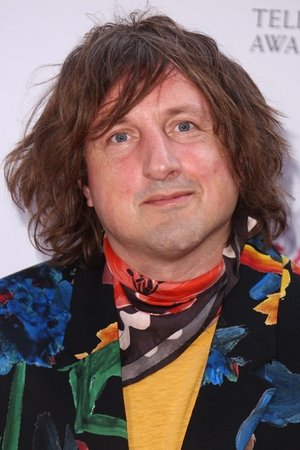
Daniel Pemberton (born 3 November 1977) is an English composer and songwriter. Primarily working in film, television, and video games, he is best known for composing the scores for the film Spider-Man: Into the Spider-Verse and its sequel Spider-Man: Across the Spider-Verse, the latter of which earned him several award nominations, including at the Golden Globes and the Critics' Choice Awards. He has also received recognition for his work in films such as Steve Jobs, Motherless Brooklyn, The Trial of the Chicago 7, Being the Ricardos, The Rescue, and the LittleBigPlanet series of games. For The Trial of the Chicago 7, Pemberton was nominated for the Ivor Novello Award for Best Original Film Score and Academy Award for Best Original Song alongside Celeste for the song "Hear My Voice". Description above from the Wikipedia article Daniel Pemberton, licensed under CC-BY-SA, full list of contributors on Wikipedia.
With a quirky outline, Project Hail Mary stays within the bounds of human language and imperial fantasy.
This is not a film, it’s a drop tower. A drop tower that you don’t get off of for the vast majority of its 106-minute runtime.
Eddington attempts to capture how media is intertwined with the uncomfortable present.
The more biting satire is reserved for those on top of the power structure, such as the police, while those occupying lower levels are given more nuance and likability, even if they operate on the wrong side of the law. This principle gives Deep Cover its heart.
It is a truth universally acknowledged that a single woman will be happiest if she marries a man with a good fortune, similar upbringing, matching attractiveness levels, and compatible politics.
The film's storylines read as allegories for the queer experience and that's a source of solace for LGBTQIA+ fans!