









Let's Make Way For the 'Wish Dragon'
A story of a magical dragon brings great representation for Chinese culture.

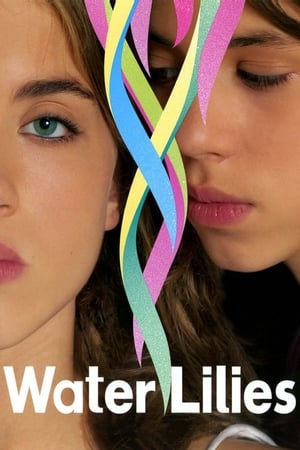


Céline Sciamma’s directorial debut Water Lilies (2007) follows three teenage girls as they begin to understand their sexuality and, thereby, their place in the world. A gentle coming of age story, Water Lilies takes its time in exploring what it’s like to be a young girl trying to make sense of her sexuality in a heteronormative world.
The three girls, Marie (Pauline Acquart), Anne (Louise Blachère) and Floriane (Adèle Haenel) each undergo their individual — and sometimes overlapping — journey of self-discovery, particularly in relation to their sexuality. Marie, a quiet and unassuming girl, shows up to synchronized swim practice one day in support of Anne, her closest friend. While there, she meets Floriane and quickly develops an attraction to the other girl. A friendship eventually blossoms from this, driving a bridge between Marie and Anne, the latter of who thinks that Floraine is trouble. A love triangle of sorts grows between these girls, complicated by François, Floriane’s boyfriend who Anne is also attracted to.
Though all relationships in the film hold weight, the most compelling one is that between Marie and Floriane, whose friendship slowly begins to deepen into something more. Though, Floriane ultimately rejects Marie. Sciamma uses the connection between these two to tell a nuanced and intelligent story of first love and attraction, and what exactly that looks like as a lesbian.
Marie’s attraction to Floriane is believable and, though misguided, feels genuine. Floriane’s attraction to Marie is a bit trickier — though she toys with the idea, Floriane never fully comes into her sexuality in the way that Marie does. Floriane feels pressured into having sex with her boyfriend so that she can lose her virginity and do what she believes she’s supposed to want. On the journey of preparing for this moment, Floriane goes as far as asking Marie to be her first time, which eventually doesn’t pan out. Still, this moment between them is filled with caution and nervousness, and clearly expresses how both girls are struggling to understand their attraction to women when they are being relentlessly pushed into wanting men.
When the two finally kiss towards the end of the film, Sciamma pulls the audience back into reality — this love between them is first love, and, though important to them each, is not something that was ever built to last. Sciamma takes this relationship and portrays it realistically, and the way the two girls get caught up in one another feels like a genuine first love — or, first infatuation. Marie’s story is particularly poignant, and the film rests on her relationships with both Anne and Floriane.

Set during a sultry summer in a French suburb, Marie is desperate to join the local pool's synchronized swimming team, but is her interest solely for the sake of sport or for a chance to get close to Floriane, the bad girl of the team? Sciamma, and the two leads, capture the uncertainty of teenage sexuality with a sympathetic eye in this delicate drama of the angst of coming-of-age.
A story of a magical dragon brings great representation for Chinese culture.
"The Haunting of Hill House" isn't your typical horror story. Based on a novel by Shirley Jackson, Netflix's masterpiece and limited horror series takes you on a emotional rollercoaster ride, by turning our perception of mental illness on its head. It's an unforgettable story about a loveable family, who grapples with tragedy and love after living at the foreboding Hill House.
The one-way journey went to the desert that refused to offer an answer or a transcendence.
Juno is extremely funny, very well-written, and contains great performances. The film is also about a very important topic, one that is extremely relevant now: women’s reproductive rights. Is this Oscar-winning film spreading a pro-life or pro-choice message to its audience?
“Synchronic” is special, but it doesn’t succeed in achieving all the objectives it aims for. The film is a science fiction oeuvre which tries to be cerebral at some points, although the original idea is interesting, it only accomplishes to talk about some serious matters superficially.
Juneteenth is a day to commemorate the emancipation of enslaved people in the United States on June 19th, 1865. We did it! Everyone is free! Everyone is equal! End of story, right?