The Weirdness that is 'Severance'
Severance is about breaking down facades and confronting old models that were once frameworks of our lives. The somewhat subtle message to me is it’s never too late to fall in love, no matter your insecurities.




Jenny, a young doctor who feels guilty after a young woman she refused to see winds up dead a few days later, decides to find out who the girl was, after the police can't identify the young woman.

Jean-Pierre Dardenne, Luc Dardenne
Director


Adèle Haenel
Jenny Davin

Olivier Bonnaud
Julien

Jérémie Renier
Bryan's father

Louka Minnella
Bryan

Nadège Ouedraogo
The cybercafé cashier

Christelle Cornil
Bryan's mother
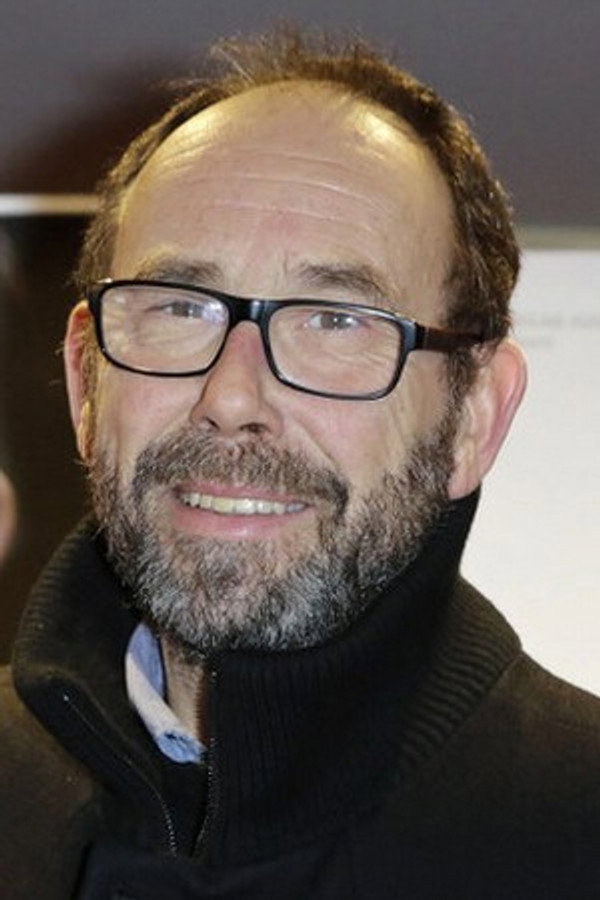
Olivier Gourmet
Lambert, the son
Pierre Sumkay
Lambert, the father
Yves Larec
Doctor Habran
Ben Hamidou
Inspector Ben Mahmoud

Laurent Caron
Inspector Bercaro
Severance is about breaking down facades and confronting old models that were once frameworks of our lives. The somewhat subtle message to me is it’s never too late to fall in love, no matter your insecurities.
Him is visually stunning—all concrete cathedrals and bone-rattling impact shots that look like a nightmare highlight reel. Marlon Wayans is magnetic as this legendary quarterback who's basically selling salvation with a smile that never quite reaches his eyes. But the story keeps running in circles: more tests, more cryptic pep talks, more ritualistic drills. The sports-as-religion metaphor beats you over the head when subtlety would've been more effective. The middle drags, and that finale chooses spectacle over substance. It's undeniably stylish, but left me cold. Also worth noting: despite the Monkeypaw connection, this isn't actually a Jordan Peele film—he didn't write or direct.
This Disney+ movie is about a 12-year-old math genius who wants to become a rapper.
This is a list of seven films that explore police brutality and systemic racism made by Black filmmakers. These are important movies to watch and to take in, as — through the power of cinema — they showcase what it feels like to be a Black person living in a country that is internally designed to be against you.
Starring Jake Gyllenhall and Yahya Abdul-Mateen II, 'Ambulance' is a film not only about a bank heist gone wrong, but also about brotherhood.
With The Father, writer-director Florian Zeller- who wrote and developed the play upon which the film is based- pulls no punches as he confidently makes every effort to put the audience in the mind of someone whose grip on reality has all but vanished. It’s a dazzling testament to Zeller’s abilities as a director as he makes his first transition from stage to film appear as if he’s been working behind a camera his entire career. The dialogue he fashions with co-writer Christopher Hampton, along with the work of production designers Peter Francis and Cathy Featherstone, collectively makes the downward spiral of dementia startlingly tangible, doing so in a way that can be comprehended by everyone except the person it directly affects.