












Fielder's "You Can See Everything" Asks Questions it Doesn't Have Answers For
One thing’s for certain: Holmes has star power. We may not be able to see everything, but we’re certainly all watching.
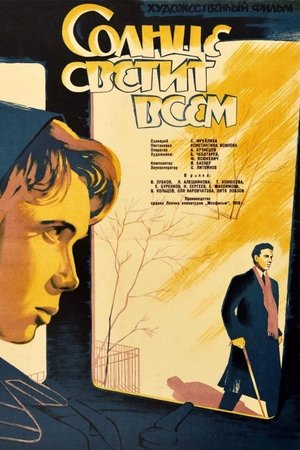


Czechoslovakia, May 9, 1945. The end of the war has already been announced. Nikolai Savelyev dreams of returning to his hometown and teaching children history again. Suddenly a battle begins - the SS unit is trying to break through to the west. The battery commander chickened out and fled. Savelyev takes command. He receives a serious injury that leads to blindness. He is accompanied to his hometown by nurse Svetlana. Nikolai does not immediately manage to find his place in life...
One thing’s for certain: Holmes has star power. We may not be able to see everything, but we’re certainly all watching.
A film loosely based on the fairy tale Hansel and Gretel, with major twists to the original story.
Cassie, a musician, and Luke, a man serving in the Marines, form a false relationship and keep it a secret.
In Spike Lee’s She’s Gotta Have It (1986), we follow the love life of powerful female protagonist Nola Darling (Tracy Camilla Johns) and explore the relationship dynamics she has with her partners. She sees three men simultaneously: Greer Childs, (John Canada Terrell) Mars Blackmon (Spike Lee), and Jamie Overstreet (Tommy Redmond Hicks). Though an 80’s film, She’s Gotta Have It is surprisingly progressive with its themes of female sexuality, although at some points in the film it is handled clumsily. Overall Nola is an incredibly compelling character especially for modern women, as we as a society acknowledge female sensuality more and more without the negative stigma.
Darren Aronofsky’s Caught Stealing is a gritty, darkly funny thrill ride through 1998 New York, with Austin Butler delivering a raw, magnetic turn as Hank Thompson—a washed-up ex-ballplayer turned bartender whose life implodes after cat-sitting for his punk neighbor drags him into a violent underworld of gangsters, crooked cops, and chaos. Brutal yet unexpectedly hilarious, the film blends noir grit with midnight-movie absurdity, proving Aronofsky can reinvent himself while Butler cements his status as a true movie star.
Overall, Lee Cronin’s The Mummy is plagued by numerous flaws, both from a quality and from a diversity standpoint. The film relies on gore and loud sounds to drown out its flat script, flatter dialogue, and one-dimensional characters.