Trans Allegories in Film: 'Nimona' (2023)
Animation as a medium of storytelling can be thought to be open to all ages and as I hope my reading will reveal, 'Nimona' could be interpreted as a transgender story.
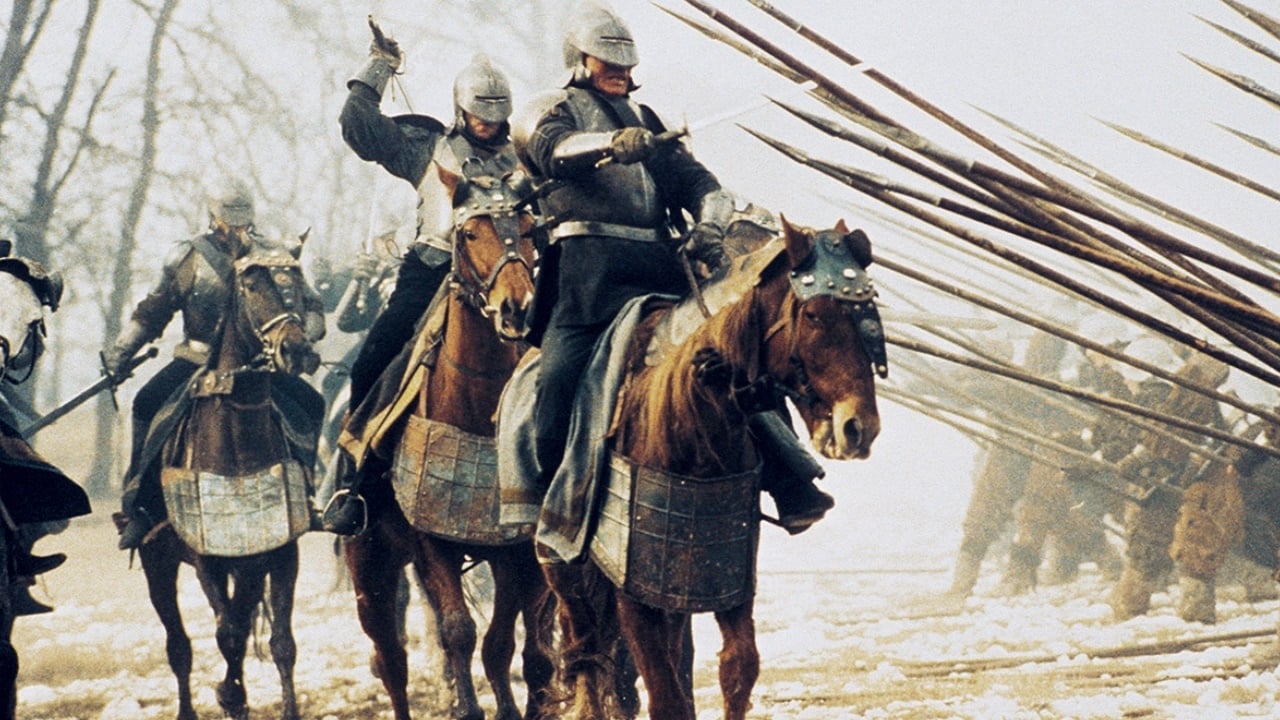



In autumn of 1526, the Emperor, Charles V, sends his German landsknechts led by Georg von Frundsberg to march towards Rome. The inferior papal armies, commanded by Giovanni de'Medici, try to chase them in the midst of a harsh winter. Nevertheless, the Imperial armies manage to cross the rivers along their march and get cannons thanks to the maneuvers of its Lords. In a skirmish, Giovanni de'Medici is wounded in the leg by a falconet shot. The attempts to cure him fail and he dies. The Imperial armies assault Rome. The film is beautifully but unassumingly set, and shows the hard conditions in which war is waged and its lack of glory. It ends straightforwardly with the declaration made after the death of Giovanni de'Medici by the commanders of the armies in Europe of not using again fire weapons because of their cruelty.

Ermanno Olmi
Director


Christo Jivkov
Giovanni De' Medici

Sergio Grammatico
Federico II Gonzaga

Dimitar Ratchkov
Lucantonio Cuppano
Fabio Giubbani
Matteo Cusastro

Saša Vulićević
Pietro Aretino

Desislava Tenekedjieva
Caterina De' Medici

Sandra Ceccarelli
Nobildonna di Mantova

Aldo Toscano
Aloisio Gonzaga

Franco Palmieri
Paolo Giovio
Franco Andreani
Ambasciatore di Carlo V
Kalin Arsov
Barcarolo
Animation as a medium of storytelling can be thought to be open to all ages and as I hope my reading will reveal, 'Nimona' could be interpreted as a transgender story.
An action-packed adrenaline rush with a diverse cast that delivers evocative storytelling.
If you identify as part of the queer community, or if you love old school slasher flicks, you will love this movie.
Overall, Sand Castle was another lack luster war drama that will eventually fade into the many similar war dramas I have seen throughout my life.
At 2:17 a.m., every child in a third-grade class wakes up, leaves their home, and disappears into the darkness—except one. The next day, teacher Justine Gandy discovers that Alex Lily is the only student left, while the rest have vanished without a trace. Did Justine have something to do with it, or is a far more sinister force stalking the town, targeting not just children, but anyone in its path?