Hokum: A Balance of Cheapness and Luxury
Hokum is an enjoyable horror film that will probably get a little under your skin, but it isn’t the tour de force that you might be expecting.



“You are all characters in a movie.” That line will surely echo in one’s head when they exit Teenage Sex and Death at Camp Miasma, the latest outing from I Saw the TV Glow director Jane Schoenbrun. It’s because that line could plausibly be applied to three different sets of characters. The first, who it is literally directed to, is the characters in the film, who sort of become characters within another movie inside this movie that may or may not exist. The second, the characters in the fictional “Camp Miasma” series that serves as the impetus for the main character’s journey.
But the third set is most interesting. That third set is the audience. Just like in Schoenbrun’s previous film, the lines between fiction and reality are so effortlessly blurred that it makes the audience question its own sense of place within reality. In a literal sense, we are real. In a more meaningful sense, we are characters in a movie. Because, at the same time, reality is less real than we seem to think, and the movie is more real than we realize.
Teenage Sex and Death at Camp Miasma is not just an experiment, however. It is also a loving send-up to the slashers of the past. Freddy Kreuger, Michael Meyers, Leatherface, but more than any of them, Jason Voorhees. From the title card, to the darkly sympathetic nature of the villain, to his origin in a lake at a summer camp, to the funniest tribute to Friday the 13th Part VII: The New Blood one can imagine, this movie is wearing that series’ DNA all over its body. But that loving tribute very quickly becomes something more mixed. Tribute, yes, but also commentary, and even more than that, seeming self-expression.
This film is very, very apparently what has been termed “own voices.” Not just in the literal sense that Jane Schoenbrun is a queer filmmaker and this is very, very obviously a queer film with a queer main character who uses she/they pronouns, but in a substantive way too. Just like I Saw the TV Glow, this film channels the queer experience into its ethos, into its essence, into something that not only demonstrates a knowledge of the queer experience but causes you to vicariously experience those emotions. The intensity of what is being depicted flows through your mind as if you were the main character, jumping back and forth between your own point-of-view and the fictional point-of-view being depicted.
Schoenbrun is not a comedian. That is perfectly fine, but if there is any flaw in this film, it’s the stilted attempts at jokes that occasionally sneak their way into this film. Most of the time, the comedy is actually effective because it is mixed with sentiment and lived experience, but when left on its own, well, it’s doubtful Schoenbrun is going to be suddenly hired to work on Spaceballs 2.
But what Schoenbrun is is a visual genius. While this film isn’t nearly as surreal as I Saw the TV Glow, when it does dabble in that surrealism, it is extremely effective. It makes the audience feel like they are being forced into this world against their will, but in a good way, because it is so beautiful. Even in the more realistically portrayed sequences, Schoenbrun captures something impressive, most notably the aesthetic of those old school VHS slasher films. A shout-out is in order for Eric Yue, Schoenbrun’s cinematographer, who of course also worked on I Saw the TV Glow.
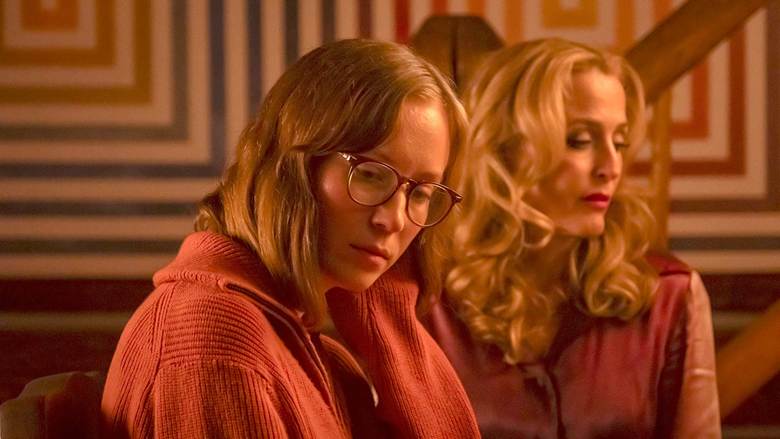
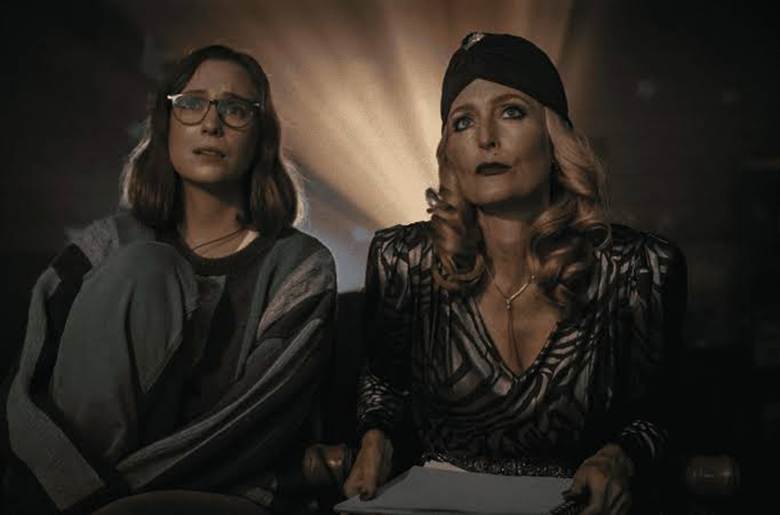
Hannah Einbinder absolutely loses herself in her role as Kris Williams. She is extremely effective. Gillian Anderson is notable as Billy Presley, and it is beautiful to watch her character unravel her barriers as her and Kris grow closer. Ironically, she is outdone by her younger self, played by Amanda Fix. Everyone else in the film does their job well enough, and overall the suspension of disbelief was very well served by the cast.
If you identify as part of the queer community, you will love this movie. If you love old school slasher flicks, you will love this movie. If you identify with both, you might very well cry at this film. But even if you fall into neither camp, I have a strong suspicion that you will appreciate this. Because it’s so damn good.
“Miasma” is defined by Merriam-Webster as “an influence or atmosphere that tends to deplete or corrupt.” There’s no question that Schoenbrun sees their beloved slasher films as miasmal. But at the same time, Schoenbrun poses the question that maybe it is okay to be a person who was shaped by less than pure, even problematic influences. Because we are who we are, we live life the way only we could, and there is nothing more powerful than self-acceptance.