“Disclosure Day” and Anthropocentrism
Disclosure Day asks us to question humanity's role in the universe but falls victim to the same assumptions of centrality.
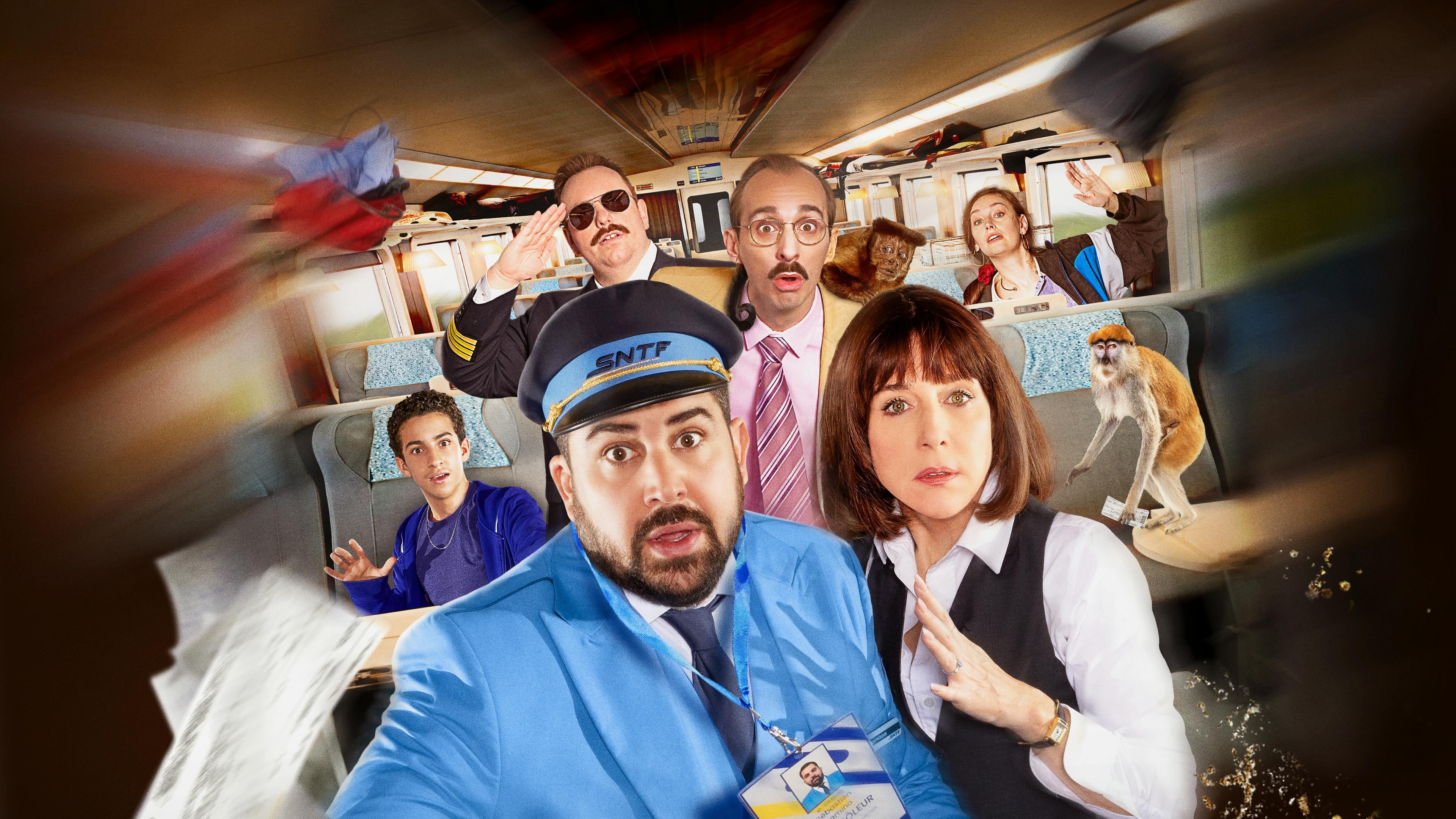


Sébastien, a conscientious and professional train inspector, dreams of being transferred to the South of France. To validate his transfer, he has to make one last routine run under the supervision of Madeleine, a slightly sociopathic inspector who won't let him go. That's when everything goes wrong: between a driver who thinks he's driving a fighter jet, a jealous colleague and passengers who are each crazier than the last, what was supposed to be a formality turns into the worst trip of his life.

Olivier Van Hoofstadt
Director


Artus
Sébastien

Elsa Zylberstein
Madeleine

Benjamin Tranié
Simon

Maël Rouin Berrandou
Adel

Nicolas Lumbreras
Mickaël Pichard

Bérangère McNeese
Léa

Louise Coldefy
Sabine, l'ex-femme de Simon

Philippe Duquesne
Patrick, le chef de gare

Lyes Salem
Le père d'Adel

Marc Riso
Fabrice, le conducteur du train

Mourade Zeguendi
Le fuyard
Disclosure Day asks us to question humanity's role in the universe but falls victim to the same assumptions of centrality.
The Lighthouse is patient and hypnotic, pulling us in with its mysterious atmosphere and characters. The film’s slow pace proves to be monumentally effective, showcasing the tedious nature that comes with isolation and poor two-way communication.
A K-9 police dog goes undercover to stop an illegal animal smuggling ring and learns a valuable lesson along the way.
The plot could’ve really been interesting if the elements of lycanthropy was integrated with perhaps the struggle of identity of being LGBTQ+. It's an experience for so many that as they’re starting to realizing their true selves, they feel like a monster, especially if they come from unsupportive homes or communities. Instead, the horror and transformation elements seem thrown in without contemplation of how this could deepen the narrative.
Telling a story about the French and Indian Wars from the perspective of the British prioritizes the perspective of the colonizers.
Evan Goldman, a child of divorced parents, is planning a memorable bar mitzvah for his 13th birthday. However, middle school has a few obstacles along the way.