Extinct (2021): Fresh Donuts, Half Baked Morals
The plot lags, the moral lessons are misguided, but are those fluffy little donut creatures adorable? Yes. Yes, they are.
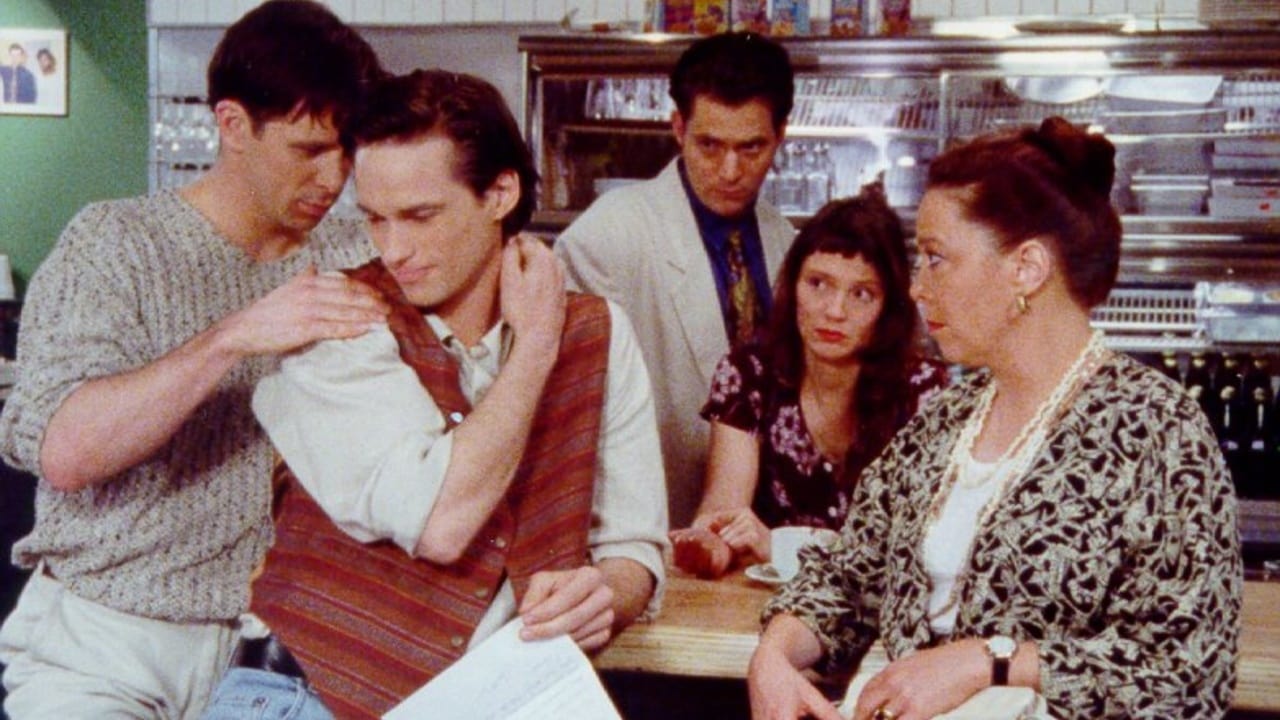



In this melodramatic French Canadian comedy-drama, a sexy male escort sashays into the living room and life of a gay man and proves to be the catalyst for turmoil. Until Steve showed up to strip as a birthday present, the life of lovers Jean-Marc and Phillipe had settled into a comfortable but passionless rut. Jean-Marc is alone at the time and has sex with Steve. Later that night, Steve tries to change a light bulb and falls, causing his friends to jump to the conclusion that he tried to kill himself. Soon Phillipe too gets involved with Steve. Finding Steve a tonic to his doldrums, Phillipe begins pursuing a real relationship with him. Steve then proves to be a troubled character who is involved secretly with another man who has been diagnosed with HIV. The problem stems from the fact that the mystery lover is none other than Phillipe's dearest friend. Matters are complicated by Nathalie -- who secretly loves Phillipe -- and by his recently divorced mother.

Denis Langlois
Director
Paul-Antoine Taillefer
Philippe

Éric Cabana
Jean-Marc

Robin Aubert
Steve

Patrice Coquereau
Christian

Jasmin Roy
Joe
Marie Lefebvre
Nathalie

Louise Laprade
Philippe's Mother
Bernadette Li
Joe's Rich Friend

David Savard
Friend at the Guitar
Félix Aubert-Surprenant
Young Philippe

Benoît Ethier
Philippe's Father
The plot lags, the moral lessons are misguided, but are those fluffy little donut creatures adorable? Yes. Yes, they are.
Years before Mexican director, Alfonso Cuaron, was winning Academy Awards for movies like Gravity (2013) and Roma(2018), he directed a small, intimate film about two best friends who decide to embark on an improvised road trip to spend time with an older, attractive woman who miraculously agrees to go with them. Y tu Mamá También is a deep journey into the raw sexuality and friendship of the young protagonists, as well as a subtle social and political commentary on Mexico at the time.
Marvel’s animated show What If...? ended last week, so let’s go back and look at all of the different universes shown and rank each episode from worst to best!
Set against the backdrop of the Jim Crow era, the film offers layered representation.
Two Summers ago, on May 27th, 2022, the theatrical cinematic realms were re-awakened from their post-COVID dormant state of being by a little film titled "Top Gun: Maverick". It re-introduced us to the absolute elation of seeing not only a highly anticipated (and, granted, 36 years in the making!) sequel, but the return of the quintessential Summer blockbuster to witness on the BIG screen again.
In this remake of the 1993 film of the same name, The Wedding Banquet follows the life of two queer couples as they struggle with life-changing decisions.