


Sweet Girl's Mind-Boggling Twist Makes the Movie... Feminist
For the most part, 'Sweet Girl' recycles tired hyper masculine revenge tropes, but a surprise twist in the end turns it into a female-centric revenge film.

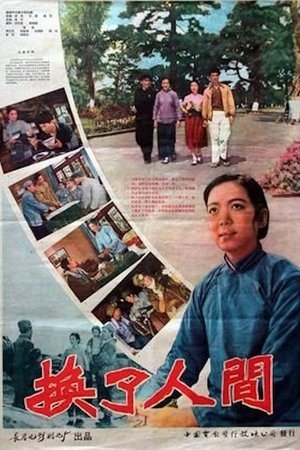
Wei uncle from the off with her daughter Shirley flee from famine came in the northeast, under the rule of the puppet work in the coalmine. Wei uncle married the daughter of Shirley Wang young miners, on their wedding day, coal mine gas explosion, Wang kille. Then, after a period of time, Shirley and miners He Zhenggang marriage, the two gave birth to a daughter, named Shu-Fang. Soon, He Zhenggang mine gas explosion has died, Shirley was the second blow. Good hard-working miners Luwan Chun in Shirley, a time of extreme difficulty, hand to help her, the two gradually built up a strong feelings, Luwan Chun's adopted son, and Shu-Fang Jiang Ming also became good friends. However, Shirley does not want Luwan Chun for their hardship, and her daughter returned to Shandong to visit his Shu-Fang. After the liberation, Shirley has her daughter Shu-Fang to the northeast, to find long-lost father, uncle and met Wei has become a model of labor, Luwan Chun.
For the most part, 'Sweet Girl' recycles tired hyper masculine revenge tropes, but a surprise twist in the end turns it into a female-centric revenge film.
Amanda Riley gets the opportunity to travel to Vietnam for the experience of a lifetime.
I understood post-memory as passing down stories and images of one’s experiences that are not your own. For decades, rape has been depicted in cinema through a third-person perspective, leaving the viewer to observe rape; not to experience it.
Poor Black characters are usually surrounded by crime and violence, while poor White characters are portrayed as noble and hard-working.
Fire Island is the more inclusive film of the two with the bi-phobic definition of pansexuality in The Thing About Harry and its obvious lack of colour on screen
In season 3 of 'Umbrella Academy', Diego, Allison, and Viktor finally get character arcs that address their unique experiences as a Latino man, a Black woman who lived through the 60s, and a trans man.