


Dissecting the Casual Racism of “Airplane!”
Airplane! (1980) is a fun spoof comedy with lots of laughs, right? I watched this film for the first time the other night. I loved it. Then came the racist jokes.
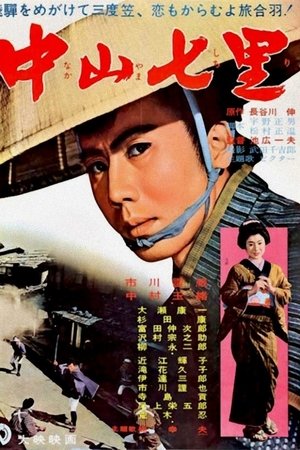


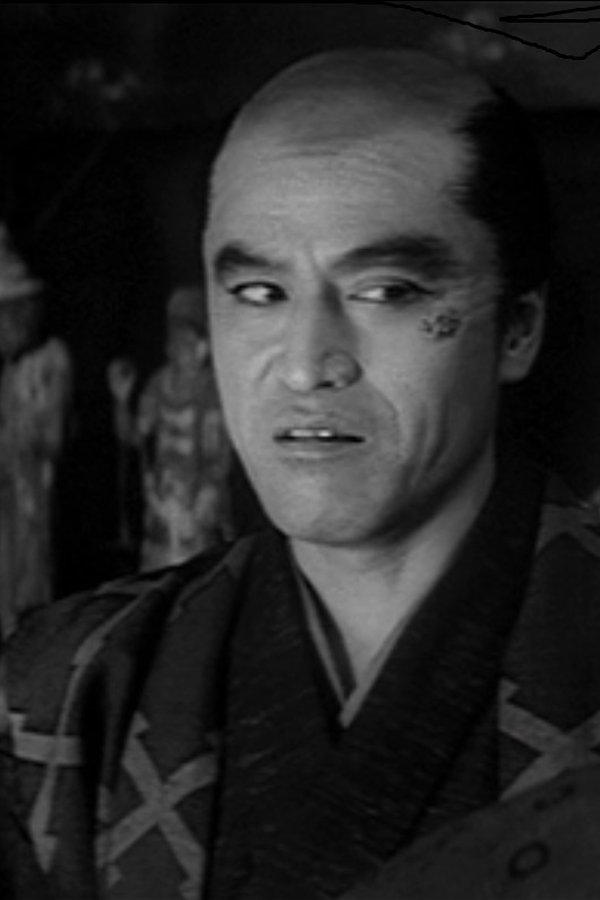
When a corrupt magistrate rapes Oshima, Masa (Raizō Ichikawa) avenges her by killing the officer, becoming thereby a fugitive, haunted and grief-stricken by the fact that Oshima committed suicide. Going underground in the gambling world, perpetually hiding from the law, Masa eventually meets a young woman named Onaka, who looks exactly like Oshima. Tales having two look-alike heroines are a commonplace in Japanese period films, a plot affectation inherited from the kabuki theater. Based on a novel by Shin Hasegawa, Nakayama shichiri was already twice filmed in 1930, one version directed by Namio Ochiai, and from which less than 40 minutes survive, the other directed by Kyotaro Namiki. Both are silent films, preserved by the Makino film institute.
Airplane! (1980) is a fun spoof comedy with lots of laughs, right? I watched this film for the first time the other night. I loved it. Then came the racist jokes.
KIMI is the main character of this film and as much as I wish it was Angela Childs played by Zoe Kravitz, it isn't. KIMI is a smart device that works not unlike Amazon's Alexa and Google's Nest assisting in anything from home purchases to music playing all under the guise of only activating when in use.
So do I recommend that people see this movie, yes 100%, but do I think they are going to come out of it with 80 hot takes, yes 100%.
Hutch just wanted a family vacation, but chaos follows him everywhere. Nobody 2 is violent, stylish, and over-the-top in the best way possible.
"WHAT ARE YOU WILLING TO SACRIFICE?!!!!" "EVERYTHING!!!!!" This is but one of a multitude of highly emphatic questions, and subsequent answers, being asked in the newest feature film from one of the current masters of horror, Jordan Peele ("Get Out", "Us" and "Nope"). I must give Peele credit in that he continues to push the boundaries of specific genres and their associated tropes in order to provide what ends up amounting to subtly then jarringly intense, yet still character and story-driven, cinema that speaks more to indie stylings than mainstream.
With The Father, writer-director Florian Zeller- who wrote and developed the play upon which the film is based- pulls no punches as he confidently makes every effort to put the audience in the mind of someone whose grip on reality has all but vanished. It’s a dazzling testament to Zeller’s abilities as a director as he makes his first transition from stage to film appear as if he’s been working behind a camera his entire career. The dialogue he fashions with co-writer Christopher Hampton, along with the work of production designers Peter Francis and Cathy Featherstone, collectively makes the downward spiral of dementia startlingly tangible, doing so in a way that can be comprehended by everyone except the person it directly affects.