


Last Christmas: Emilia Clarke Stopped Eating Hearts and Decided to Win Them.
In Paul Feig’s newest comedy, Last Christmas, Katarina (Emilia Clarke) didn’t give a heart, she got a heart, you see.

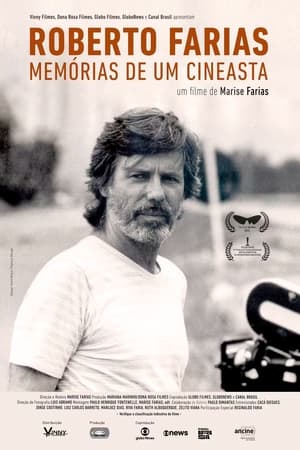


Filmmaker Roberto Farias' passion for cinema is revealed by his daughter Marise Farias through an intimate look, from childhood to his political, economic and cultural role in Brazilian Cinema. Through Roberto Farias himself and friends such as Luís Carlos Barreto, Cacá Diegues and Zelito Viana, the film tells the stories of the director who achieved a direct dialogue with the public through successes such as O Assalto ao Trem Pagador (1962), the trilogy with singer Roberto Carlos (1968 to 1971) and Pra Frente Brasil (1982). Texts from an unpublished book of memories are interpreted by his brother, actor Reginaldo Faria.
In Paul Feig’s newest comedy, Last Christmas, Katarina (Emilia Clarke) didn’t give a heart, she got a heart, you see.
The venn diagram of pop feminism and white-centered feminism is a circle. Acknowledging that is not a crime nor a diminishing of 'Barbie', Director Gerwig, or feminism in general.
A pop star at Radio City Music Hall gets the opportunity to change herself to save her music career.
This is a Spanish-speaking short film that contains English subtitles. The short film is produced in the United States.
“To be universal, you have to get specific”: while the film does not attempt to provoke discussions about queerness or race, those watching closely may find something resonant in Sorrentino’s love letter to the Naples of his youth.
The Outer Senshi get characterization and some stellar moments in the second part of the Eternal movie duo.