


Disney's ‘From Our Family to Yours’ Passes Down the Magic of the Holidays
Disney’s first Christmas advert, ‘From Our Family to Yours’ teaches us the magic of the holidays.
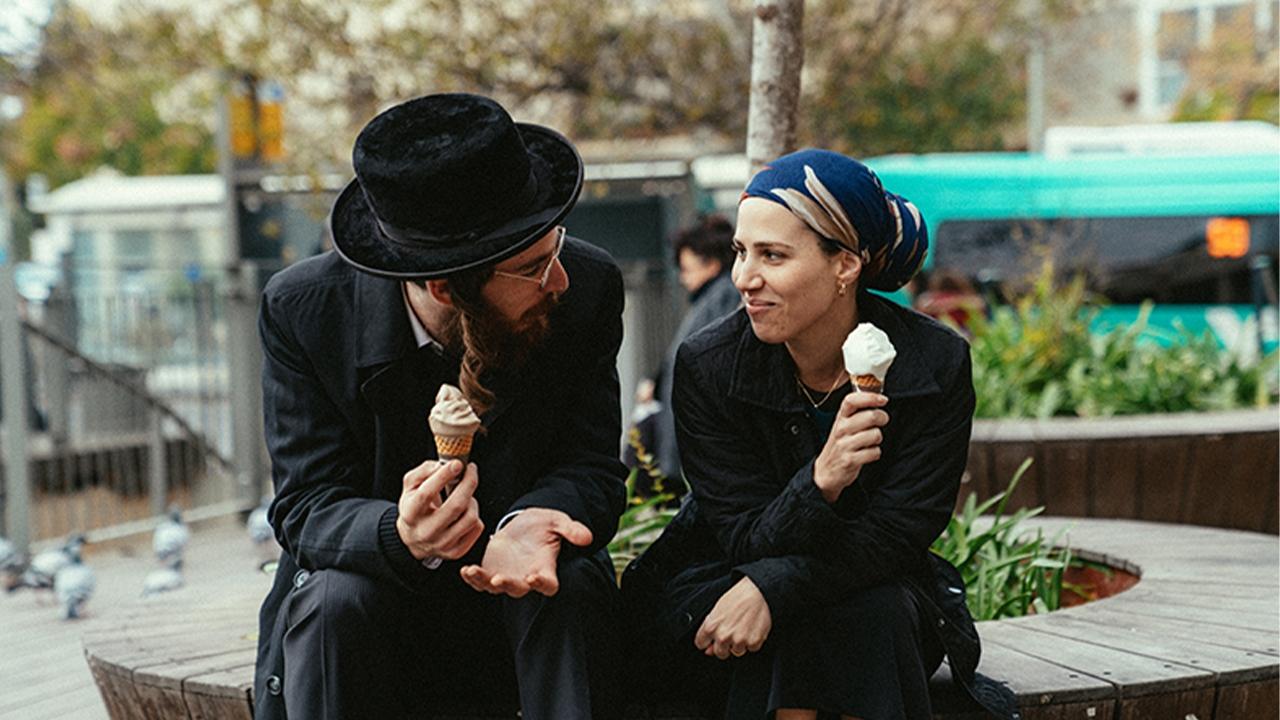
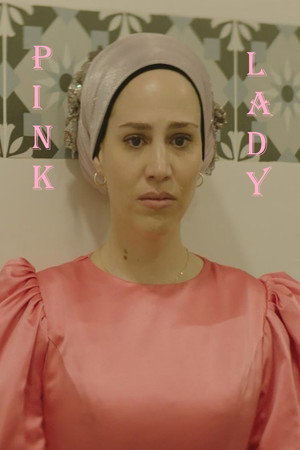


Having already seen and loved Haim Tabakman’ Eyes Wide Open, I watched Pink Lady, expecting it to address the problem of homophobia within the ultra-Orthodox Jewish community in the same way, by gently showing that the love between two men can be as beautiful and as powerful as the love between a man and a woman. But Pink Lady turned out to be different. Most movies give you their point upfront, while others make you think it’s about a specific topic, then reveal that the story is about something else. Pink Lady belongs somewhere in the middle of those two categories.
Written by Mindi Ehrlich, who has lived in and left that environment, and directed by Nir Bergman, Pink Lady follows a devout ultra-Orthodox woman called Bati (Nur Fibak), whose life takes a turn for the worse when she discovers that her husband, Lazer (Uri Blufarb), is being blackmailed and tormented by their religious community because he’s a closeted gay man. Desperate to save their marriage and fix him, she resorts to all sorts of available methods to make him desire her. But the more the plot unfolds, the more it becomes clear that this isn't a movie about a gay man trapped inside a deeply conservative religious community and a wife who’s been betrayed. It is also about a woman discovering that she has been trapped too.
Backed up by powerful performances from both actors, the film shows that Bati and Lazer are cornered into playing a role for appearances' sake. Lazer is expected to deny his sexuality and be the heterosexual, religious husband, while Bati, who has only ever been taught to be modest, obedient, and a good wife, is expected to know how to please her husband without ever really having been taught anything about her own sexuality.
That becomes obvious when Bati finds a pink wig in a porn magazine that a rabbi has given Lazer in an attempt to cure his homosexuality. Believing that the wig might help her become desirable enough for her husband to want her, she orders one. And suddenly, the two of them are simulating for each other, but most importantly, for their community. She is trying to become desirable enough to make him heterosexual. He is trying to become heterosexual enough to remain acceptable.
Pink Lady is much more than a story about homophobia. It is about what happens when people are given a role before they are given the chance to figure out who they actually are or what they want. Lazer's sexuality cracks open the marriage, but once that happens, Bati starts seeing the walls around herself too. They're everywhere: in the rules governing her body, in her ignorance about sex, in the expectations placed on her as a wife, and in the assumption that it’s up to her to make her husband heterosexual.

In an ultra-Orthodox Jewish community in Jerusalem, Bati has a seemingly perfect life. She is happily married to Lazer and the young couple have three children. But their world starts to crumble when Lazer is blackmailed and Bati discovers his secret affair with his male study partner. Desperate to protect her family and keep the man she loves, she supports Lazer as he attempts to “cure” his homosexuality, whilst uncovering her true desires.
Disney’s first Christmas advert, ‘From Our Family to Yours’ teaches us the magic of the holidays.
'Rag Tag' encompasses the diversity within the African Diaspora by showing London Nigerian men learning to regulate their emotions while navigating love and societal pressures.
Tran Quoc Bao succeeds in telling us a story about martial arts, human decay, and friendship. The originality shown by his filmmaking is admirable and brings fresh air to the classic Chinese martial arts genre.
A brief look at two Barry Jenkins films that have established him as one of the greatest filmmakers of our time.
Queen & Slim is a nice example of representation in both cast and crew