

Why 'Wakanda Forever' Will be Better Than its Predecessor
Only time will tell what this new Black Panther and movie will show us with all of the old and new elements of the superhero craft integrated.
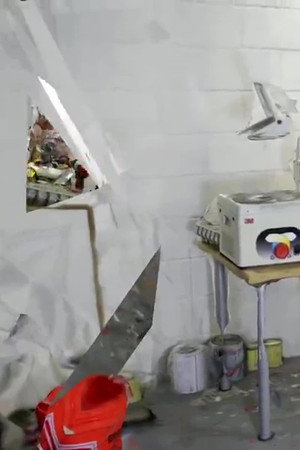


In Takeshi Murata's video, in collaboration with Billy Grant, computer generated scans are utilized to recreate his every day environment in high tech 3D. The video starts in his studio, where his computer, desk and chair are “haunted” - dissolving and reforming in a myriad of mirrored shapes, going from recognizable to abstract to obliterated. The scans blend with Murata’s own computer rendered fragments, further emphasizing the high and low, real and unreal. The result can be seen as an homage to both Walt Disney’s The Sorcerer’s Apprentice and Bruce Nauman’s Mapping the Studio.
Only time will tell what this new Black Panther and movie will show us with all of the old and new elements of the superhero craft integrated.
In 1983, V first debuted as a mini-series. It chronicled the story of alien visitors who arrive on Earth in motherships; they look like us, they talk like us, and they say they are of peace
“Eleanor The Great” is a feel-good story that explores how we cope with grief and loss while educating us about the horrors of the Holocaust.
Sorry to Bother You ultimately speaks to the unfair advantages that the country’s power structures award to those with the resources to control others, as Lift’s easy access to the media allows his opinion to be the only one that matters in the eyes of the unsuspecting and easily impressed public. Moreover, it reveals the extent to which the American Dream has any true validity. It postulates how the promise of success and fulfillment as promoted by the American Dream more often than not leads to the undoing of the individual. Interestingly, in its revealing of the American Dream as merely a facade, Sorry to Bother You wisely questions whether or not anything can really be done to undo a system that has been accepted and in action for centuries.
'Airplane Mode' is a young adult movie that is about a woman who learns to step away from her smartphone, and from social media.