The Blues, and Two Contradictory Films That Claim It
Crossroads follows a young guitarist on a journey through the American South in search of blues history and his own voice.



An Extremely Inclusive Show About a Clown Eating Children
As lifelong Stephen King fans, IT: Welcome to Derry is a story so many of us have been living with since childhood. From the original IT hardcover, a famously massive 1,138-page first edition that felt like a rite of passage, to the 1990 ABC miniseries that turned Pennywise into a pop-culture nightmare thanks to Tim Curry, and later to IT and IT Chapter Two, which reintroduced every child’s nightmare to a new generation of fans, we have been obsessed with the killer clown that lives in the sewer.
This new series is genuinely fun, deeply bingeable, and clearly made by people who know why fans keep coming back. It expands the world, delivers scares, introduces new characters (and old ones), and it makes hitting “next episode” inevitable. You will love it. Legendary characters tell new stories. Origins are explained. Inclusivity is embraced unapologetically. There is just something about Pennywise that makes you always come back to him.

Set decades before the events of the original story, IT: Welcome to Derry explores what happens in this small town when a young boy mysteriously disappears. What begins as unsettling disappearances and supernatural phenomena quickly draws in a U.S. Air Force unit led by Major Leroy Hanlon, whose commands intersect with a classified military effort to control the terror that lurks beneath Derry’s surface.
Alongside this, the series centers on the children of Derry. Teddy, Phil, Lilly, Ronnie, Will, Rich, and Susie all struggle with their own personal fears, misconceptions about themselves, and evolving friendships in a way that pushes them to investigate what adults either can’t or won’t see.
Characters played by Taylour Paige, Jovan Adepo, Chris Chalk, James Remar, Madeleine Stowe, and Stephen Rider intersect across families, institutions, and social lines. Hovering over it all is Pennywise, once again portrayed by Bill Skarsgård, as less a jump scare engine here than a constant, patient, and very hungry presence.
Some characters grow when confronted with uncomfortable truths about themselves or the town. Others hide from reality, lie to themselves, or project confidence they haven’t earned. The result is a story where the adults’ drive for control and the children’s search for reprieve collide.
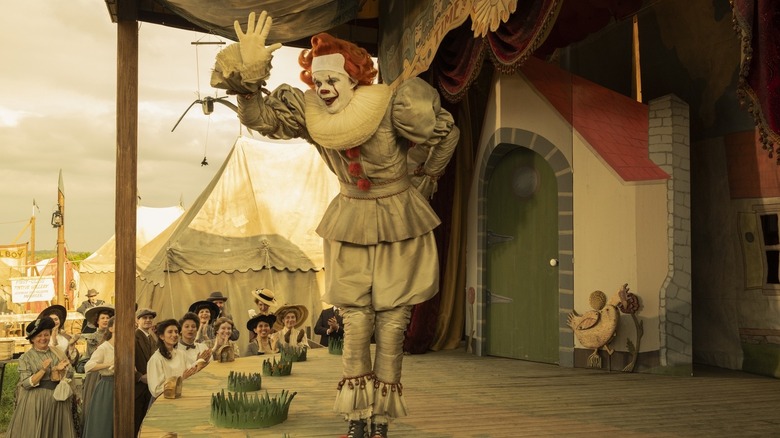
What IT: Welcome to Derry does especially well is refuse to treat representation as a surface-level exercise. Characters from historically excluded groups are positioned as drivers of the story. The show unapologetically distributes narrative weight across race, class, age, and ability.
The children, often sidelined or victimized in horror, are given genuine interior lives. Their fears aren’t interchangeable, and neither are their responses to them. Some children are brave in public and frightened in private. Others misunderstand themselves entirely, clinging to false beliefs about who they are or what they’re capable of.
Black characters are essential to both plot and theme. Major Leroy Hanlon (Jovan Adepo) and his wife Charlotte Hanlon (Taylour Paige) are central figures whose family’s experiences in 1962 Derry intersect with fear, racial tension, and the series’ mysterious military project. Dick Hallorann (Chris Chalk), a character with psychic abilities drawn from The Shining canon, is portrayed with depth and reverence, connecting supernatural horror to real emotional history.
The show also expands representation beyond Black characters. Rich Santos (Arian S. Cartaya), a Cuban-American kid with heart and courage, and Latino characters like him are treated as full participants in the story, not background flavor.
Native American presence is meaningful and respectful. Characters like Rose (played by Kimberly Norris Guerrero) and Taniel (Joshua Odjick), along with figures like John and Necani, anchor a spiritual and cultural history that predates and informs the town’s horror.
Women and young women, from Ronnie Grogan to Lilly Bainbridge, are portrayed with both agency and vulnerability, and their emotional journeys are as significant as those of any adult. Kids like Teddy Uris and Will Hanlon are curious, stubborn, and active in uncovering the truth.
In IT: Welcome to Derry, diversity is woven into the narrative’s emotional and thematic core, and this is a breath of fresh air. People are allowed to interact with each other as their identities without feeling the need to assimilate or apologize. Better yet, they are just accepted for who they are.
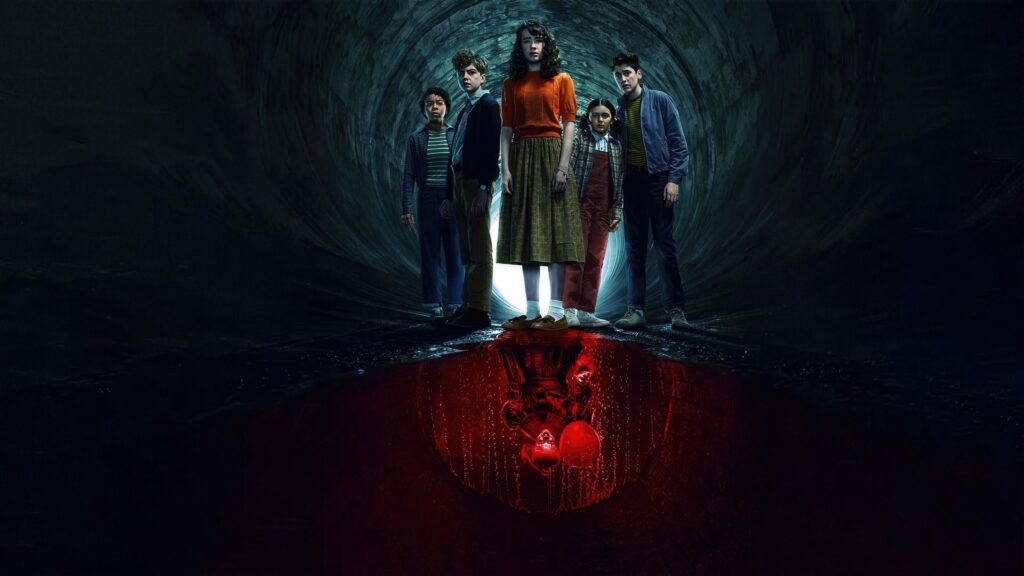
What ultimately makes IT: Welcome to Derry work is how grounded the performances feel, even when the story moves into supernatural territory. Jovan Adepo, the man without fear, brings authority but compassion to Major Leroy Hanlon. Taylour Paige gives Charlotte Hanlon emotional specificity, especially in moments where fear collides with responsibility. Chris Chalk’s Dick Hallorann is human, suffering from substance abuse and painful thoughts, but knows who he is and what matters.
The portrayal of Rose and the Native characters surrounding her stands out for its authenticity as their performances carry cultural weight and emotional truth without exposition, allowing Native identity to exist naturally within the story rather than being framed as symbolism or spectacle.
The younger performers are especially strong. The kids feel curious, scared, impulsive, and sincere. Even Pennywise, again played by Bill Skarsgård from IT (2017) and IT: Chapter Two (2019), is provided depth as we learn what motivated him to choose that creepy, giggly form. IT: Welcome to Derry tells us that fear thrives where people are unheard, and inclusivity here is built into how that is revealed.

What’s striking about IT: Welcome to Derry is how few blind spots it actually has. That alone feels refreshing. The series doesn’t stumble over representation, and it doesn’t stop the story to explain it either. Characters are allowed to simply be. Whether Black, Native, Latino, struggling with mental illness, young, or old, every character exists without those identities needing justification, translation, or narrative punishment, leaving them free to fight Pennywise without being forced to walk that fine line so as not to alienate half of the audience.
In a genre that often uses difference as shorthand for danger or otherness, Welcome to Derry refuses that shortcut. It treats identity as fact and not a flaw. After all, Pennywise doesn’t care who he’s tormenting, so why should we?
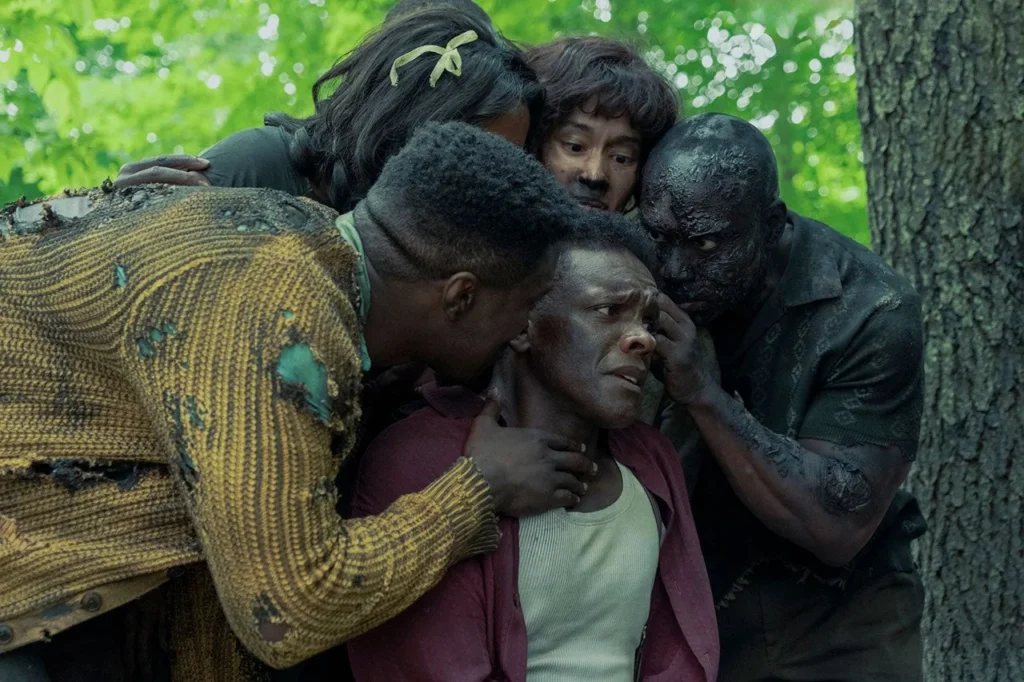
IT: Welcome to Derry is for viewers who are ready to stop treating inclusion as a political debate and start treating it as a given. The show lets us enjoy Pennywise doing what he’s always done, scaring children so they can taste better. Pennywise isn’t obsessed with identity. He doesn’t care who you are. He just wants to eat your kids. The result is a series that’s fun, bingeable, and confident for everyone, a rare horror story where acceptance is the baseline. Five out of five.