






'Pretty Guardian Sailor Moon Eternal Part 2'
The Outer Senshi get characterization and some stellar moments in the second part of the Eternal movie duo.

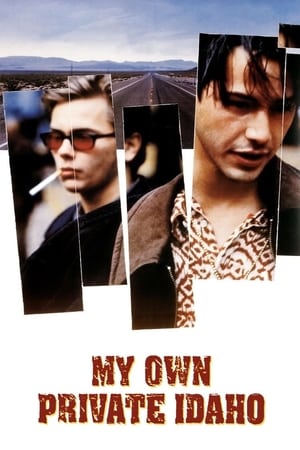


My Own Private Idaho is a 1991 independent LGBT drama, the third feature film from director Gus Van Sant (Good Will Hunting, Milk). The story follows Mike Waters (River Phoenix), a narcoleptic street hustler in love with his best friend Scott Favor (Keanu Reeves).
The film opens with the definition of narcolepsy and then cuts to Mike entering the frame in a deserted Idaho landscape. Mike is confused and stuck in the middle of a road, dissociated from any clarity. He randomly falls asleep and dreams of his long-lost mother nurturing him. This is the hazy, mirage-like tone cast like a spell throughout the story. Van Sant uses his experimental avant-garde skills to capture a feeling of waking up in the middle of nowhere, devoid of a sense of time and space. The entire film feels like a dream, driven by surreal Western landscapes, mindscapes, and an ethereal slide guitar rendition of “America the Beautiful” (performed by Bill Stafford), which rolls in and out of the soundtrack.
The piece takes fascinating creative liberties referencing Shakespeare’sHenry the IV Parts I and II. Scenes at the “hotel” in Portland, Oregon, where Mike and Scott live with their fellow hustlers, recall Shakespeare using vaguely Elizabethan yet contemporary costumes, language, and music. In between the sex work, the drugs, and the use of the word “dude”, these degenerates pronounce a playful, transcendent timelessness in their roles.
Scott Favor (Reeves) embodies the Prince Harry role from Henry the IV Part I, a defiant, privileged teenager who, in this version, hustles in rebellion toward his father. Bob Pigeon (William Richert) is the Sir John Falstaff to Scott’s Prince Harry, while Scott’s father, Jack Favor, the Mayor of Portland, represents King Henry IV. “A plague on all cowards!” Bob belts as Mike and Scott step off a motorcycle and enter the hotel. “If manhood’s not forgotten on the face of the earth, then I’m a shot herring.”
On the flipside, Gus Van Sant utilized real Portland street hustlers as advisers and shot interview footage to inspire the actors, but ended up using the footage in the film. The trick to pulling off this approach is to achieve a non-confused, confident blurred line between the neo-Elizabethan dialect and the film’s otherwise improvisational documentary-like style. The film's strange, dreamlike state supports this, making the Shakespearean moments feel almost like a heightened reality. Lines such as “The thieves scatter!” or “Are they such chickens?” feel different from the rest of the film’s more realistic dialogue, but not distractingly so. The modernized Shakespearean energy blends beautifully into realism as Mike and Scott leave the city and their humanity blooms.

In this loose adaptation of Shakespeare's "Henry IV," Mike Waters is a hustler afflicted with narcolepsy. Scott Favor is the rebellious son of a mayor. Together, the two travel from Portland, Oregon to Idaho and finally to the coast of Italy in a quest to find Mike's estranged mother. Along the way they turn tricks for money and drugs, eventually attracting the attention of a wealthy benefactor and sexual deviant.
The Outer Senshi get characterization and some stellar moments in the second part of the Eternal movie duo.
Narnia, Avengers: Doomsday, Jumanji 3 are some compelling ones! Some of the biggest 2026 movies tied to popular franchises, books, video games, comics, and existing series. Marvel and DC, Disney and Pixar.
Fiction doesn't have to be the model for how our real-life pandemic plays out. Here's how we can avoid the dangers shown in "Contagion."
When you first hear that there is a series on Netflix where the lead character’s wife dies from cancer and he becomes dangerously suicidal, you wouldn’t immediately assume that it’s a comedy.
This article discusses the classic and timeless franchise, The Smurfs.
This side-splitting workplace comedy features a diverse cast and tackles challenging social issues. Other sitcoms should take note.