

'A Babysitter's Guide to Monster Hunting'
This horror movie combines elements of horror and babysitting with Black representation.
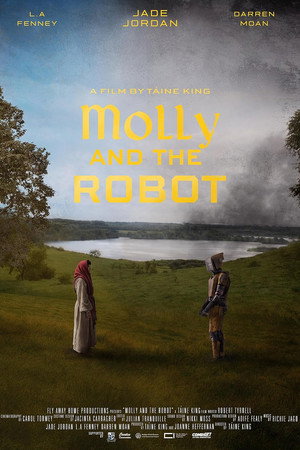


In a ruined future Ireland, a solitary woman discovers a deactivated war robot on her untouched ancestral land. As she reawakens it, an unlikely bond forms-threatened by outsiders who seek to claim the purity she's vowed to protect.
This horror movie combines elements of horror and babysitting with Black representation.
Disclosure Day asks us to question humanity's role in the universe but falls victim to the same assumptions of centrality.
Yeah, sure, the movie’s about Carnage. But it’s really about love. A love that defies all odds: the love between a man and his man-eating alien symbiote.
The plot could’ve really been interesting if the elements of lycanthropy was integrated with perhaps the struggle of identity of being LGBTQ+. It's an experience for so many that as they’re starting to realizing their true selves, they feel like a monster, especially if they come from unsupportive homes or communities. Instead, the horror and transformation elements seem thrown in without contemplation of how this could deepen the narrative.
Richard speaks with Dia Frampton about some of her experiences with acting and music.
With The Father, writer-director Florian Zeller- who wrote and developed the play upon which the film is based- pulls no punches as he confidently makes every effort to put the audience in the mind of someone whose grip on reality has all but vanished. It’s a dazzling testament to Zeller’s abilities as a director as he makes his first transition from stage to film appear as if he’s been working behind a camera his entire career. The dialogue he fashions with co-writer Christopher Hampton, along with the work of production designers Peter Francis and Cathy Featherstone, collectively makes the downward spiral of dementia startlingly tangible, doing so in a way that can be comprehended by everyone except the person it directly affects.