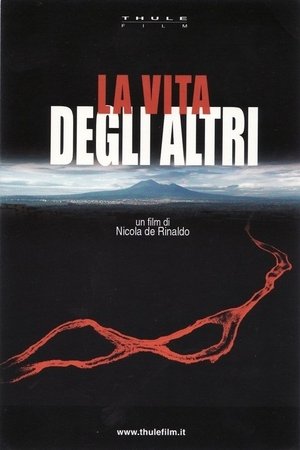
La vita degli altri
Luisa, a young volcanologist, is sent to a villa to install the technical instruments to survey Mount Vesuvius. Here she meets Mariano, a member of the camorra, that has just discovered that he has been betrayed he decided to break off completely from those he considered his friends. Luisa and Mariano have nothing in common except for a deep sense of the failure they are experiencing and which attracts them to each other. Between the young woman, exploited and disillusioned by an ambitious colleague, and the mature ex-criminal, the spark of friendship is kindled.

- / 5
PopScore
Representation
Pictures and Videos

Movie Information
Luisa, a young volcanologist, is sent to a villa to install the technical instruments to survey Mount Vesuvius. Here she meets Mariano, a member of the camorra, that has just discovered that he has been betrayed he decided to break off completely from those he considered his friends. Luisa and Mariano have nothing in common except for a deep sense of the failure they are experiencing and which attracts them to each other. Between the young woman, exploited and disillusioned by an ambitious colleague, and the mature ex-criminal, the spark of friendship is kindled.
Rating:
Genre:Drama
Written By:Nicola De Rinaldo, Pablo Lo Giudice
In Theaters:
Box Office:
Runtime:90 minutes
Studio:Thule






Articles You May Like
"The Woman in Cabin 10" (2025) Should Have Stayed Faithful to the Book
I’m disappointed in The Woman in Cabin 10, but that’s at least in part because of my love of Ruth Ware’s novel.
'Don't Look Up' Wasn't Much to Look Up to
Adam McKay might have been more concerned with cramming cameos than he was in this story which is a bloated criticism of the rich and famous… delivered unto us by the rich and famous.
You are my Tomorrow: “Vai”
The 2019 film, Vai, takes us through eight stories across the islands of Oceania. The settings are unbelievably beautiful, the cast is beautiful, the languages are beautiful, and the stories are beautiful…but heartbreaking.
"First Day": A Unique Take on a Familiar Tale
"First Day" is a trans kid slice-of-life tv show that brings desperately needed diversity to coming-of-age stories in mainstream media. Here's a show that get's it right by having a trans actress in a story centered on trans girlhood.
Telling Other People’s Stories: Representation on Both Sides of the Camera
A recent look at gender and racial diversity in film shows some signs of progress. However, white men still make up the vast majority of actors and directors in top-grossing films.