Wuthering Heights— What is the cost of love?
Wuthering Heights— What is the cost of love?



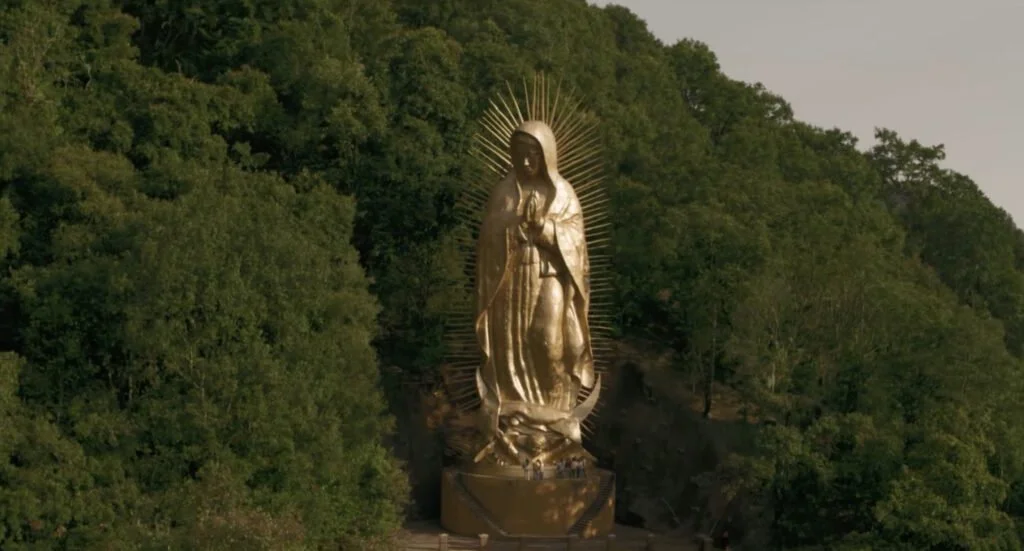
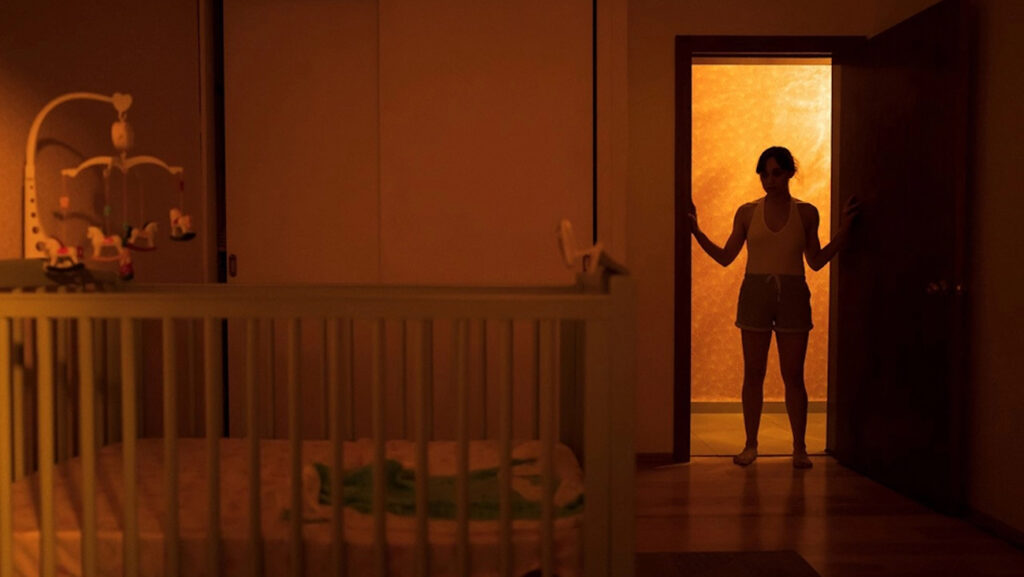
Michelle Garza Cervera’s Huesera: The Bone Woman centers on Valeria, a young woman in the middle of a substantial life transition. She’s on the precipice of becoming a wife and a mother, slotting neatly into the space left open for her by the patriarchal society in which she lives and has lived and leaving behind her former life as a music-loving, independent woodworker. Unfortunately, she is as haunted by her impending motherhood as she is by the titular la huesera—a faceless female figure who appears to move by constantly reconfiguring her bones. Valeria’s attempts to free herself from this bone woman mirror her attempts to transition smoothly into her new life, in that she fails routinely at both. La huesera haunts her daily life, leaving people to question her viability as a mother, and Valeria’s lack of satisfaction with her life leave her asking similar questions. These misgivings reach their peak after the baby is born, when Valeria, visibly in a state akin to possession, locks her in the fridge when she won’t stop crying through the night. Ultimately, Valeria seeks the aid of a group of curanderas, folk-medicine women, who successfully banish la huesera, leaving both mother and child unharmed. Valeria brings the baby back to her would-be husband and leaves them both behind, her future blessedly uncertain. Valeria’s struggle to excise herself from this culturally constructed simulacrum of who she should be and to instead give herself the opportunity to become who she is can be understood through Julia Kristeva’s idea of abjection.
Kristeva is a philosopher and literary critic who is perhaps best known for her conception of abjection as laid out in her book Powers of Horror: An Essay on Abjection. Abjection is a fairly enormous concept which has found its way into all manner of academic fields, but Kristeva describes it as “a violent, clumsy, breaking away, with the constant risk of falling back under the sway of a power as securing as it is stifling.” It is a disruptive, horrifying instance of becoming, which exists in moments of identity-defining separation—the essence of the moment in which blood from a wound ceases to be part of the person from whom it bled and instead becomes an unpleasant red stain. In that moment, the blood takes on a new identity as something separate from a person and the person’s identity reforms to reflect the fact that they are now bleeding. The moment in which the person simultaneously has their identity disrupted and then reformed can be understood as the moment of abjection.
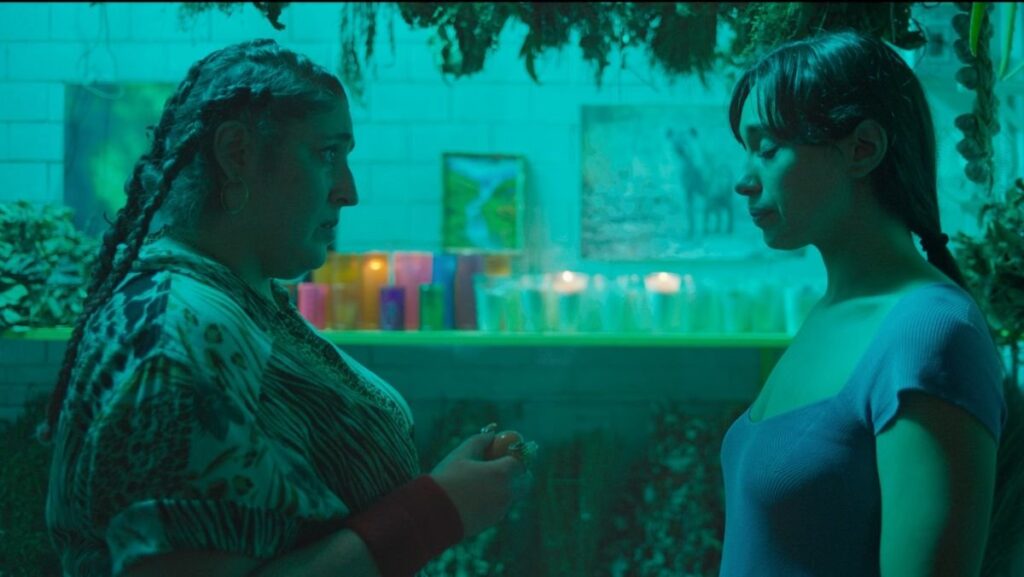
The climactic scene of Huesera depicts Valeria’s cleansing ritual at the hands of the curanderas. Part of the ritual includes the burning of a human-shaped effigy which sends Valeria into a vision of a nightmarish forest where she is stalked by a mass of faceless bodies which attempt to overtake her while she searches the forest for her baby. She is nearly overwhelmed before seeing an image of herself wearing a burning cloak and walking into the dark. This repetition of a burning figure positions the effigy as an object of abjection for Valeria: the moment in which her wandering self is violently separated from her culturally constructed self for the purpose of saving her life and the life of her child. Her stumbling through the woods evokes Kristeva’s image of the “violent, clumsy, breaking away” in the process of abjection, which further invites the viewer to see her entire life throughout the film as that same violent and clumsy separation. This ritual scene shows her realizing and accepting that she cannot fit into the societally defined image of “wife” or “mother,” and that attempting to do so might kill her and her child. She chooses instead to break away from the stifling security of this societal expectation and find a new path all her own—a solitary, untrodden path with none of the guardrails of the path she is rejecting.
The broader context of this scene presents a more obvious point of abjection as well: that of the separation between Valeria and her child. Kristeva’s mention of “the maternal entity” has obvious connections to Valeria’s own motherhood and the abjection of the literal birthing process, in which one “body” becomes two discrete identities. But this focus in this climactic scene shows that the film places less importance on the physical birth and more on this metaphorical rebirth and subsequent abjection of Valeria and her child. In the same way that the literal birth’s abjection separated the singular identity of “Pregnant Valeria” into the two reconfigured identities of “Mother Valeria” and “baby,” this ritual abjection of Valeria’s conformist identity and her yet-to-be-defined identity necessarily include an abjection of Valeria from her child. Her identity is reconfigured to a Valeria free of the restrictive expectations of motherhood, and her child’s identity is reconfigured to be a child without a mother.
There is an undeniable tragedy here; Valeria, in some ways, regresses to the wanderer she was before the movie began. Her child is destined to grow up without a mother. However, the film remains sympathetic to Valeria and her child and affirms that this was the best outcome under the given cultural conditions. Valeria may be wandering, but now her explorations are those of an adult seeking new purpose after shedding an ill-fitting identity. Her child will carry some of this emotional trauma, but she will live to experience and hopefully overcome it. After all, Valeria’s final act as a mother was to save her own life and the life of her child by choosing to renounce her motherhood. This depiction of abjection as a necessary part of the healing and the pain inherent to becoming the people that we are reflects a duality within Kristeva’s abridged definition: the simultaneous “securing” and “stifling” qualities of the parts of ourselves we leave behind.