
Parasite and Capitalism: What the Film Says About the Pursuit of Wealth
Bong Joon Ho’s masterpiece, Parasite (2019) became one of the few international films to break into the American mainstream.
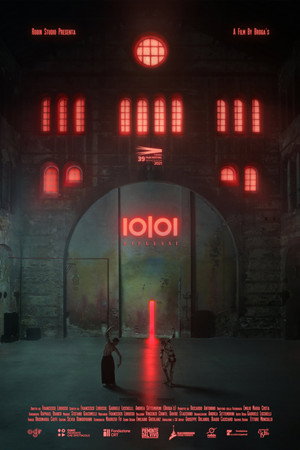


How can a person change the world around them? Art is one of the most important tools that human beings have at their disposal to change thought, to move what seems to be sedimented and fixed. In IO|OI, with a play of exchanges and reflections, a person and their creation dance together. The work of art and its creator guide each other step by step, exchanging parts and leaving behind more questions than answers, one above all: are we the creation or the creator?
Bong Joon Ho’s masterpiece, Parasite (2019) became one of the few international films to break into the American mainstream.
'Don't Lose Your Head' follows the motto of "grades aren't everything."
The definition of the word foul is “offensive to the senses,” which is a pretty good summation of the new Disney+ film, Artemis Fowl
These confines won’t really encourage you to read the film as a metaphor for the nerve-inducing experience we’ve all been through over the last year, however — and in the interest of maintaining your dignity, you probably shouldn’t. While the sociopolitical commentary may have worked for the similarly-themed Buried (2010), in which we find Ryan Reynolds on his own buried alive in the Middle East, but this futuristic take on the premise is best left as a piece of distracting entertainment. Nevertheless, the atmosphere is no less suffocating, literally and dramatically.
Coralie Fargeat once said that “Being a woman is body horror,” and when you think about the ways we are taught to experience our own bodies, it becomes almost impossible to argue with her.
‘Candyman’ (2021) builds upon the original 1992 film by presenting the myth of Candyman not only as an example of black pain, but as an opportunity for black vengeance.