
'The Mitchells vs. The Machines': Creative Kids vs. Practical Parents
"The Mitchells vs. The Machines" captures the eternal struggle between kids who want to pursue the arts and their practical parents who think they'll fail.
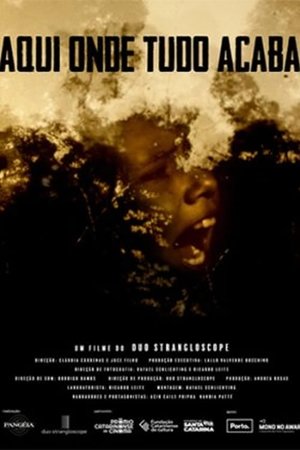


"Here Where It All Ends" is an experimental, poetic short film that moves between documentary and fiction to address an endangered culture, that of indigenous people in the Brazil. It is, in particular, a sharing of knowledge carried out in Aldeia Bugio, at all stages of 16mm filming, botanical development and sound capture in a collective way. It seeks to reactivate the memory of the origins of the Laklãnõ/Xokleng people.
"The Mitchells vs. The Machines" captures the eternal struggle between kids who want to pursue the arts and their practical parents who think they'll fail.
When you don’t factor in the plethora of inferior sequels that have been produced, Luca is one of Pixar’s simplest and most unassuming films in years — and there is absolutely nothing wrong with that. The film thrives on being a visual feast with a warm message for all ages, so much so that its unoriginal storyline doesn’t feel that big of a problem.
If you’re also a major fan of the familiar strangers story between two people of different generations, here are 5 underrated films you probably haven’t heard of, but might thoroughly enjoy.
As I typed this, Chris Evans was being “cancelled” on Twitter. I did a little research on this since I always thought Chris Evans was well-received. It turns out the backlash is because of a white savior movie he made called Red Sea Diving Resort.
Sorry to Bother You ultimately speaks to the unfair advantages that the country’s power structures award to those with the resources to control others, as Lift’s easy access to the media allows his opinion to be the only one that matters in the eyes of the unsuspecting and easily impressed public. Moreover, it reveals the extent to which the American Dream has any true validity. It postulates how the promise of success and fulfillment as promoted by the American Dream more often than not leads to the undoing of the individual. Interestingly, in its revealing of the American Dream as merely a facade, Sorry to Bother You wisely questions whether or not anything can really be done to undo a system that has been accepted and in action for centuries.