Living People in "It Was Just an Accident"
It doesn’t offer an absolute answer for the dialectical ethical questions that emerged in search of justice but portrays the characters as living people beyond the identities of victims.
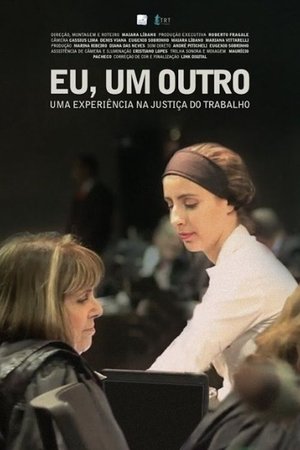


The documentary follows the project "Vivendo o Trabalho Subalterno", which invited judges to experience a day of activities with invisible workers. In secret, judges exchange their robes for uniforms and live the day of street cleaners, waitresses and gardeners. In turn, manual workers are invited to discuss the role of judges in society. The initiative served as inspiration for the theme of otherness to be part of the initial training of labor judges in Brazil. The first two editions resulted in the publication of a book with the same name, the recording of a podcast and this documentary.

Maiara Líbano
Director

Jardel Pereira da Silva
Self
Gloria Neves de Souza
Self
Evandro Pereira Valadão Lopes
Self

Carlos Ayres Britto
Self
Marcelo Augusto Souto de Oliveira
Self
Giselle Bondim Lopes Ribeiro
Self
Vanessa Kern de Abreu
Self
Jorgeane da Conceição Cordeiro Brandão
Self
Amanda Diniz Silveira
Self
Roberto Fragale Filho
Self
Adilza Pereira da Conceição
Self
It doesn’t offer an absolute answer for the dialectical ethical questions that emerged in search of justice but portrays the characters as living people beyond the identities of victims.
You can’t talk to my grandpa about The Sopranos. You can’t talk to him about The Godfather either. Merely by bringing up the subject, you’d be treated to a lecture on how movies and TV want you to believe that all Italians are criminals and mobsters. He won’t watch any of it, in protest.
A man invents the internet with the help of an otherworldly force. But he soon learns that not all is what it seems. A delightful sequence of images for a delightful fictional story about what lies behind.
If I had truly wished to witness "Guardians of the Galaxy", I would have stayed home to do so. Instead, I went to the IMAX and took in this newest incarnation of one of the most recognized and adapted superheroes in the DC Universe. **Sigh** Let me be clear here. I am NOT saying this is an AWFUL film.
The venn diagram of pop feminism and white-centered feminism is a circle. Acknowledging that is not a crime nor a diminishing of 'Barbie', Director Gerwig, or feminism in general.
The history of Hollywood is as ugly as it is beautiful. Most notably absent from Hollywood history are Black-produced films. “They’ve Gotta Have Us” explores the rise of Black cinema.