Garden of an Angry God: when the nightmare of guilt crawls out to the daily life
The repeated actions, the blood on the petals, the rustling under the floor…An ambient short horror film takes us into another realm.



Iranian director Jafar Panahi’s new film, It Was Just an Accident, won the prestigious Palme d’Or in 2025, and the film is worthy of every praise. The brilliance of the film might be easy to be overshadowed by its rebellious and courageous background. Jafar Panahi was imprisoned and banned from filmmaking by charges of “propaganda against the government” by the Islamic Republic of Iran in 2010. Continually making award-winning cinematic projects secretly, he was released after another arrest in 2023, followed by his hunger strike in the prison. After attending the Oscar for his nominated new film, which was also shot illegally, he planned to return to Iran to receive a one-year sentence in Iran. Iranian political and human rights activist Mehdi Mahmoudian, who co-wrote this film with Jafar Panahi, was arrested in Tehran for co-signing a letter against the Supreme Leader Ali Khamenei and was released on February 17. Shortly after, Iran was under airstrike by the U.S. and Israel, and Khamenei was killed on the first day. The war, without a goal or a strategy, is widening in Tehran and the whole Gulf area.
The film develops in strict chronological order in the span of one day and two nights, with a surprising turn right after the beginning. A family (a man with his pregnant wife and young daughter) drove through at night and bumped into a dog, which was killed, causing the car to halt and be damaged. The man comforted the young daughter that he wasn’t the one to blame for its death but its own fate and action, stating the title of the film—“It was just an accident.” Its chilling resonance was only revealed later in the film. When they stopped by a shop, the main character shifted to car mechanic Vahid. He followed them and waited until the next morning and hit the father with a shovel, taking him to a desert to bury him. The motive behind it was in the dialogue between the man and Vahid: Vahid was unfairly jailed while fighting for his rights and severely tortured by a man named Eghbal while being blindfolded, which made the identification of him difficult. This experience cost Vhaid’s career and family and left him with chronic pain in his back. Vahid was persuaded by the man’s denial and adjusted his impulsive plan.
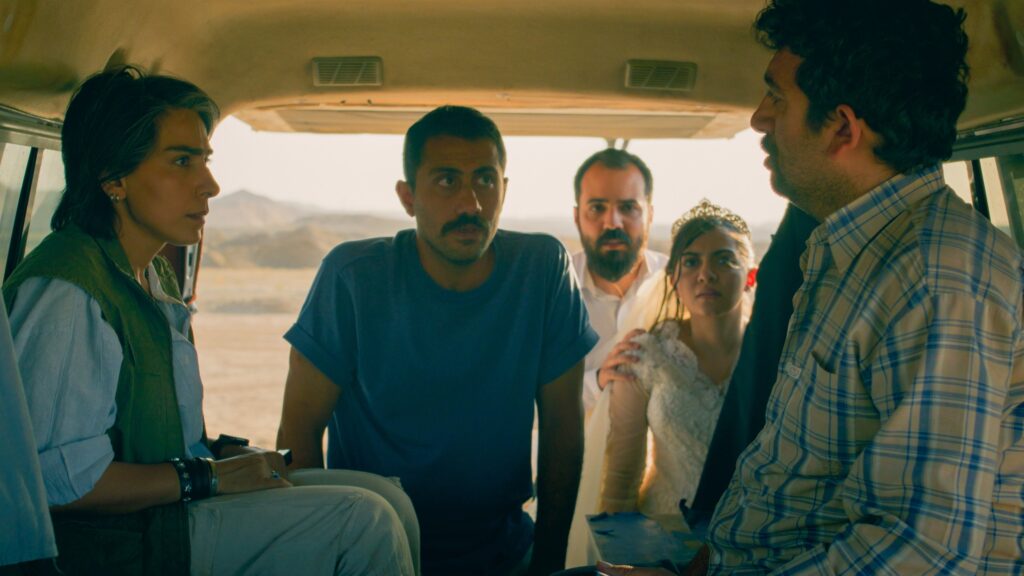
On the way to identifying the man, a makeshift group of vengeful people with similar stories and various physical and psychological traumas was formed unexpectedly. Each member has their overwhelming rage towards Eghbal, and every term of dismissing and rejoining was far out of Vahid’s control. As in other adventure films, the comedic element also surfaced in the chaotic run but didn’t surpass the anxious one, accomplishing the realistic tone. The film never visually displays the brutality of tortures and investigations. Instead, the details were shared in pieces in conversations, tangled with memories and pain, which made the suffering even more vivid and appalling. When the young daughter called the unconscious man’s phone, Vahid picked it up and took the pregnant mother to the hospital filled with the bureaucracy. This makeshift group constantly collided over different opinions of how to bring justice.
Among the 5 main characters, Shiva is an androgynous photographer. When they approached the corrupt police, they would slightly raise the pitch of their voice and put on a scarf over their hair. Another member, Goli, is a bride wearing a wedding dress due to the wedding photo shoot, who was meant to marry the day after. The film captured how she stubbornly carried the wedding dress through the whole operation, refusing to leave. The weight of the dress in the lens was a constant reminder of the outburst of this bizarre adventure and the closeness between the horror and the mundane daily life.
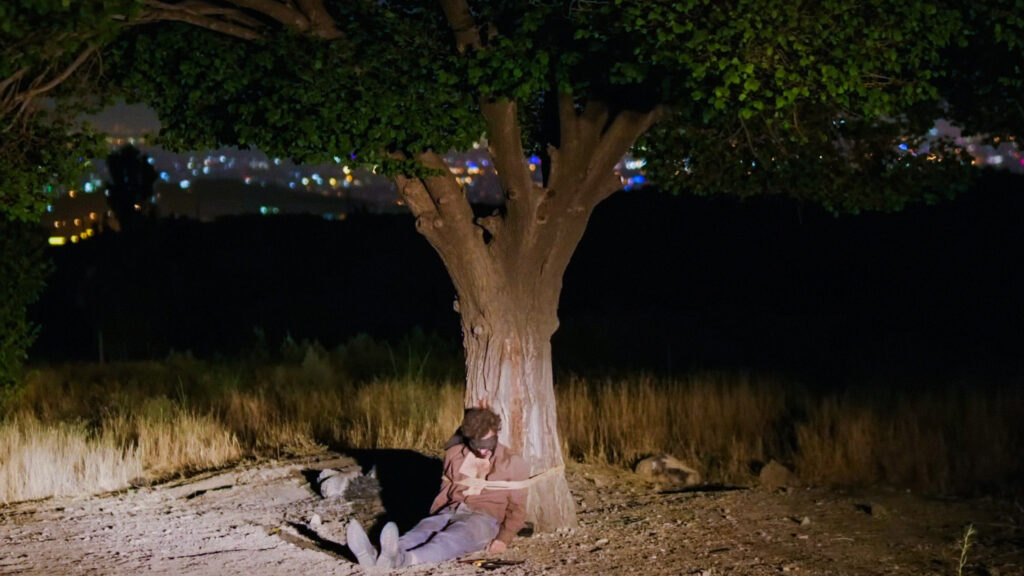
After being confronted by Vahid and Shiva, the man confessed that he was indeed Eghbal and accountable for the harm he had caused, and then he was released. This film has an open ending with a chilling long take—Vahid standing still, his back facing the camera, and a clicking sound echoing that indicated the possible return of Eghbal. The film doesn’t offer an absolute answer for the dialectical ethical questions that were torn between violence and inaction in search of justice. More importantly, none of these conflicts are hypothetical dilemmas but are the violent reality under the conditions of the authoritarian regimes. It’s undeniable that both Jafar Panahi’s and Mehdi Mahmoudian’s experiences in the jail are part of the core of the film. However, this film can’t be reduced to one political point. No country is free of the threat of dictatorship, and the stance of this film is not defeated. It stands by itself by portraying these characters as lively figures without epilogues, not only as hollow shells of the identities of victims. How they continue to live even after the inhumane events shows the inherent resilience and hope, so does their attempt to fight, question, and stop the repeated cycle of violence.