
A Refusal to Comply: The Films of Lynne Ramsay
"Well, the film industry is completely sexist and completely class-biased." A closer look at Lynne Ramsay's impressive body of work.

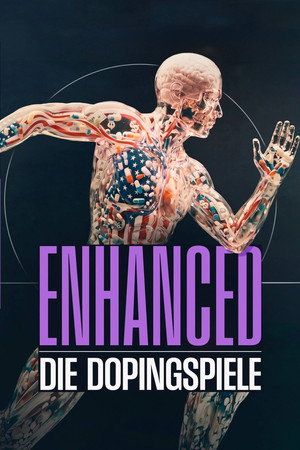


The controversial Enhanced Games challenge the foundations of modern sport by allowing athletes to use performance-enhancing drugs in pursuit of world records and prize money. As investors, athletes, scientists, and anti-doping officials clash over the project's ambitions, questions emerge about human enhancement, medical risks, commercial interests, and the future of elite competition. Between technological progress, ethical boundaries, and billion-dollar business opportunities, the debate raises a fundamental question: if doping becomes the norm, what remains of sport?
"Well, the film industry is completely sexist and completely class-biased." A closer look at Lynne Ramsay's impressive body of work.
This article discusses the classic and timeless franchise, The Smurfs.
A short film that begins with the language of romance but slowly reveals something far more unsettling beneath the surface.
Despite its glaring flaws, First Girl I Loved is not entirely undeserving of a watch. For people who can handle the more difficult aspects of the story and graphic scenes, it is worth looking into. It’s not a film worthy of rewatch, but it may still resonate somewhat with those who need a story like this. It is a genuine, if flimsy attempt at a coming-of-age tale. Were the film to be directed by someone with experiences more similar to Anne, it would likely be more powerful--as it is, it feels like a man’s perspective of what it means to come to terms with your identity as a lesbian.
With The Father, writer-director Florian Zeller- who wrote and developed the play upon which the film is based- pulls no punches as he confidently makes every effort to put the audience in the mind of someone whose grip on reality has all but vanished. It’s a dazzling testament to Zeller’s abilities as a director as he makes his first transition from stage to film appear as if he’s been working behind a camera his entire career. The dialogue he fashions with co-writer Christopher Hampton, along with the work of production designers Peter Francis and Cathy Featherstone, collectively makes the downward spiral of dementia startlingly tangible, doing so in a way that can be comprehended by everyone except the person it directly affects.