


The Secret Diary of an Exchange Student
This coming-of-age movie discusses immigration issues in the United States through the eyes of two exchange students in Brazil.

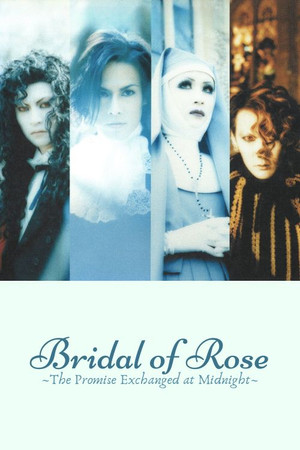


A silent film retelling of Bram Stoker's Dracula starring and soundtracked by Malice Mizer. Jonathan (Klaha), engaged to Cecil (Terumi Nagayoshi) has received a letter from the Earl of Dracula (Yu~ki) who asks him to travel to Transylvania to finalize the purchase of a manor which causes him to push back his wedding, soon after he arrives Dracula imprisons Jonathan and travels to London to meet Cecil. Meanwhile, the resident Vampire in London (Közi) is not happy that Dracula has gone there to hunt and attempts to thwart Dracula's wishes but is prevented by his sister the Nun (Mana) who is a minion of Dracula.
This coming-of-age movie discusses immigration issues in the United States through the eyes of two exchange students in Brazil.
With The Father, writer-director Florian Zeller- who wrote and developed the play upon which the film is based- pulls no punches as he confidently makes every effort to put the audience in the mind of someone whose grip on reality has all but vanished. It’s a dazzling testament to Zeller’s abilities as a director as he makes his first transition from stage to film appear as if he’s been working behind a camera his entire career. The dialogue he fashions with co-writer Christopher Hampton, along with the work of production designers Peter Francis and Cathy Featherstone, collectively makes the downward spiral of dementia startlingly tangible, doing so in a way that can be comprehended by everyone except the person it directly affects.
'Living' dives into many themes that we can all understand regardless of our cultural backgrounds. We can see this through the shared similarities between 'Ikiru' and 'Living'.
The film didn’t have to be as long as it is. It just dragged on and on with scenes that had no substance. Every so often we get an action scene, and even those isn’t that fun.
'Blonde' commits a relentless assault on the autonomy of Marilyn Monroe, reducing the icon to nothing more than a victim of the director's whims.
If the message here is that without a support system, grieving people turn into monsters, it’s not really well-delivered and may be flawed as a message itself.