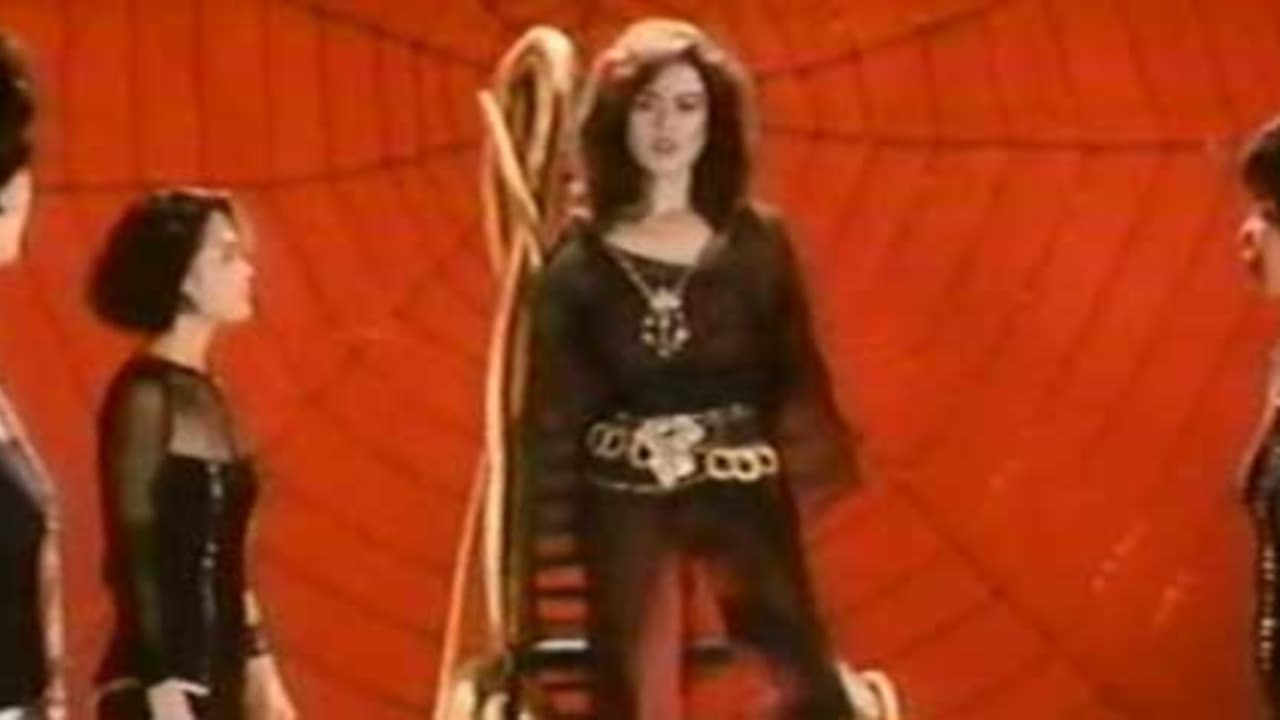

Beauty Evil Rose
A beautiful stranger, Yan-Hong (who is one of the Roses), wanders into Inspector Liang's office, takes her gear off, then turns him into a zombie-servant of the Evil God. Policeman Cheng tries to get his wife, who is also an Inspector and his boss, in the mood for sex, but she handcuffs him and walks off. Ah-Kong and his sister, Sao Mui, are out for a stroll. Ah-Kong is also trying to stop his lovely wife Mannie from posing for nude modelling. Yan-Hong is arrested by Cheng and is interrogated, then she reports to her superior, the leather-clad Dai-Jeh ("Big Sister"), who practices her evil laugh and hands out a whipping as punishment. Later, a dozy Taoist priest is called in to exorcise the Beauty and her Evil Roses. The priest fails, but lays the groundwork for the final showdown between good and evil.

- / 5
PopScore
Representation
Pictures and Videos

Movie Information
A beautiful stranger, Yan-Hong (who is one of the Roses), wanders into Inspector Liang's office, takes her gear off, then turns him into a zombie-servant of the Evil God. Policeman Cheng tries to get his wife, who is also an Inspector and his boss, in the mood for sex, but she handcuffs him and walks off. Ah-Kong and his sister, Sao Mui, are out for a stroll. Ah-Kong is also trying to stop his lovely wife Mannie from posing for nude modelling. Yan-Hong is arrested by Cheng and is interrogated, then she reports to her superior, the leather-clad Dai-Jeh ("Big Sister"), who practices her evil laugh and hands out a whipping as punishment. Later, a dozy Taoist priest is called in to exorcise the Beauty and her Evil Roses. The priest fails, but lays the groundwork for the final showdown between good and evil.
Rating:
Genre:Horror
Written By:Chan Hiu-Bing
In Theaters:
Box Office:$96,830
Runtime:90 minutes
Studio:喜而雅電影有限公司




Articles You May Like
Mixed-Race Passing: An Actress's Life Mirrored in "Imitation of Life"
White audiences saw Peola’s mixed-race passing as a Black woman’s struggle to be white. Black audiences saw it as the rebellion of a Black woman trying to gain privileges only given to white people.
TIFF ‘22 Coverage: ‘Triangle of Sadness’
Ruben Östlund muses about his characters, “As soon as you get close to a person, you see them as just another human being”. It is widely recognized that aboard the luxury yacht in ‘Triangle of Sadness’, the different groups of people represent a small society as a commentary on classism and gender binaries.
They/Them Falters As A Slasher But Is A Triumph For LGBTQ+ Representation
Those saying it's a bad movie simply because it's bad as a slasher should be reminded that the likes of Jordan and Alexandra often don’t get their tales told, let alone in such major releases helmed by veteran actors like Bacon.
Takeaways on Cutaways
Ditch the lube and get to the point in the raw, honest, cheeky dramedy written and directed by Mark Schwab.
We Are Lady Parts Is The Muslim Representation To Keep Your Eyes On
Presenting a bold and unapologetic narrative focused on strong Muslim female characters, the show beautifully incorporates punk rock as a feminist movement in their lives.