
Hamnet: A Passage through Time to the Magnificent Forest
A family drama is woven with quiet yet powerful forces of words and nature.
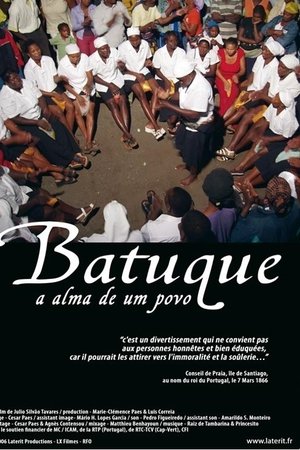


In 1462, the first African slaves were settled on the island of Cape Verde brought by the Portuguese colons. It is supposed that they were the first inhabitants of the archipelagos. They carried with them the rhythms and the seeds of what became the BATUQUE: a music form, performed mostly by women, both singers and dancers. The singers, repeat very strong lyrics, sitting in a circle and beating the rhythms with their hands on a piece of cloth between their legs. While one woman performs a very sensual dance with her hips in the middle of the circle. During the colonial era, it has been strongly forbidden but it remained alive in clandestinity. The group Raiz de Tambarina, one of the oldest groups of Batuque on Santiago island, is composed of ordinary people, saleswomen, fish merchants, drivers... Through their every day life and performances we discover Cape Verde today and their passion for the Batuque.
A family drama is woven with quiet yet powerful forces of words and nature.
We sat down with Writer/Director Albert Acosta to discuss his debut short film, (ha-ha), Acosta's foray into narrative cinema, and how his personal experiences have shaped his filmmaking philosophy.
In the shadow of towering film production companies lived dozens of grindhouses, genres, and low-budget films deemed too “unclean” for the modern film audience.
This is not a film, it’s a drop tower. A drop tower that you don’t get off of for the vast majority of its 106-minute runtime.
It’s passionately protective of the women mentioned in the story or appearing on screen. Just like the article and the #MeToo movement, the film could help a trapped person find the courage to fight back.
While it initially sounds nothing like 'Nope,' the focus on recording/sharing everything—especially trauma—for profit makes Hulu's 'Not Okay' similar to Jordan Peele’s newest movie.