






Venturing deep into the labyrinth of the faun: Why Pan's Labyrinth remains among all-time great fantasy movies 20 years later
Guillermo del Toro's masterwork "Pan's Labyrinth" stands test of time as it celebrates 20th anniversary in theaters.
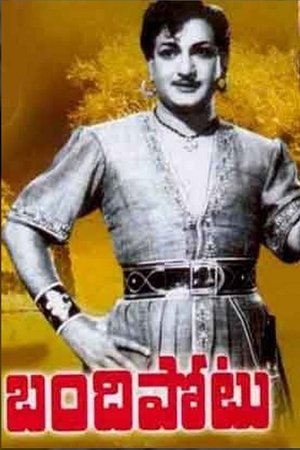


Sathyasena (Gummadi), the king of Gandhara, suffering from paralytic legs leaves the rule to his vicious brother-in-law Soorasimha (Rajanala), the army commander. Dharma Nayaka (Chittoor V. Nagaiah) is one of the victims of Surasimha’s tyranny. Dharma’s brother Veera Nayaka (Mikkilineni) as a masked man rebels against Surasimha by leading a group of men. He robs the royal wealth and distributes it to the poor. While he is looting the wealth of princess Mandaramala (Krishnakumari), Dharma’s son Narasimha (N. T. Rama Rao) fights with the masked brigand and is surprised to find it is his uncle. He learns from Veera how Soorasimha has ruined their lives. Meanwhile, Surasimha plots to ascend the throne by marrying Mandaramala. In an act of deceit, he eliminates Dharma Nayaka and Veera Nayaka. Narasimha takes the place of Veera Nayaka as the masked rebel, annihilates Soorasimha and ascends the throne after marrying Mandaramala.
Guillermo del Toro's masterwork "Pan's Labyrinth" stands test of time as it celebrates 20th anniversary in theaters.
The live-action remake brings adventure and shows viewers why representation is important in a Disney Princess movie.
Episode 3, entitled “Now in Color,” brings us to the 1970s — a decade full of vibrancy, color, and total mayhem.
Unrelentingly funny, highly entertaining, and ridiculously absurd, My Movie Starring Paul Dano is, according to its creator, Joe Bartone, a tribute to the willful ignorance of independent filmmaking found in the late '70s in New York City. Developed through open discussions with the cast at the reading table, the mockumentary follows a delusional and fame-starved indie director, Herman Rumowicz, through the process of making his very first feature movie starring Paul Dano.
One of the reasons I love watching movies is that, much like books, they serve as windows into other times and different places. Productions from around the world offer valuable insights into the history and culture of their respective countries. And just like literature, cinema can help us understand the present by showing us the past.
Malignant is a roller coaster ride of slow-build scares, moments of wonderfully absurd camp, and explorations of autonomy.