







Women Are Just Convenient Puzzle Pieces in “Animals”
A deer caught in the headlights is the perfect metaphor for Animals.

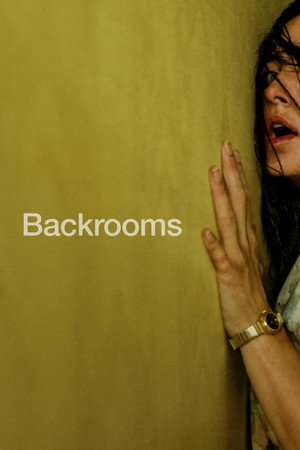


Well they brought in the cavalry for the newest horror hit. Produced by James Wan, Osgood Perkins, and Atomic Monster, among many others, distributed by powerhouse studio A24, and directed by Kane Parsons, the man who brought us the original Backrooms YouTube series. It would be futile to try to list the entire resume of this coalition. So, does the resulting product mirror this excessive firepower?
Well, not exactly, but it’s still pretty darn good. To be honest, what I expected going into this film was something akin to A24’s previous horror films, but in yellow this time. Instead, we got a movie that takes the old school approach of trying to creep you out with chilling atmosphere more than anything else. That approach is as ancient as film itself, going back to the Universal monster classics and even farther back to the 1920s German expressionist films. There’s no question that there are parallels between this film and The Cabinet of Dr. Caligari. But those parallels aren’t just visual, they’re also substantive. Specifically, the underlying current of mental illness that fuels the narrative from behind-the-scenes – or should I say, from the backrooms.
To fully explain how this film expounds on the theme of mental illness would be to spoil key elements of the narrative, but suffice it to say that our main character, Clark, has an interesting reaction to the backrooms. At first, it’s the same as everybody else’s reaction would be: befuddlement and fear. But as he becomes more familiar with the backrooms, they become almost sort of an escape. He’s never unafraid of what lies within those walls, but he contrasts it to his personal life in the “real world,” and finds an escape. In the end, this approach doesn’t quite work out, and that’s all I’ll say. Nevertheless it feels like enough to point out how, like a certain bacteria monster, psychological issues fester when put in a proverbial petri dish. Isolate them from the outside world and suddenly they grow exponentially. This idea has been explored not only in The Cabinet of Dr. Caligari but numerous other horror classics like The Shining and A24’s own Hereditary. It’s no coincidence that our second main character, Mary, had a mother who completely blocked her from the outside world as a child, and the fact that Mary must escape multiple times throughout the film to find answers.
Another way this film succeeds is with its representation. Clark is a black man and Mary is a woman. In 2026, this isn’t exactly a shining beacon of diversity, but it is strong representation in an era where it is sorely needed. With how (shockingly) young the audience for this movie skews, having a black man and a woman in positions of prominence sends a message to our youth that you don’t have to be a particular skin color or gender to play a pivotal role in a film of any genre.

A strange doorway appears in the basement of a furniture showroom.
A deer caught in the headlights is the perfect metaphor for Animals.
This fantasy movie released on Disney+ has strong topics and themes related to magic.
Netflix’s recent "Enola Holmes 3" is a disappointing and confusing entry in the stellar "Enola Holmes" franchise.
'Brother' is a gripping family drama with dazzling performances all around.
Slytherin is painted negatively for the traits the members of this house embody. Although Slytherin students are ambitious, cunning, and determined, they are more.
Those perfect Summer or Fall days. The sun is shining, the temperature is JUST right, and you've got nothing else to do. Therefore, isn't it time to get outside and take a nice stroll through the park, or along the shoreline (should you be that fortunate), or even just around the neighborhood? Sure. BUT.....if one lives in the America found in the newest film adaptation of the work from horror author/cultural icon Stephen King.....doing this SHOULD be the LAST thing you hope to find yourself engaged with.