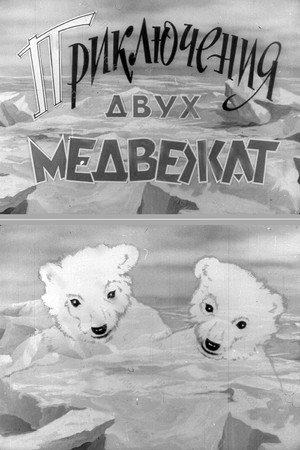
Adventures of Two Bear Cubs (1959)
Arctic landscape. Polar station. Winterers at their instruments, by the map. Preparing dog sleds for the journey. Winterers and dogs making their way through the snow. Bear cub tracks in the snow. Amidst a blizzard, two bear cubs traverse the snowy plain. Winterers collect the cubs, bring them to the station. Cubs get to know the station, play and wrestle. Constructing a play area, digging a den for the cubs. Sending the cubs by plane to Moscow. Zoo. Cubs are washed, examined by a veterinarian. Cubs on the young animals' platform, bathing, playing with a dog.

- / 5
PopScore
Representation
Pictures and Videos

Movie Information
Arctic landscape. Polar station. Winterers at their instruments, by the map. Preparing dog sleds for the journey. Winterers and dogs making their way through the snow. Bear cub tracks in the snow. Amidst a blizzard, two bear cubs traverse the snowy plain. Winterers collect the cubs, bring them to the station. Cubs get to know the station, play and wrestle. Constructing a play area, digging a den for the cubs. Sending the cubs by plane to Moscow. Zoo. Cubs are washed, examined by a veterinarian. Cubs on the young animals' platform, bathing, playing with a dog.
Rating:
Genre:Documentary
Written By:Vladimir Kopalin, V. Bessonov, Yevgeni Ryss
In Theaters:1/1/1959
Box Office:
Runtime:19 minutes
Studio:Central Studio of Documentary Films
Cast

Articles You May Like
No Other Choice: Killing for the Family at the Age of Obsolescence
With the theme of unemployment, it presents a family fantasy anecdote rather the a comment on social problems.
“Young Washington” Is Imperialist Propaganda
Telling a story about the French and Indian Wars from the perspective of the British prioritizes the perspective of the colonizers.
Luke Skywalker, Gay Icon: Part 1
Star Wars is better if you believe that Luke Skywalker is gay. You can't change my mind.
'The Half of it' Handles its Presented Social Issues Thoughtfully
The social issues The Half of it takes on are handled well, between the antagonization brought on to Ellie for her race and the conflict that arises from her being gay. Both aspects of her character are built up over the course of the film and don’t seem abrupt or rushed. The film shows racism towards Ellie and her and father in varying levels, from having her schoolmates specifically address her as "Chinese girl” to the fore mentioned way her Dad is treated due to language barriers. The same can be said about Ellie being a lesbian. While she never truly “comes out” in the narrative, that does not undermine her journey of self-discovery from being meaningful. These ideas aren’t thrust upon the viewer in a preachy manor, the scenarios that occur feel believable given the rural setting. The film presents watchers with problems whom those like Ellie may face, and leaves us to sit with them and reflect.
The Burden of Female Intuition in Something Very Bad Is Going to Happen (2026)
“Trust your gut" is one of the most common pieces of advice you’ll receive during your lifetime. And as a person inclined to trust my intuition above all else, it’s the most common advice I find myself giving in real life and in my online socialising. But what happens when your gut is trying to warn you that something is seriously wrong without you being able to identify what triggered it in the first place? How can you act on a feeling or make it go away when you don’t have a clue about what could be wrong? How can you trust your intuition when you don’t know what makes it act out in the first place?