











Incluvie – Better diversity in movies.
Identity in film with Incluvie stamps, scores, reviews.

Incluvie – Better diversity in movies.
Explore identity in film with Incluvie stamps, scores, reviews, and insights.

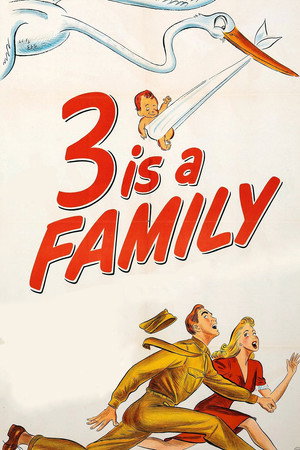
3 Is a Family poster

3 Is a Family (1944)

Based on a play by Phoebe and Henry Ephron, "3 Is a Family" is a 1940s farce. Charlie Ruggles plays a hubby whose bungled business schemes force his wife, Fay Bainter, to enter the workplace. The couple's daughter, Marjorie Reynolds, shows up with her twin babies in tow. Son Arthur Lake arrives with his pregnant wife (Jeff Donnell). And overbearing maiden aunt Helen Broderick also decides to move in. Because his wife is away at work, poor old Charlie Ruggles is not only housekeeper, but nursemaid and servant as well.
- / 5
PopScore
Representation

Pictures and Videos


Incluvie Gala

Movie Information


Based on a play by Phoebe and Henry Ephron, "3 Is a Family" is a 1940s farce. Charlie Ruggles plays a hubby whose bungled business schemes force his wife, Fay Bainter, to enter the workplace. The couple's daughter, Marjorie Reynolds, shows up with her twin babies in tow. Son Arthur Lake arrives with his pregnant wife (Jeff Donnell). And overbearing maiden aunt Helen Broderick also decides to move in. Because his wife is away at work, poor old Charlie Ruggles is not only housekeeper, but nursemaid and servant as well.

Rating:
Genre:Comedy
Directed By:Edward Ludwig
Written By:Harry Chandlee, Marjorie L. Pfaelzer
In Theaters:11/23/1944
Box Office:

Runtime:81 minutes
Studio:Sol Lesser Productions, United Artists

Articles You May Like


Who Needs 'Independence Day' When You've Got 'Sorry to Bother You'?

Sorry to Bother You ultimately speaks to the unfair advantages that the country’s power structures award to those with the resources to control others, as Lift’s easy access to the media allows his opinion to be the only one that matters in the eyes of the unsuspecting and easily impressed public. Moreover, it reveals the extent to which the American Dream has any true validity. It postulates how the promise of success and fulfillment as promoted by the American Dream more often than not leads to the undoing of the individual. Interestingly, in its revealing of the American Dream as merely a facade, Sorry to Bother You wisely questions whether or not anything can really be done to undo a system that has been accepted and in action for centuries.

Matt Geiger