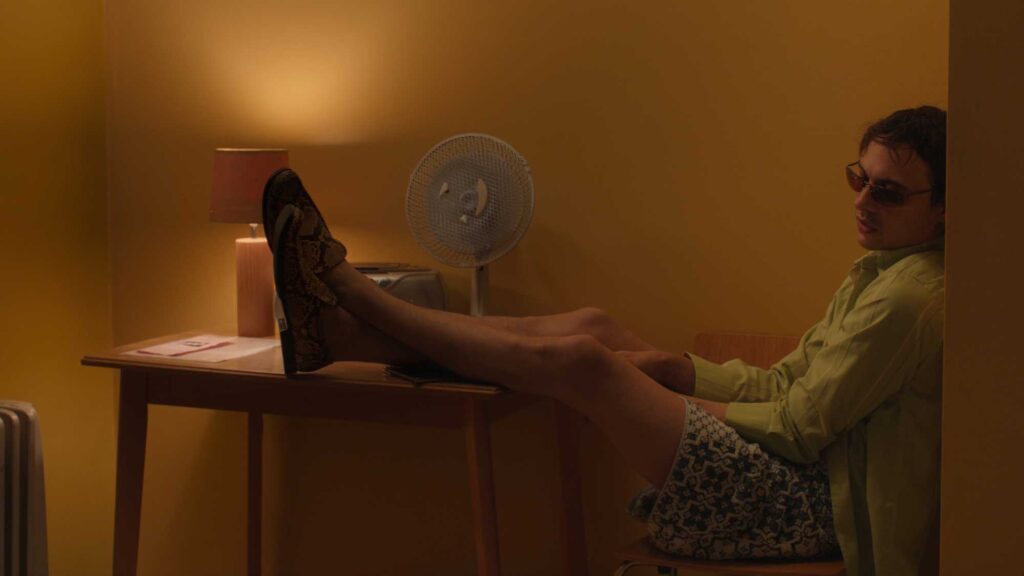
I came across Urchin by chance and decided to watch it because of the title. It made me think of the spiky animal that lives at the bottom of the ocean, and the old Dickensian novels, where an urchin was an orphaned, homeless child in shaggy and dirty clothes.
A slice from the life of an addict living in the UK.
I came across Urchin by chance and decided to watch it because of the title. It made me think of the spiky animal that lives at the bottom of the ocean, and the old Dickensian novels, where an urchin was an orphaned, homeless child in shaggy and dirty clothes. Following my instinct was the right choice, because this gentle character-focused directorial debut from Harris Dickinson has moved me in ways I wasn’t really expecting.
Dressed in shaggy clothes, his head adorned with spiky hair, the main character in Urchin is a young homeless addict called Mike. Like the urchin at the bottom of the ocean, he lets the currents of life pull him back and forth, back and forth.
Even though the movie belongs in the “slice of life” subgenre because it closely follows a character over a short period of time, Urchin is unconventional in the way it handles it. While other directors make a purpose of opening their movies on an ambiguous note, Dickinson leaves no room for interpretation as to who Mike is and what you’re about to see. He doesn’t ease you into what will prove to be a heavy and depressing story; he takes you right down into Mike’s world as he wakes up on the streets in the first scene and, shortly after, gets arrested for battery and robbery and sentenced to 8 months in prison. Those 8 months are shown briefly, only for a few seconds, and then he’s out, sober and remorseful for his violent crime. For the next few weeks, the viewers become observers of his life and witness his efforts as he tries to turn it around. In a discreet but genuine way, he is the embodiment of the classic underdog, and I instinctively rooted for him every time he seemed to take a positive step towards getting his life back together. I couldn’t help but feel disappointed when, in one moment of weakness at a small impromptu party, he gives in to his addiction and everything he’s built so far comes undone.
Throughout the movie, the camera stays focused mostly on Mike’s face and his reactions, and this creates a false sense of intimacy because we don’t really know Mike at all in the end. We only see how the addiction controls every part of his life, even when he’s sober. Luckily for me, Urchin leaves a lot of room for interpretation. To convey Mike’s inner life, symbolic elements and scenes are scattered here and there like bread crumbs in Hansel and Gretel, showing the way home. The shame and guilt he feels are shown through being haunted by visions of an old woman, whom I could only assume is his mother. And perhaps he also feels a sense of longing for his past self, before choosing this self-destructive path.
Another useful tool to understand Mike better was the cave that keeps appearing in his dreams. As he’s getting back on track with his life, he dreams himself standing still in a luminous, serene, and peaceful cave. At first glance, I thought it represented his ability to enjoy being alone, but after a deeper consideration, I’m more inclined to believe that the drug addiction holds him in that cave, promising serenity but isolating him from everyone else. When he starts using drugs again, the cave appears empty in his dreams, which could mean that addiction has such a strong hold on him that it’s taken complete control, erasing him in the process.
The problem of addiction has been analyzed in movies over and over again. Following in the footsteps of iconic movies such as Requiem for a Dream, Trainspotting, Oslo, August 31st, and Leaving Las Vegas, Urchin is surprisingly delicate and tender in the way it treats its character and us, his viewers. It’s honest and true to life in showing that nothing extraordinary has to happen for an addict to lose control. One small slip-up and you’re in hell again.